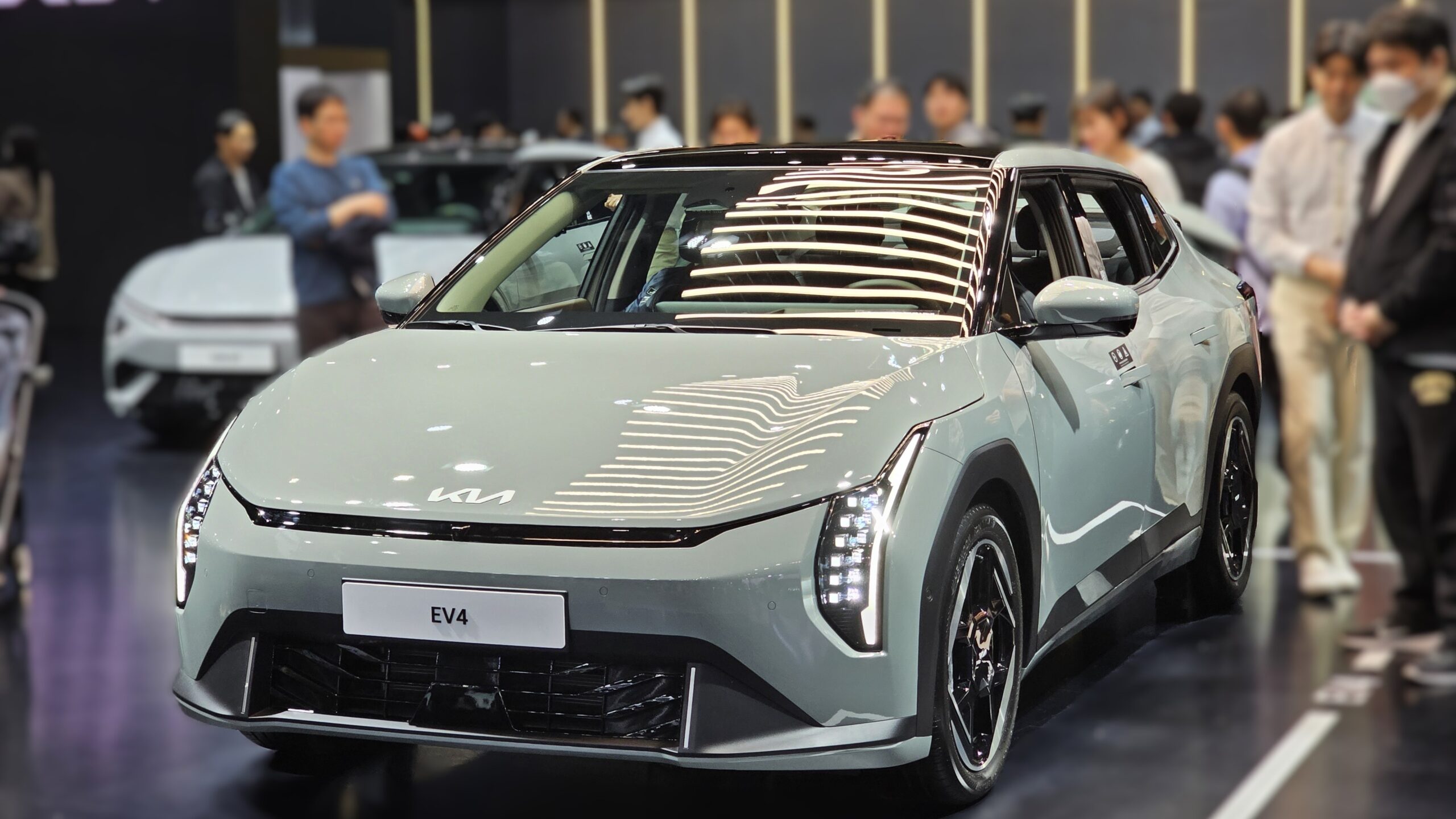
Kia’s all-electric EV4 sedan, built in South Korea and aimed squarely at American buyers, is pressing ahead with U.S. sales plans even as a 25% tariff on imported vehicles reshapes the economics of every foreign-assembled car sold in the country. A recent White House order easing some of that tariff burden, combined with a two-year parts reimbursement window running through April 2027, gives the Korean automaker a narrow but real path to keep the EV4 competitively priced. The result is a test case for whether a well-timed import sedan can still win in a market that increasingly rewards domestic assembly.
How the 25% Auto Tariff Reshaped the Playing Field
A presidential proclamation signed earlier this year established a 25% tariff on imported automobiles effective April 3, 2025, with a matching 25% levy on auto parts following on May 3. The framework also applies to non-U.S. content in vehicles that otherwise qualify under the USMCA trade agreement, meaning even cars with partial North American sourcing face added costs on their foreign components. A research timeline from the Congressional Research Service confirmed the tariff took effect on schedule, with subsequent country-specific rates layered on top as the administration sought to pressure foreign manufacturers while rewarding domestic production.
The immediate fallout hit importers hardest. For a Korean-assembled sedan like the Kia EV4, the math is straightforward: every dollar of declared value at the U.S. border now carries a 25-cent surcharge before the car reaches a dealer lot. That cost either gets absorbed by the manufacturer, passed to the buyer, or offset through policy relief. According to coverage of the auto tariffs, the administration moved to reduce tariff stacking and created a two-year reimbursement mechanism for parts used in U.S.-assembled vehicles, with caps extending through April 30, 2027. That provision offers some relief to automakers building cars in American factories, but it does not directly help fully assembled imports like the EV4, which still arrive at U.S. ports carrying the full 25% vehicle tariff.
Kia’s EV4 Bets on Speed and Specs
Kia chose the New York International Auto Show to introduce the 2026 EV4 to American audiences, signaling confidence that the sedan can compete despite the tariff headwinds. In its U.S. announcement, Kia said the EV4 will be assembled at the Autoland Gwangmyeong EVO Plant in South Korea and offered with two battery configurations: 58.3 kWh and 81.4 kWh. The larger pack is aimed at drivers who prioritize highway range and fewer charging stops, while the smaller pack is expected to underpin a lower entry price that could bring more budget-conscious buyers into the EV market. Kia has stated that it expects U.S. sales to begin in early 2026, specifically targeting the first quarter for initial deliveries.
That timeline is aggressive given the unsettled trade environment and the capital-intensive nature of EV launches. Kia is effectively racing to lock in a foothold before tariffs, currency shifts, or additional policy changes erode the EV4’s value proposition. The company is also threading a needle between performance and affordability: to land in the roughly $35,000 to $40,000 price band where many compact EVs compete, Kia will have to balance equipment levels, dealer margins, and marketing costs against the tariff hit. The gamble is that strong specifications, a familiar brand, and a relatively early on-sale date will convince buyers to overlook the fact that a similarly sized EV built in the U.S. might qualify for more generous incentives or carry a lower embedded tariff cost.
Rivals Are Reshoring While Kia Imports
The contrast between Kia’s approach and the broader industry trend is sharp. General Motors, for example, announced plans to shift some production from Mexico to the United States through a $4 billion investment program. That move is a direct response to the tariff regime and is exactly the kind of reshoring the White House framework was designed to encourage. By building more vehicles domestically, GM can better position itself to take advantage of the parts reimbursement mechanism and reduce its exposure to future import penalties, all while signaling alignment with U.S. industrial policy priorities.
Kia’s decision to keep EV4 assembly in South Korea reflects a different set of constraints. Constructing a new U.S. factory or retooling an existing plant for a single sedan model would require years of planning, local permitting, and supplier localization, on top of billions of dollars in capital spending. The Autoland Gwangmyeong EVO Plant is already configured for EV4 production, with established battery, electronics, and drivetrain supply chains built around Korean manufacturing. In the near term, the company appears to be calculating that absorbing tariffs on a limited-volume sedan is less risky than rushing into a costly U.S. manufacturing commitment that might outlast the current policy environment. That leaves Kia exposed to trade politics, but it also preserves flexibility if future negotiations ease import costs or open alternative North American assembly options.
Polestar’s Parallel Struggle Signals a Wider Pattern
Kia is not the only foreign EV maker trying to navigate this new landscape. Polestar, the Swedish electric performance brand with Chinese manufacturing ties, had planned to provide detailed financial and product guidance at a strategy day in February 2026 but ultimately scaled back those disclosures. As reported by international wire coverage, the company instead focused on conserving cash and emphasizing European sales, even as it pushed ahead with revamped models. That shift underscored how tariff uncertainty, higher borrowing costs, and competitive pressure from legacy automakers are forcing smaller EV specialists to be more cautious about capital-intensive expansion plans in North America.
Polestar’s product roadmap nonetheless remains ambitious. The company has laid out plans to introduce a slate of new vehicles, with industry reports noting that it aims to launch four EV models within a three-year window. Those additions are intended to broaden Polestar’s appeal beyond its initial niche and to give it a fuller lineup to sell across multiple regions, including Europe, China, and North America. Yet each new model also raises questions about where it will be built and how exposed it will be to U.S. tariffs. Like Kia, Polestar must weigh the benefits of tapping the U.S. market’s scale against the risks of importing vehicles into a country that is increasingly using trade tools to steer production decisions.
Can an Imported EV Sedan Still Win in the U.S. Market?
The EV4’s path into American garages will hinge on whether buyers view tariffs as an abstract policy issue or as a concrete price difference on the showroom floor. Many consumers focus on monthly payments rather than factory locations, meaning Kia could still find success if it pairs the EV4 with aggressive financing, lease offers, or dealer incentives that blunt the effect of the 25% import duty. The car’s dual-battery strategy also gives Kia levers to pull: a more affordable base model can serve as the volume driver, while a higher-range version caters to buyers willing to pay extra for capability. However, as more competitors retool U.S. plants and take advantage of parts reimbursements and other domestic-production perks, the relative cost disadvantage for the EV4 may widen over time.
For policymakers, the EV4 and Polestar examples highlight the trade-offs embedded in the current tariff strategy. Higher import duties appear to be nudging some manufacturers, like GM, toward reshoring, but they also risk limiting consumer choice and slowing the adoption of lower-cost EVs that originate overseas. Kia’s decision to proceed with a Korean-built EV4 suggests that, for now, there is still room in the market for well-equipped imported sedans, even if they carry a policy-imposed price premium. Whether that remains true into the late 2020s will depend on how quickly foreign automakers can adjust their production footprints, and on whether the U.S. continues to use tariffs as a primary tool for shaping the future of the auto industry.
More From The Daily Overview
*This article was researched with the help of AI, with human editors creating the final content.

Grant Mercer covers market dynamics, business trends, and the economic forces driving growth across industries. His analysis connects macro movements with real-world implications for investors, entrepreneurs, and professionals. Through his work at The Daily Overview, Grant helps readers understand how markets function and where opportunities may emerge.

