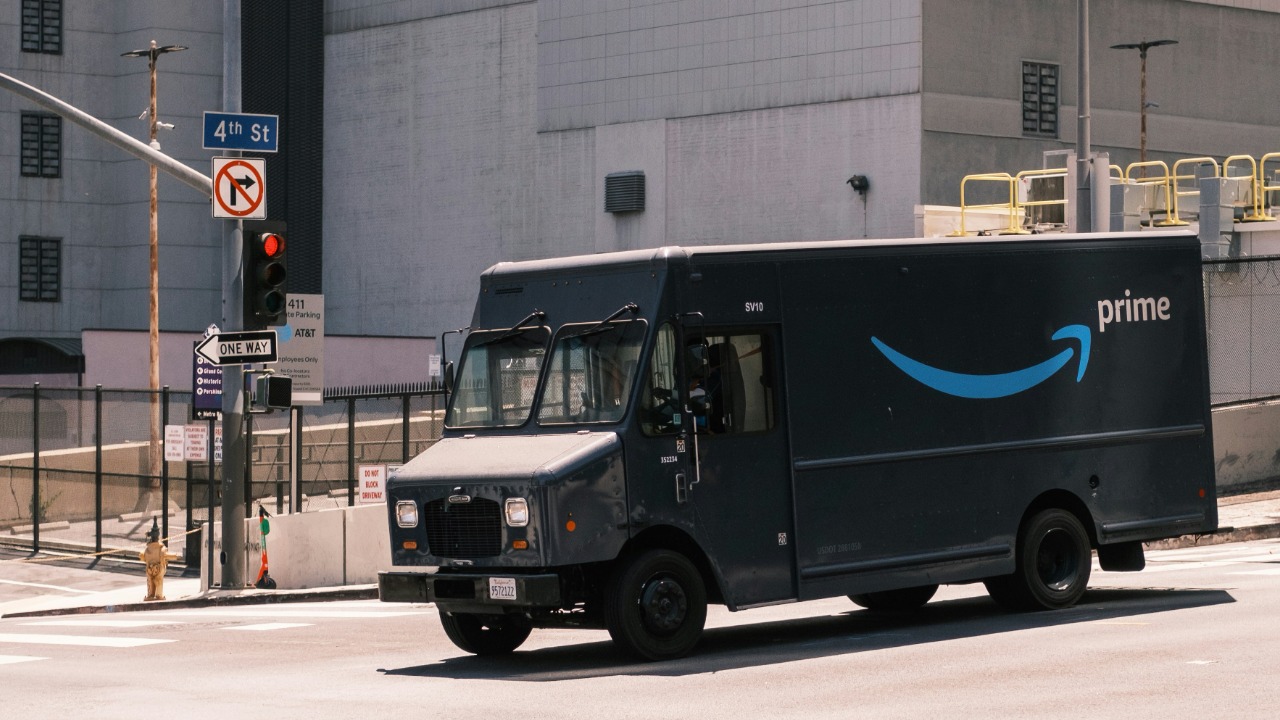
Amazon is quietly preparing for a future in which it no longer relies on the United States Postal Service, a shift that could strip USPS of its largest package customer and reorder how millions of online orders move across the country. The company’s current contract runs through 2026, and people familiar with the talks say negotiations over an extension have stalled badly enough that both sides are now gaming out a breakup. If Amazon walks away, it will not just be a corporate divorce, it will be a stress test for the entire U.S. delivery ecosystem.
At stake is a relationship that channels billions of dollars in parcel revenue into USPS and underpins the speed and predictability of Amazon’s Prime delivery promise. The e‑commerce giant has already spent years building its own vans, planes, and local partners into a parallel network, and now it appears ready to lean on that infrastructure far more aggressively if it cannot secure the terms it wants from the Postal Service. I see the emerging picture as less a sudden rupture than the culmination of a long power shift in which Amazon, not USPS, increasingly dictates how packages get from warehouse to doorstep.
Amazon’s USPS contract is nearing a breaking point
The core tension is simple: Amazon’s current deal with USPS expires in 2026, and the two sides have not been able to agree on what comes next. Reporting indicates that Amazon pays the USPS billions of dollars each year to distribute packages, a flow of money that accounts for a significant share of the agency’s annual revenue and makes Amazon its single biggest package client. Under the current agreement, USPS provides nationwide last‑mile coverage that even Amazon’s own vans and planes cannot fully replicate, especially in rural areas where the Postal Service already visits every address.
Yet as the contract’s end approaches, Amazon is now reportedly considering dropping USPS entirely and building what amounts to a competing postal service of its own. People briefed on the talks say the company has explored scenarios in which it shifts a large portion of its volume into its proprietary network and alternative carriers if it cannot secure favorable pricing and flexibility from USPS, a move that would turn today’s partnership into direct competition for parcel traffic. That possibility is serious enough that one report describes Amazon weighing how to stand up a full rival system if it walks away from the USPS contract.
USPS’s fragile finances raise the stakes
If Amazon leaves, the financial shock to USPS would be immediate and severe. The Postal Service has already been struggling with structural deficits, and one analysis notes that its delivery service recently incurred a loss of about 9 billion dollars, a figure that underscores how thin its margins are even with Amazon’s volume in the mix. Losing a customer that currently pays billions of dollars annually would rip a hole in USPS’s revenue base that no single replacement client is likely to fill.
That is why rumors of an Amazon‑USPS breakup have intensified as the 2026 contract expiration draws closer, with observers warning that the agency’s already messy finances could deteriorate further if the talks fail. People familiar with the negotiations say discussions over a renewal have largely concluded with no deal, which suggests both sides are now preparing for a scenario in which the partnership ends and USPS must scramble to replace a major portion of its package income. The prospect of that kind of revenue shock is central to recent reporting that frames the potential departure as a serious threat to the Postal Service’s long‑term stability and highlights how much of its budget is tied to Amazon’s business.
A $6 billion partnership on the auction block
Behind the scenes, the numbers attached to this relationship are even more striking. One detailed breakdown describes the Amazon‑USPS partnership as a 6 billion dollar contract that may end in 2026, a figure that captures both the scale of Amazon’s shipping needs and the degree to which USPS has come to depend on that revenue stream. For an agency that still has to deliver letters to every address in the country, that kind of package income has been a rare growth engine in an otherwise shrinking mail business.
As the contract winds down, USPS has reportedly begun exploring an “auction” style system for shipping capacity, in which carriers and large shippers would bid for access to its network rather than locking in long‑term, fixed‑rate deals. That shift would mark a significant change from the current arrangement and could be one reason Amazon is reluctant to simply roll over the existing terms. The idea of moving to a more market‑driven model for parcel volume is central to recent analysis that frames the 6 billion dollar agreement as a partnership at risk and notes that USPS is already testing new ways to price and allocate shipping capacity.
Inside the stalled negotiations
From Amazon’s perspective, the current talks are about more than just price per package. The company has spent years tightening its delivery promises, and it now wants a contract that gives it more control over routing, timing, and integration with its own logistics systems. Reports describe Amazon as being in active discussions with the U.S. Postal Service while simultaneously making plans to potentially part ways, a dual‑track strategy that suggests the company is using its growing in‑house network as leverage in the negotiations.
At the same time, USPS appears wary of locking itself into a long‑term deal that could limit its ability to raise rates or rebalance its network if Amazon’s volume shifts again. That tension has left the two sides far apart, with people familiar with the talks saying the Postal Service and Amazon have not been able to bridge key gaps on pricing and service guarantees. One account notes that Amazon’s contract with the U.S. Postal Service is at the center of these discussions and that the company is already lining up alternative carriers, including national brands and regional shipping firms, in case it decides to walk away from the Postal Service and pursue a different mix of partners.
How Amazon’s own network changes the power balance
The biggest difference between this round of talks and earlier ones is that Amazon no longer needs USPS in the way it once did. Over the past decade, the company has built out a vast logistics operation that includes branded delivery vans, leased cargo planes, local delivery partners, and sophisticated routing software that rivals traditional carriers. That infrastructure gives Amazon the option to expand its own delivery network nationwide and reduce its dependence on USPS if the economics of the contract no longer make sense.
Recent reporting says Amazon is planning to expand its own delivery network and cut ties with the US Postal Service if negotiations continue to stall, a strategy that would allow it to keep its Prime delivery system largely unaffected even if the partnership ends. Analysts note that Amazon’s internal logistics arm already handles a large share of its urban and suburban volume, and the company believes it can absorb more if it invests in additional capacity. One report underscores that Amazon’s payments account for a significant portion of the agency’s annual revenue, which only strengthens the company’s hand as it weighs whether to keep paying USPS or redirect that money into its own delivery network.
What a breakup would mean for Prime delivery
For customers, the most immediate question is what happens to Prime if Amazon and USPS part ways. The company has built its brand around fast, predictable shipping, and any disruption to that promise would be costly. So far, Amazon’s strategy appears to be to insulate shoppers from the turmoil by ramping up its own capacity and diversifying its carrier mix, rather than allowing a contract dispute to slow down deliveries or force widespread surcharges.
Still, the company is clearly preparing for major changes to how Prime delivery works behind the scenes. One report describes Amazon considering a significant shift in its Prime logistics model, with the company weighing how to rely more heavily on its own network and a curated set of alternative carriers to maintain reliable delivery for its customers if USPS is no longer in the picture. That analysis notes that Amazon is evaluating how to preserve its “Buy Now” convenience while reconfiguring the underlying routes and partners, a process that could lead to a major change in Prime delivery if the current contract with USPS is not renewed, as highlighted in coverage of an Amazon major change to its shipping model.
Amazon’s plan B: a competing postal service
If the talks collapse, Amazon’s fallback is not simply to shift volume to UPS or FedEx, it is to behave more like a postal operator in its own right. People familiar with the company’s planning say executives have examined what it would take to build a competing postal service that could handle a much larger share of its packages, including in regions where USPS has traditionally been the only cost‑effective last‑mile option. That would require more regional hubs, deeper partnerships with local carriers, and potentially new services that mirror some of the Postal Service’s offerings.
One detailed account notes that Amazon is preparing to expand its nationwide delivery network and give up its long‑standing partnership with the U.S. Postal Service as early as the end of 2026 if the negotiations do not produce a deal. The same reporting describes how Amazon is already mapping out routes and capacity that would allow it to cover more of the country on its own, effectively turning its logistics arm into a parallel system that competes with USPS for parcel traffic. That vision of a full‑scale alternative is central to recent coverage of how Amazon is preparing for a post‑USPS future.
The consumer experience if USPS loses Amazon
Even if Amazon manages to shield Prime members from obvious disruption, a breakup would ripple through the broader e‑commerce landscape. USPS uses Amazon’s volume to help cover the fixed costs of its nationwide network, which in turn supports affordable shipping options for smaller retailers that cannot negotiate the same discounts with private carriers. If that volume disappears, USPS may have to raise rates or cut back on certain services, changes that would hit independent sellers and their customers long before they show up in Amazon’s checkout flow.
Customer experience experts are already sketching out what that world might look like. One analysis imagines a shopper clicking “Buy Now” on a Tuesday evening and then facing longer delivery windows, higher shipping fees, or more frequent delays if USPS loses the economies of scale that Amazon’s packages provide. That scenario is framed as a likely outcome if the long‑standing, negotiated‑rate partnership between USPS and Amazon, which reportedly blindsided some stakeholders when breakup news first surfaced, gives way to a more fragmented system in which smaller merchants pay more for slower service, as explored in a report on USPS and Amazon Breakup: CX Impacts on E‑commerce Delivery.
Why this standoff matters beyond Amazon and USPS
What makes this standoff so consequential is that it is not just about one contract, it is about who controls the infrastructure of American online shopping. If Amazon succeeds in peeling away from USPS while keeping its delivery promises intact, it will prove that a private company can replicate much of what a national postal service does for parcels, at least for its own traffic. That would strengthen Amazon’s already formidable grip on e‑commerce and could encourage other large retailers to invest more heavily in their own networks rather than relying on shared public infrastructure.
On the other hand, if USPS manages to keep Amazon on board, even at reduced volume, it will buy the agency time to modernize its operations and experiment with new pricing models like the auction system now under discussion. Either way, the outcome will shape how packages move across the country for years to come, and it will determine whether USPS remains a central player in that system or cedes more ground to private giants. As one reporter, Stevie Bonifield, has noted while covering the 2026 contract talks, the current negotiations are the culmination of trends that began more than 30 years ago when parcel delivery first started to outgrow traditional letter mail, a reminder that the Amazon‑USPS relationship is part of a much longer story about how Americans get their online orders.
More From TheDailyOverview

Grant Mercer covers market dynamics, business trends, and the economic forces driving growth across industries. His analysis connects macro movements with real-world implications for investors, entrepreneurs, and professionals. Through his work at The Daily Overview, Grant helps readers understand how markets function and where opportunities may emerge.