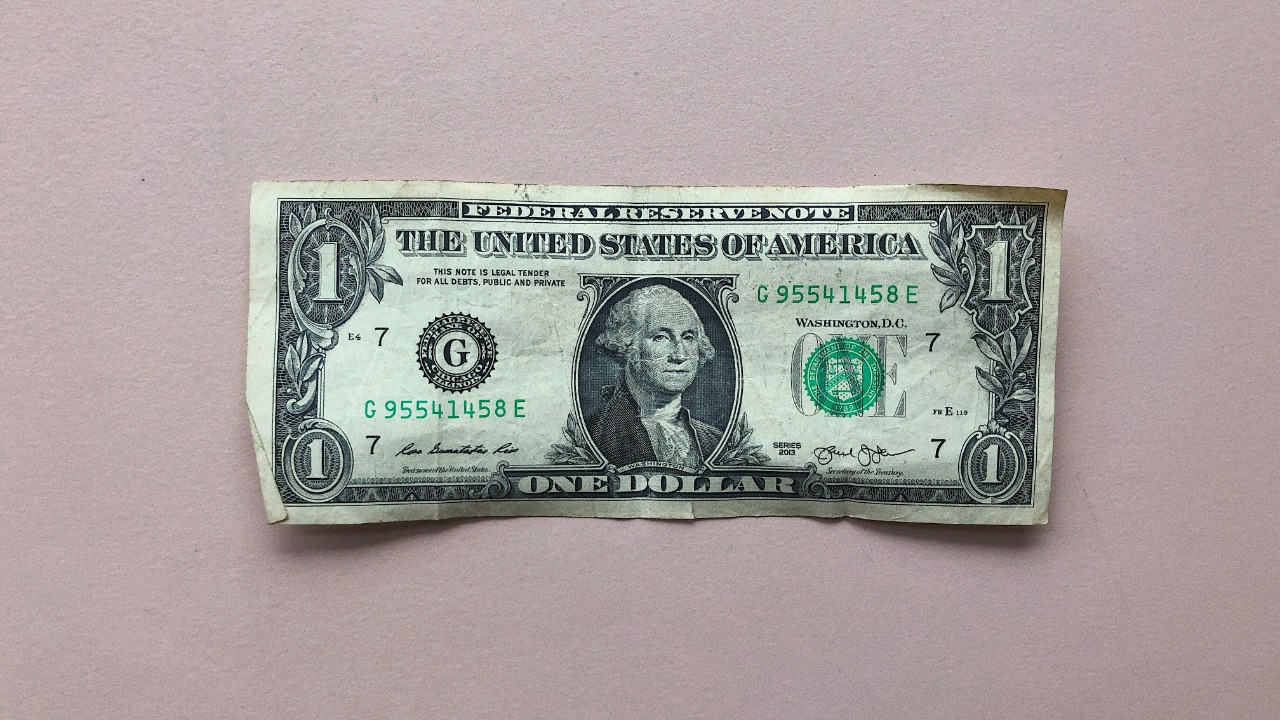
The U.S. one dollar bill is one of the most familiar objects in American life, yet its design is packed with symbols that quietly tell a story about power, unity, and national identity. From Latin mottos to a watchful eye atop a pyramid, almost every mark on the note was chosen to send a message about what the United States believed it was, and what it hoped to become. I want to unpack those messages, line by line, so the next time you hand over a single, you can actually read what it is saying.
To do that, I will move across the bill the way your eye naturally does, starting with the portrait and serial numbers on the front, then turning to the Great Seal and its dense cluster of imagery on the back. Along the way, I will explain how phrases like “E Pluribus Unum” and “Annuit Cœptis” fit into American political culture, why the number 13 appears so often, and how even the leaves and border flourishes carry meaning.
The $1 bill as a national calling card
I see the one dollar bill as the country’s most widely circulated piece of political messaging, a compact summary of how the United States wants to present itself at home and abroad. It is no accident that the note combines a sober portrait, formal typography, and dense symbolism, because the design has to function as both a practical instrument of payment and a visual statement of legitimacy. The fact that this single denomination has remained visually stable for generations has turned it into a kind of unofficial logo for the federal government.
On the front, the bill is formally identified as a Federal Reserve note, with specific bank note identifiers that tie each piece of paper to a series, a Federal Reserve district, and a unique serial number. On the back, the reverse showcases the obverse and reverse of the Great Seal of the United States, including the bald eagle and a pyramid symbolizing the nation’s strength and duration. Together, these elements turn the bill into a portable emblem of American authority, one that has become, as collectors note, one of the most recognized forms of U.S. currency in the world.
George Washington’s portrait and what it signals
The most obvious feature on the front of the bill is the engraved portrait of George Washington, which anchors the design and sets the tone for everything around it. Choosing Washington, the first president and commander of the Continental Army, signals continuity with the founding era and frames the currency as an extension of the constitutional order he helped create. His calm, unsmiling expression and the neoclassical frame around him are meant to project stability rather than glamour.
Modern novelty issues that colorize the note underline how central that image has become. One such collectible emphasizes the vivid color enhancements to the portrait of George Washington on the obverse and both sides of the Great Seal of the United States on the reverse, explicitly trading on the familiarity of the original artwork. Another commemorative piece notes that the obverse of the note features George Washington while the reverse showcases the iconic Great Seal of the United States, underscoring how tightly Washington’s image and the seal are linked in the public imagination. Even when the bill is repurposed as a collectible, those two symbols remain untouchable, which tells you how deeply they are embedded in the story the dollar is meant to tell.
Serial numbers, seals, and the fight against counterfeits
Beneath the portrait and decorative scrollwork, the one dollar bill is also a carefully engineered security document. The front of the note includes a serial number, a combination of 11 numbers and letters that appears twice and ties each bill to a specific production run. That string of characters is not just bookkeeping, it is part of a system that lets the government track issues and helps businesses spot anomalies that might signal a fake.
The obverse, for instance, features the Federal Reserve seal, the Treasury seal, and those serial numbers, all of which are part of the identifiers that distinguish genuine notes from crude copies, as detailed in official bank note identifiers. Guidance for merchants stresses that You should Familiarize yourself with the security features of true U.S. currency so you know what to look out for, from the feel of the paper to the placement of seals and numbers. Educational explainers on the symbols of the dollar bill point out that the serial numbers on the obverse are among the least mysterious elements, but they are some of the most important for protecting the integrity of the entire union as a whole, which is why they are printed twice and paired with district letters and seals that must all match.
The Great Seal: eagle, shield, and the power of 13
Turn the bill over and the design becomes more overtly symbolic, dominated by the Great Seal of the United States. On the right side of the reverse, the bald eagle holds a shield with no crest above it, a deliberate choice that suggests the nation’s strength comes from its people and institutions rather than a monarch. The eagle itself has become, as one educational overview notes, perhaps the most universally renowned symbol to appear on American paper money, front and center on our $1 Federal Reserve notes and shared across generations of Americans.
Every detail around that eagle is doing work. The shield’s stripes represent the states supporting a unifying chief, while the eagle’s talons clutch an olive branch and a bundle of arrows, a pairing that signals a preference for peace backed by readiness for war. The design leans heavily on the number 13, with 13 arrows, 13 leaves, and 13 olives, echoing the original colonies. A kid-focused explainer on Dollar Bill Trivia highlights that one of the original design ideas had the eagle facing the arrows, but the final version has it looking toward the olive branch, a subtle cue that the country officially faces toward peace. A broader overview of symbols on American money notes that this eagle has become a shared reference point for generations of Americans, reinforcing ideals of strength and unity every time a bill changes hands.
Latin mottos: “E Pluribus Unum” and “Annuit Cœptis”
Hovering above the eagle’s head is a banner with the Latin phrase “E Pluribus Unum,” which translates as “out of many, one.” I read that motto as the clearest statement of the political project the founders were attempting: to weld multiple states, cultures, and interests into a single republic. The phrase has been an important part of American history, appearing on coins and official documents as a reminder that the national identity is supposed to be built from diversity rather than imposed over it.
Research on Pluribus Unum notes that the Latin phrase e pluribus unum, meaning “out of many, one,” has served as a significant symbol in American political communication and remains an important part of American history. A separate historical account explains that the phrase e pluribus unum began appearing on coins a few years after independence, not due to an act of Congress but because Coin designers simply felt it captured the new nation’s character, offering a fascinating perspective on American culture. On the left side of the reverse, above the pyramid, another Latin motto appears: “Annuit Cœptis.” As explained in a detailed entry on Annuit, the phrase is often translated as “He has favored our undertakings,” and it was chosen as one of two mottos on the reverse side of the Great Seal, with designers explicitly opting for secular mottos that could still suggest providential support without naming a specific deity.
The pyramid and the Eye of Providence
To the left of the eagle, the reverse of the bill presents a stark, unfinished pyramid topped by a glowing eye inside a triangle. This is one of the most analyzed images in American iconography, and it is easy to see why: it combines ancient architectural symbolism with a mystical-looking emblem that seems to watch the viewer. The pyramid’s incomplete top is often read as a statement that the United States was, and remains, a work in progress, a nation still being built.
Official histories of the Great Seal explain that the reverse of the $1 bill showcases the Great Seal of the United States, including a pyramid symbolizing the nation’s strength and duration. The eye above it is known as The Eye of Providence or the All Seeing Eye, a symbol depicting an eye, often enclosed in a triangle and surrounded by rays of light, meant to represent divine guidance or oversight. A detailed entry on The Eye of Providence notes that this emblem appears on the reverse of the Great Seal and on the U.S. one dollar bill, where it has fueled everything from theological interpretations to conspiracy theories. A historical slide presentation on the history behind the dollar emphasizes that the unfinished pyramid was chosen to represent the country’s unfinished nature at its founding, a reminder that the republic was intended to evolve rather than freeze in place.
Leaves, borders, and the quieter symbols of growth
Not every symbol on the dollar bill shouts its meaning. Some of the most revealing details are tucked into the decorative border and the foliage around the central images. Leaves appear in multiple places on the front side of the dollar bill, including around the border as well as in the wreaths and flourishes that frame the word “ONE.” I read these botanical motifs as a visual counterweight to the hard geometry of the pyramid and the rigid stripes of the shield, suggesting organic growth alongside institutional strength.
One close reading of the design notes that Leaves appear in front of the eagle and around the border of the one dollar bill, reinforcing themes of growth and renewal that complement the more explicit symbols of power. A separate educational presentation on Symbols of America explains the origins and significance of these kinds of images, noting that they were chosen to represent ideals of strength, courage, freedom, and democracy. Even the way the note is physically finished supports the symbolism: kid-friendly explainers describe how the paper is overprinted with symbols, then starched to make it water resistant and pressed to give it that crisp feel, a process that turns fragile fibers into something durable enough to survive daily use while carrying all this imagery.
The hidden numerology and the obsession with 13
Once you start counting, it is hard to stop. The number 13 appears again and again on the one dollar bill, from the stripes on the shield to the stars above the eagle’s head and the items in its talons. This repetition is not accidental. It is a deliberate nod to the original 13 colonies that formed the United States, a way of keeping the founding coalition visible even as the country expanded far beyond those first states.
One breakdown of What Those Symbols on the dollar bill actually mean points out that it is no surprise that the phrases “Annuit Cœptis” and “E Pluribus Unum” both have 13 letters, mirroring the 13 arrows, 13 leaves, and 13 stars that appear elsewhere in the design. That kind of numerology may seem obsessive, but it reflects how intent the early republic was on memorializing its origin story. Educational materials on the reverse of each $1 bill in uncut sheets emphasize that the Great Seal of the United States is an enduring symbol of America, representing strength, resilience, and the nation’s ongoing growth. The repeated 13s tie that story of growth back to a specific starting point, reminding every holder of the bill that the modern United States grew out of a much smaller, more precarious union.
How the $1 design fits into the broader story of U.S. money
Seen in isolation, the one dollar bill can look like a quirky collage of Latin, eagles, and eyes. In context, it is part of a larger visual language that runs across American coins and higher denominations. The same mottos and symbols recur, sometimes simplified, sometimes elaborated, but always pointing back to a core set of ideas about unity, vigilance, and endurance. That consistency is one reason the dollar has become such a powerful global brand.
Educational overviews of symbols on the dollar bill note that the obverse features the portrait, seals, and serial numbers that identify the note as part of the Federal Reserve system, while the reverse uses the Great Seal to represent the entire union as a whole. A broader history of U.S. currency explains that $1 Federal Reserve notes feature the obverse and reverse of the American Great Seal, with the eagle and the pyramid symbolizing strength and duration. Collectible uncut sheets highlight that the reverse of the $1 bill showcases the Great Seal of the United States, another iconic element of American (the United States) currency, with the pyramid and Eye of Providence presented as a symbol representing strength and longevity. Taken together, these sources show that the one dollar bill is not just small change, it is the distilled version of a much larger symbolic system that has been refined over centuries to tell a particular story about what the United States is and aspires to be.
More From TheDailyOverview

Cole Whitaker focuses on the fundamentals of money management, helping readers make smarter decisions around income, spending, saving, and long-term financial stability. His writing emphasizes clarity, discipline, and practical systems that work in real life. At The Daily Overview, Cole breaks down personal finance topics into straightforward guidance readers can apply immediately.
