Gen Z is entering work at a moment when traditional career ladders are wobbling and headlines about layoffs and stalled hiring are hard to ignore. Yet some of the most powerful executives in corporate America insist that opportunity has not vanished, it has simply shifted toward people who approach work with a different mindset. Their message to young job seekers is blunt: the jobs are there, but you have to be flexible, proactive, and willing to grow in uncomfortable directions.
From Amazon and Walmart to McDonald’s and major financial and tech firms, leaders are spelling out what that mindset looks like in practice. They are not promising easy paths or linear promotions. Instead, they are offering a playbook for how Gen Z can navigate a volatile market, build resilience, and turn even unglamorous roles into launchpads for long term careers.
The job market looks bleak, but CEOs see hidden openings
Across the economy, millions of Gen Zers are confronting a jarring mismatch between their expectations and the reality of the labor market. Entry level postings have tightened, some internships have vanished, and the old assumption that a degree guarantees a smooth landing has started to fray. In that context, it is striking that a group of Fortune 500 leaders, speaking with Dec career writer Preston Fore, are adamant that opportunity still exists if young workers adjust how they search, learn, and show up, a point that Fore makes explicitly as a Success Reporter.
These executives are not sugarcoating the turbulence, and they acknowledge that for many Gen Zers the early part of a career has become more precarious than it was for older cohorts. Yet they argue that the same forces disrupting traditional roles are also creating new ones in logistics, data, frontline services, and digital operations. Reporting on how millions of Gen Zers face unemployment notes that leaders at Amazon and Walmart still describe themselves as optimistic about long term prospects for young workers, even as they concede that the path to those roles now demands more agility and self direction than in the past, a tension captured in coverage of Gen Zers and hiring.
Mindset over map: Amazon CEO Andy Jassy on not having it all figured out
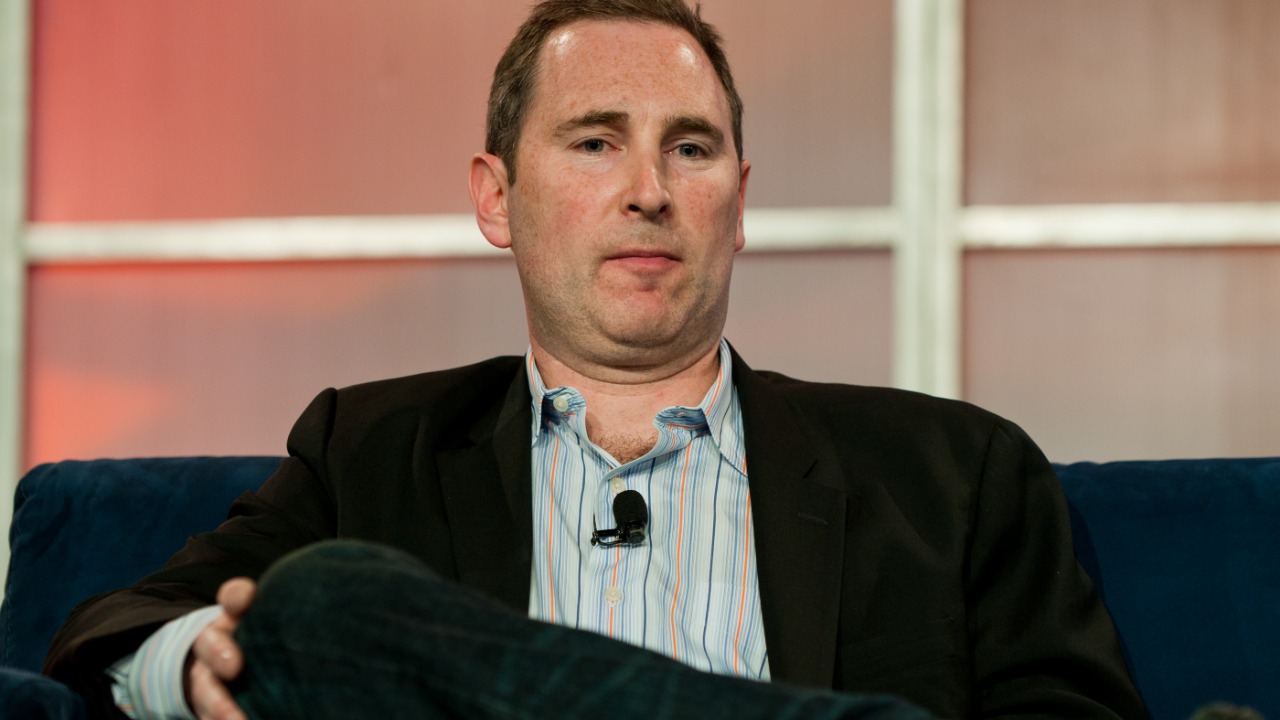
One of the most counterintuitive pieces of advice for anxious graduates comes from Amazon CEO Andy Jassy, who argues that trying to script an entire career at 22 is not only unrealistic but counterproductive. He suggests that in an era defined by constant change, the better strategy is to focus on learning environments, managers who invest in you, and roles that stretch your skills, rather than obsessing over a perfect long term plan. In his view, You do not need to have every step mapped out to make progress, and clinging to a rigid blueprint can blind you to unexpected openings inside large employers like Amazon.
Jassy’s perspective is echoed in broader reporting that frames the current market as unpredictable but still navigable for those who treat each role as a chance to gather skills rather than a final destination. Instead of waiting for the one perfect job, he urges Gen Zers to say yes to roles that may not match their major but offer exposure to fast growing parts of the business, from cloud operations to last mile delivery. That approach aligns with the wider message from executives who tell Dec audiences that the key is to keep moving toward work that teaches you something new, even if you are not yet sure what you ultimately want to do, a theme highlighted in coverage of Amazon CEO Andy Jassy.
Standing up for your own career: McDonald’s CEO Chris Kempczinski’s tough love
If Jassy’s message is about loosening your grip on a rigid plan, McDonald’s CEO Chris Kempczinski focuses on tightening your grip on personal responsibility. He has become known for telling young workers that nobody cares about your career as much as you do, a line that has resonated precisely because it cuts through the illusion that managers or HR departments will automatically shepherd you to the next level. In his view, waiting passively for recognition is a recipe for stagnation, and the people who advance are those who ask for feedback, volunteer for stretch assignments, and make it impossible for decision makers to overlook them, a stance captured in reporting that the McDonald’s CEO has some candid advice.
Kempczinski’s own story, from early roles to overseeing Happy Meals and a global franchise network, underpins his insistence that young employees must stand up for their own careers. In a Dec conversation about how millions of Gen Zers are navigating unemployment, he framed it bluntly as a choice between letting the market happen to you or making things happen for yourself. He urged Gen Zers to treat every job, even a part time shift role, as a platform to build a reputation for reliability and initiative, arguing that the people who consistently raise their hands for unglamorous tasks are the ones who get that next call, a theme reinforced in guidance that McDonald’s CEO Chris Kempczinski summarizes as Stand up for your own career.
Running toward hard problems: AMD CEO Lisa Su on embracing difficulty
Where some young workers instinctively shy away from messy, ambiguous assignments, AMD CEO Lisa Su argues that those are exactly the challenges that accelerate a career. Her advice to early career employees is simple and demanding: Run toward the toughest problems instead of avoiding them. For AMD CEO Lisa Su, uncertainty is not something to fear, it is where the biggest impact and the fastest learning live, especially in industries like semiconductors where technology and competition move quickly, a philosophy detailed in guidance from AMD CEO Lisa Su.
Su’s point is that in a crowded field of applicants, the people who volunteer for the hardest tasks quickly become indispensable. Whether it is debugging a failing product launch, taking on a struggling store, or learning a new analytics tool, leaning into difficulty signals both courage and ambition. That mindset also helps Gen Zers reframe setbacks, because a failed experiment on a tough project can still showcase resilience and problem solving. In a market where millions of Gen Zers are competing for limited roles, Su’s advice effectively turns the hardest assignments into a filter that separates those who want a comfortable job from those who want a chance to make a difference, a distinction that matters in sectors like AMD’s where the stakes are high and the margin for error is thin.
Raise your hand: Walmart CEO Doug McMillon on visibility and initiative
Walmart CEO Doug McMillon distills his own decades long rise inside the retail giant into a deceptively simple rule for young employees: Raise your hand. He argues that in sprawling organizations, managers often have more problems than people, and the workers who consistently volunteer for new responsibilities become the ones leaders rely on. That can mean taking an overnight shift to help open a new store, learning how to run a fresh department, or stepping into a temporary supervisor role, all of which create visibility in a company that spans everything from local outlets to the global Walmart marketplace.
McMillon’s emphasis on volunteering is not about blind hustle, it is about strategically putting yourself where growth is happening. He has said that throughout his career he learned that if you raise your hand, you are more likely to get the job, a lesson that applies whether you are stocking shelves or managing a regional logistics hub. That same ethos surfaces in a Dec feature that highlights his advice as one of the standout lines of the year, noting how Walmart CEO Doug frames initiative as the bridge between entry level roles and leadership opportunities, a sentiment captured in coverage that quotes him urging young workers to Raise your hand.
From dishwasher to the C-suite: saying yes to unglamorous starts
For Gen Zers frustrated by unpaid internships or entry level roles that feel beneath their qualifications, Kempczinski offers a different lens. He points to careers that began in the most basic restaurant jobs, including dishwashing, and eventually climbed to the C-suite by consistently saying yes to new responsibilities. His argument is that the title on your first job matters far less than the habits you build there, from showing up on time to learning how to manage a team under pressure. In his words, I am a big believer in finding your way in the world, and that is not just about getting the first job, it is about using each role as a stepping stone, a philosophy he laid out in detail in a Dec conversation with Fortune.
That dishwasher to executive arc is not a fairy tale, it is a pattern in service industries where frontline roles are the primary talent pipeline. Kempczinski’s tough love for Gen Z is that waiting for a perfect corporate role can mean missing the chance to build a track record in places that are actually hiring. He argues that the key to long term success is saying yes to the job in front of you, mastering it, and then asking for the next challenge. In a labor market where millions of Gen Zers are competing for a limited number of white collar openings, his advice reframes fast food counters, warehouses, and call centers as legitimate starting blocks rather than dead ends, provided you treat them as training grounds instead of holding patterns.
Dream big, build resilience: Citi CEO Jane Fraser on setbacks
While retail and restaurant leaders focus on initiative and grit, Citi CEO Jane Fraser adds another dimension that is especially relevant for Gen Zers who feel they have already fallen behind. She urges young people to Dream big and build resiliency, arguing that ambition without the capacity to absorb setbacks is fragile. For Jane Fraser, the challenges facing young people are personal, in part because Her own family includes kids coming out of college into the same choppy market, a perspective she shared while reflecting on how today’s graduates are navigating a landscape that looks very different from the one she entered, as detailed in coverage of Citi CEO Jane Fraser.
Fraser’s advice blends optimism with realism. She encourages Gen Zers to aim for roles that excite them, whether in finance, technology, or public service, but to expect that the path will include layoffs, rejected applications, and lateral moves. The difference between those who eventually land in their dream fields and those who drift away, she suggests, often comes down to how they interpret those setbacks. Do they see a rescinded offer as proof that they do not belong, or as a signal to sharpen skills and widen their search? In a market where millions of Gen Zers are facing unemployment, her call to pair big dreams with thick skin is a reminder that resilience is not a soft skill, it is a survival skill.
Learning faster than the world changes: Nvidia’s lesson for Gen Z
Tech leaders are also weighing in on what it takes to stay employable as automation and artificial intelligence reshape entire industries. One of the most striking messages comes from the Nvidia CEO, who has been asked repeatedly what young people should study to thrive in a world where chips and algorithms are everywhere. But the Nvidia CEO’s advice to young people is not that they need multiple degrees or to be a tech whiz. Instead, he emphasizes the importance of staying curious, reading widely, and treating learning as a lifelong habit, especially as computing power keeps doubling every single year, a point highlighted in a Dec feature on what CEOs are tuning into.
For Gen Z, that advice translates into a practical mandate: do not freeze your skill set at graduation. Whether you are in marketing, logistics, or hospitality, the tools of your trade are changing quickly, from generative AI platforms to new point of sale systems. The Nvidia perspective suggests that the workers who will thrive are those who treat each new technology as an invitation to level up rather than a threat. That might mean taking a free online course in Python, experimenting with design tools like Figma, or learning how to analyze data in Excel and SQL. In a market where millions of Gen Zers are competing for roles that increasingly blend human judgment with digital tools, the ability to learn faster than the world changes becomes a competitive edge in itself.
Careers are not solo projects: the power of asking for help
Amid all the emphasis on individual hustle, several leaders caution against interpreting self reliance as isolation. A Dec profile of a leader who went from consulting to being the CEO of Pittsburgh’s airport underscores that he could not have gotten to the top without the help of others. Nothing happens through the work of just an individual, he notes, emphasizing that mentors, sponsors, and peers all play a role in opening doors and offering honest feedback, a point that echoes Doug McMillon’s observation that if you raise your hand, you are more likely to get the job, as described in coverage of how Nothing happens alone.
For Gen Z, that means treating networking not as a cynical exchange of business cards but as a genuine effort to build relationships with people who can teach you something. It also means being willing to ask for help, whether that is a mock interview with a former professor, a resume review from a manager, or an informational chat with someone two levels above you. The executives advising young workers are clear that while nobody will care about your career as much as you do, plenty of people are willing to help if you show initiative and respect their time. In a labor market that can feel impersonal and algorithm driven, those human connections often make the difference between a resume that disappears into an applicant tracking system and one that lands on a hiring manager’s desk.
From crisis to playbook: how Gen Z can turn CEO advice into action
Across these perspectives, a coherent playbook emerges for Gen Zers who feel stuck between dire headlines and their own ambitions. The executives closest to hiring decisions are not promising a smooth ride, and some warn that 2026 could bring further turbulence. But while there are signs that the next year may be choppy, they insist that young workers who combine flexibility, initiative, and resilience can still build meaningful careers in an unpredictable job market, a conclusion drawn in reporting that synthesizes how top leaders see opportunity even as signs of turbulence persist.
Putting that advice into practice means making a series of concrete choices. It means applying not only to dream roles but also to adjacent jobs that offer real learning, as Dec reporting on millions of Gen Zers facing unemployment and the responses from Amazon, Walmart, and McDonald’s makes clear, a dynamic captured in coverage of how Gen Zers, Amazon, Walmart intersect. It means raising your hand for hard problems, running toward the toughest challenges, dreaming big while building resilience, and remembering that even in a bruising market, the combination of curiosity, courage, and consistent effort is still a powerful hiring signal. For a generation that has already weathered a pandemic, social upheaval, and economic shocks, that mindset may be the most valuable job asset of all.
More From TheDailyOverview

Grant Mercer covers market dynamics, business trends, and the economic forces driving growth across industries. His analysis connects macro movements with real-world implications for investors, entrepreneurs, and professionals. Through his work at The Daily Overview, Grant helps readers understand how markets function and where opportunities may emerge.