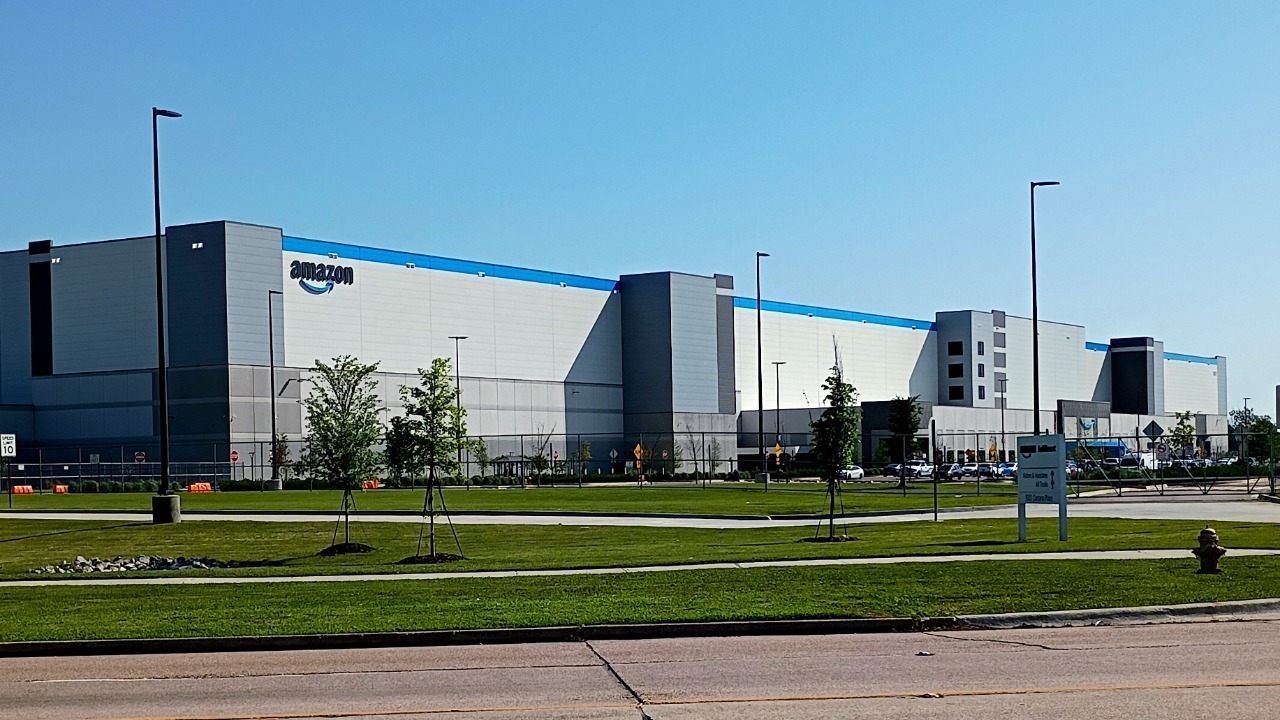
Amazon’s decision to cut 30,000 corporate jobs in the span of a week marks a new high watermark for white‑collar layoffs at a single company, compressing years of restructuring into a few brutal days. The move crystallizes how quickly even the most valuable tech employers can redraw their org charts when strategic priorities shift toward artificial intelligence and leaner margins. It also exposes a widening gap between record sales and the security workers once assumed came with building the digital infrastructure of the global economy.
As the company trims tens of thousands of roles across logistics, payments, gaming and cloud, executives are signaling that the future of Amazon will be smaller, more automated and more centralized around its core platforms. For employees, investors and policymakers, the scale and speed of these cuts raise urgent questions about what “efficiency” really means in an era when a single corporate decision can upend the careers of 30,000 people in seven days.
The week Amazon rewrote the layoff playbook
When Amazon confirmed plans to eliminate 30,000 corporate positions, it effectively compressed a full scale restructuring into a single, concentrated wave. Internal planning described cuts that would hit roughly 10% of the company’s white‑collar workforce, a share that underscores how aggressively leadership is willing to move when it decides entire layers of management and engineering are no longer essential. The figure of 30,000 is not a projection spread over years but a target for a rapid downsizing cycle that redefines what a “mass layoff” looks like in modern tech.
Reporting on the internal headcount math has consistently pointed to that 30,000 figure as the ceiling for this round of cuts, with one analysis noting that Amazon is set to eliminate about 30,000 corporate positions, roughly 10% of its office staff, as part of a sweeping reset of its cost structure and talent mix. Another account framed it as the company’s biggest mass layoff ever, describing how Amazon will reportedly cut 30,000 jobs in a single campaign that touches some of its most strategically important units. Together, those reports make clear that the company is not nibbling at the edges of its org chart but executing a decisive, one‑week pivot in how it wants to be staffed.
From 14,000 to 30,000, and why the numbers keep climbing
The 30,000 figure did not appear out of nowhere. Earlier in the fall, Amazon had already announced plans to cut about 14,000 corporate jobs as it ramped up spending on artificial intelligence and looked for ways to trim costs that have been rising since 2021. That first wave was framed as a targeted adjustment, focused on specific teams and geographies, and it was large enough on its own to rank among the biggest white‑collar layoffs of the year. Yet within weeks, internal documents and state filings showed that the total number of affected roles was already creeping higher.
Regulatory disclosures later confirmed that Amazon’s 14,000-plus layoffs touched almost every part of its sprawling business, including thousands of engineers whose work underpinned everything from retail systems to cloud infrastructure. At the same time, executives were privately acknowledging that the cuts could ultimately reach 30,000, a possibility that was soon echoed in public reporting that said the company had just cut 14,000 jobs and was not done, with total reductions potentially climbing to that 30,000 mark. The rapid escalation from 14,000 to 14,000-plus and then to 30,000 illustrates how quickly a “limited” restructuring can evolve into a full scale overhaul once leadership decides the old headcount baseline no longer fits its strategy.
Inside the 30,000: who is being cut and where
Behind the headline number is a specific map of which teams and locations are absorbing the shock. Planning documents describe a focus on corporate roles across logistics, payments, gaming and cloud, the very units that have powered Amazon’s expansion into shipping, financial services, entertainment and enterprise technology. One detailed breakdown said Amazon plans up to 30,000 corporate job cuts across those core departments, signaling that this is not a narrow cull of underperforming side projects but a rebalancing of the company’s central profit engines.
Additional reporting has emphasized that the cuts are concentrated in office jobs rather than warehouse or delivery roles, with one analysis noting that Amazon plans to cut corporate jobs across its logistics, payments, gaming and cloud units starting as cost pressures mount and leadership looks for ways to protect margins. Another account described how the company will reportedly cut 30,000 jobs in what is expected to be its biggest mass layoff ever, a move that hits some of the same high profile divisions that have defined Amazon’s public image as one of the United States’ largest employers. Taken together, the picture is of a company trimming deeply into its professional ranks while keeping its frontline operations largely intact.
AI, AWS and the new corporate hierarchy
Amazon’s leadership has been explicit that these layoffs are not simply about short term belt tightening but about redirecting resources toward artificial intelligence and cloud computing. Earlier guidance on the initial 14,000 cuts made clear that the company was reducing corporate headcount as it invested more in AI, a tradeoff that reflects a belief that machine learning systems and automation can eventually handle work now done by human managers, analysts and even some engineers. The logic is straightforward: if AI can optimize pricing, logistics and customer service at scale, then fewer people are needed to oversee those functions.
That strategic pivot is most visible inside Amazon Web Services, the cloud division that has long been the company’s profit engine and is now racing to stay ahead in the AI infrastructure arms race. The company has been promoting new generative AI tools and managed services through its AWS platform, positioning them as ways for customers to offload more of their computing and data workloads. Internal commentary on the layoffs has suggested that some roles being eliminated today could eventually be replaced or reshaped by these AI driven products, a point echoed in analysis that noted how the company’s investment in automation and machine learning could eventually displace some roles even as it creates new ones in specialized engineering and product teams.
“It felt like a spreadsheet decision”: workers’ stories
For the people on the receiving end of the 30,000 cuts, the strategic narrative about AI and efficiency often feels abstract compared with the shock of losing a job. Laid off employees have described learning their fate through early morning emails and hastily scheduled video calls, with some saying they had little warning that their teams were on the chopping block. One account collected stories from former staff who said Amazon announced plans in late fall to cut thousands of corporate roles, leaving them to navigate a challenging job market where other tech giants were also trimming headcount.
Those personal accounts highlight how uneven the impact can be across different demographics and career stages. Workers who had joined Amazon straight out of college spoke about suddenly competing with mid career engineers for the same limited openings, while parents described scrambling to secure health coverage and childcare after their severance runs out. A detailed feature that urged readers to Follow Jacob Zinkula captured how Every laid off Jacob and his peers described the experience as disorienting, with some saying they felt like line items in a spreadsheet rather than members of a team. Their stories underscore that behind each percentage point of “efficiency” are thousands of disrupted lives.
Culture, not crisis: what Amazon says is driving the cuts
One of the more striking aspects of this layoff wave is what Amazon’s executives are not blaming. In public and internal messaging, leaders have pushed back on the idea that the 14,000 and 30,000 cuts are a response to financial distress or a sudden collapse in demand. Instead, they have framed the downsizing as a cultural reset, arguing that the company had allowed layers of bureaucracy and overlapping roles to accumulate during years of rapid growth. A legal and employment analysis noted that Amazon recently announced 14,000 layoffs, but company executives are not blaming the downsizing on financial performance, increased AI usage or external shocks, instead pointing to internal expectations around performance and ownership.
That framing sits alongside hard numbers that show the business is still expanding. A breakdown of the company’s latest results highlighted that Amazon’s net sales topped 600 billion in 2024, even as it prepared to cut approximately 14,000 corporate jobs as part of a broader effort to streamline operations. Another overview of the 2025 restructuring, titled Amazon Layoffs 2025: What They Mean for the Labor Market and the Future of Work, argued that Amazon’s 2025 layoffs are once again a reminder that job cuts at large tech firms are not limited to tech or HR and can be driven by internal culture as much as by external pressure. Taken together, the message from leadership is that this is about reshaping how Amazon works, not saving a company in trouble.
How the cuts ripple through the broader labor market
When a company as large as Amazon eliminates 30,000 corporate roles in a week, the impact extends far beyond its own campuses. Labor market analysts have warned that such a concentrated wave of layoffs can flood local job markets in Seattle, Arlington and other tech hubs with experienced professionals all at once, putting downward pressure on salaries and lengthening job searches. One overview of the trend noted that Amazon will cut about 14,000 corporate jobs as the online retail giant ramps up spending on artificial intelligence and continues a broader push to cut costs overall since 2021, a pattern that mirrors similar moves at other logistics and delivery companies.
Specialists who track white‑collar employment say the 2025 cuts are part of a broader recalibration in which employers are rethinking how many people they need in traditional corporate roles as automation improves. A detailed explainer on Why Amazon is cutting so many roles now argued that the layoffs are part of an ongoing effort to streamline operations and refocus on core growth areas, with ripple effects that include increased competition for remaining tech jobs and a shift in which skills are most valued. Another analysis of Amazon Layoffs 2025: What They Mean for the Labor Market and the Future of Work pointed out that these cuts are once again a reminder that large scale job losses are not limited to engineers or HR professionals but can affect product managers, marketers and operations specialists as well.
Investors, regulators and the politics of a 30,000‑job cut
From Wall Street’s perspective, the 30,000 cuts are part of a familiar story: a maturing tech giant trims costs to protect margins and fund its next wave of innovation. Analysts have noted that Amazon plans to cut corporate jobs across logistics, payments, gaming and cloud units as cost pressures mount, a move that many investors interpret as a sign of discipline rather than distress. A concise summary of the restructuring listed as Key Takeaways emphasized that Amazon is planning sweeping job cuts across its core departments starting as early as late October, aligning the move with broader efforts to keep expenses in check while demand normalizes after the pandemic era surge.
Regulators and politicians, however, are likely to view the situation through a different lens. As one of the United States’ largest employers, Amazon’s decision to cut 30,000 jobs in a short window raises questions about how concentrated corporate power can amplify economic shocks. A widely shared report noted that Amazon will reportedly cut 30,000 jobs in its biggest mass layoff ever, underscoring how a single employer’s choices can reshape local economies and tax bases. Another breakdown of the initial 14,000 cuts pointed out that Amazon said it would lay off about 14,000 corporate employees as it invests more in AI, a juxtaposition that could draw scrutiny from lawmakers who are already debating how automation and consolidation are affecting middle class jobs.
What this layoff wave signals about the future of tech work
For workers across the tech industry, Amazon’s 30,000‑person layoff is less an isolated event than a signal of where the sector is heading. The fact that Amazon’s 14,000-plus layoffs touched almost every piece of the company’s business, from retail to cloud, suggests that no function is entirely insulated from restructuring when leadership decides to reset its cost base. A detailed breakdown of those filings showed that thousands of engineers were among the roles eliminated, a reminder that even highly technical positions are vulnerable when companies believe they can do more with fewer people or with different skill sets.
At the same time, the company is doubling down on areas it believes will define its next decade, particularly AI and cloud infrastructure. The 14,000 corporate layoffs tied to AI investment and the subsequent expansion to 30,000 cuts are part of a single story about how Amazon wants to reallocate capital and talent. A video breakdown of the company’s financials noted that Amazon’s net sales topped 600 billion in 2024 even as it prepared to cut approximately 14,000 corporate jobs, illustrating that strong topline growth no longer guarantees job security in a world where efficiency and automation are paramount. For tech workers, the lesson is stark: the next wave of opportunity is likely to favor those who can build, deploy or manage AI and cloud systems, even as traditional corporate roles become more precarious.
The human and digital record of a historic layoff
One of the defining features of this layoff wave is how publicly it has unfolded in real time, with employees, recruiters and observers documenting each twist across social platforms and forums. On Reddit, a widely circulated post labeled BREAKING Amazon layoff 30,000 corporate employees captured the shock inside engineering circles as word spread that the company was planning one of the largest layoffs in its history. Commenters traded notes on which teams were affected, how severance packages compared with past rounds and what the job market looked like for software developers and product managers suddenly back on the hunt.
Traditional media and specialist outlets have filled in the rest of the picture, from the granular breakdowns of WARN filings to the human stories of people packing up their desks. A detailed explainer on how the 14,000 cuts could ultimately reach 30,000 walked through the internal scenarios that led to the current totals, while another analysis of mass Amazon layoffs attributed the decisions to culture rather than financial woes or increased AI usage, even as it acknowledged that hundreds of thousands more employees remain globally. A legal commentary on mass Amazon layoffs attributed to culture underscored how unusual it is for a company to tie cuts of this magnitude to internal expectations rather than external shocks. Together, those digital traces form a record of how, in the span of seven days, Amazon set a new extreme for corporate layoffs and forced the rest of the tech world to confront what that level of flexibility means for the future of work.
More From TheDailyOverview

Grant Mercer covers market dynamics, business trends, and the economic forces driving growth across industries. His analysis connects macro movements with real-world implications for investors, entrepreneurs, and professionals. Through his work at The Daily Overview, Grant helps readers understand how markets function and where opportunities may emerge.