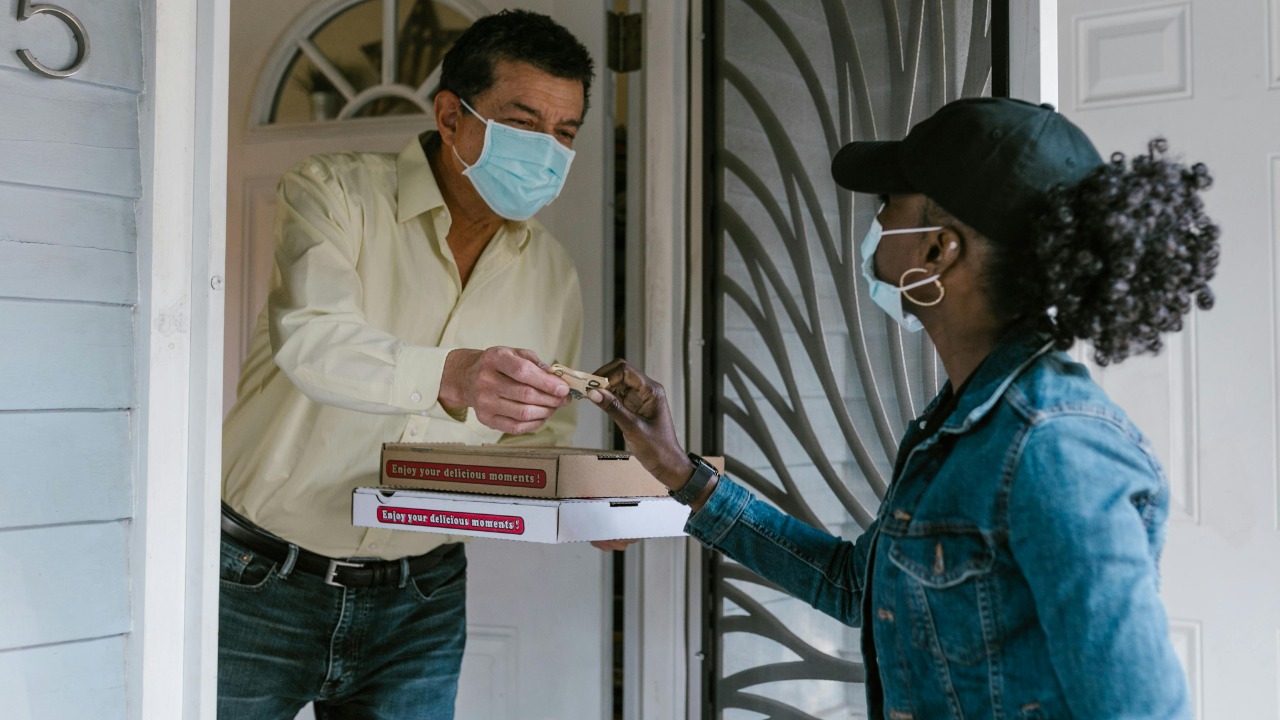
Across the country, Americans are discovering that the price of a simple pizza delivery now comes loaded with hidden fees, aggressive prompts, and what many describe as outright tipping tricks. What used to be a straightforward exchange of cash at the door has turned into a maze of service charges and digital nudges that leave customers feeling cornered and drivers still underpaid. The anger is not just about money, it is about the sense that everyone is being played.
At the center of the frustration is a new kind of “tipping scam” that lives in apps, card readers, and fine print, where customers are pushed to pay more while never quite knowing who actually gets the extra dollars. As delivery platforms and pizza chains lean harder on tips to subsidize low base pay and rising costs, the backlash is growing louder, from viral videos to furious social media posts and calls to overhaul the system entirely.
The new delivery math: fees up, trust down
The modern pizza order often starts on a delivery app that looks convenient but quickly piles on costs. A customer might see a modest menu price, then watch the total balloon with a delivery fee, a service fee, and taxes before they are even asked for a tip. On platforms like Uber Eats, that final tipping screen arrives after a series of markups that already pushed the bill far beyond what a phone order to a neighborhood shop used to cost. By the time the driver rings the doorbell, the customer may have paid a premium without any clear sense of how much of it reaches the person doing the driving.
Inside local debates, the confusion is obvious. In one heated Facebook discussion about food delivery costs, a poster named Jan tried to explain that the “delivery fee” is not a tip at all, arguing that “the owner uses that money to pay their drivers,” while others pushed back that this still leaves drivers dependent on extra cash from customers. Another commenter, Mary Feline, bluntly concluded that if the owner is charging a delivery fee, “he is getting paid either way,” and the driver should be compensated properly through a paycheck rather than guilt-driven tipping. That thread, which also featured people insisting that “you are supposed to tip” and others saying they “usually tip based on service,” captured how little consensus there is about what all these charges really mean, even among regulars in a local pizza group.
When “no tip” is literally covered up
If the apps are subtle, some in-store tactics are anything but. In one viral complaint from a pizza-focused Facebook community, a customer named Apr described walking into a shop to pick up a $20.95 meal and discovering that the card reader had the “NO TIP” button literally “COVERED” with a sticker. Faced with a screen that only offered pre-set percentages and no visible way to opt out, Apr said they were “absolutely livid,” calling the setup a “scam circus” and vowing never to return after feeling forced into tipping on a counter order that involved no table service and no delivery. The detail that the total was exactly $20.95, and that the missing “NO TIP” option was physically “COVERED,” became a rallying point for others who felt similarly cornered by digital prompts.
That story resonated because it captured a broader shift in how tipping is presented. Instead of a quiet line on a paper receipt, customers now face touchscreens that default to high percentages, hide the skip button, or, in Apr’s case, obscure “NO TIP” altogether. For many, the issue is not generosity but consent: they want the choice to tip based on service, not because a machine has been rigged to steer them toward paying more. The anger in that Facebook post was less about the few extra dollars and more about the feeling that the system was designed to trap them.
Drivers caught in the middle of tipping wars
While customers complain about being squeezed, drivers often feel just as exploited, and the tension between the two sides is increasingly public. In one widely shared video, a Door Dash driver in Texas confronted a woman after delivering her food, telling her that “a 25% tip” was not enough and criticizing the size of her house compared with the tip she left. The clip, which showed the driver lecturing the customer at her front door, quickly spread online and led to the driver losing access to the platform. For many viewers, the incident crystallized how delivery workers, under pressure from low base pay and algorithmic incentives, are pushed into awkward and sometimes hostile conversations about tips, as seen in the original video.
Another report on the same encounter highlighted the driver’s remark that it was “a nice house for a $5 tip,” a line that became shorthand for the resentment some workers feel when they believe customers are under-tipping. That coverage also noted that the DoorDash driver was ultimately fired, even as the episode sparked a broader debate about “tipping fatigue” and new rules for how Door Dash structures pay. In a separate broadcast, a station revisited the story of a worker who delivered a $20 pizza to a woman in Texas and made “snarky comments” about the tip, only to see the footage go viral and his job disappear. Together, the $5 remark, the $20 pizza, and the Texas setting underscored how a single doorstep exchange can now become a national flashpoint once it hits social media and local news.
Tip baiting, reversals, and the feeling of being scammed
On the other side of the equation, some customers are using the flexibility of apps to play their own games with tips, and drivers say they are paying the price. Workers on Instacart have described a pattern where customers leave large tips upfront to get faster service, then quietly change the amount to $0 after the groceries or takeout arrive. This practice, often called “tip baiting,” leaves drivers who spent time and gas on an order suddenly shortchanged, and it feeds a sense that the entire system is rigged against the people doing the work. Reports from Instacart drivers describe customers who exploit the option to adjust tips after delivery, turning what was supposed to be a reward into a bait-and-switch.
For drivers, this behavior feels indistinguishable from a scam, even if it is technically allowed by the app’s rules. They accept orders based on the promised payout, only to discover later that the tip has vanished and the trip barely covers their costs. That dynamic mirrors the frustration customers feel when they see “service fees” and “delivery fees” that do not clearly go to workers. In both cases, the lack of transparency breeds suspicion, and each side starts to see the other as the problem rather than the platforms that designed the system. The anger over tip baiting is one more sign that the current model is eroding trust on all sides.
How pizza chains and platforms shifted the burden
Behind the scenes, the economics of pizza delivery have changed dramatically, and big chains have leaned on third-party services to cut their own risk. In California, for example, major brands like Pizza Hut have turned to companies such as DoorDash to handle deliveries, a move that lets them avoid maintaining their own fleets and paying drivers directly. One industry analysis noted that rising labor costs pushed chains to outsource, with some California pizza operations now fully integrated into DoorDash logistics. That shift means the familiar pizza box on the doorstep may now be the end point of a complex chain of contractors, fees, and algorithms rather than a simple run by a shop employee.
As the business model moved toward gig work, tipping became even more central to driver pay. Guidance from catering and delivery experts still frames 10 to 15 percent, or at least $5, as a standard tip for drivers who bring food to homes or offices, reinforcing the idea that gratuities are a core part of their income. Etiquette advice aimed at consumers stresses that You “should absolutely tip food delivery drivers,” whether they are bringing pizza or other meals, and suggests that a few extra dollars is a “sufficient tip” in many cases. Yet those norms, laid out in resources like tipping guides and etiquette advice, collide with a reality where customers already feel overcharged before they ever reach the tip line.
The backlash: “End tipping” and legal gray zones
As the friction grows, a vocal segment of Americans is calling for the entire tipping model to be scrapped, at least for delivery. On Reddit, users in communities like r/EndTipping argue that the responsibility for fair pay should rest squarely on employers, not on customers who are already paying delivery and service fees. One commenter, identified as a Top 1% Commenter, put it bluntly, saying that the customer’s job is to pay the listed price and “the rest is for the employer and employee to work out between themselves.” That sentiment, echoed in a thread titled “They have no idea,” reflects a belief that the current system lets companies double dip by charging fees while still expecting tips, a frustration that has become a recurring theme on r/EndTipping.
At the same time, some of the more aggressive tactics around tipping raise questions about legality, even if they do not always cross the line into criminal fraud. Legal explainers note that “scamming” is not a single defined offense, and that the consequences depend heavily on how a scheme is structured and whether it involves deception that violates specific statutes. A company that hides a “NO TIP” button or designs a confusing fee structure might be acting in bad faith without technically committing a crime, while a customer who promises a large tip to secure faster service and then changes it to $0 may be exploiting a loophole rather than breaking the law. Analyses of online scams by groups such as Spokeo emphasize that the legal system often lags behind new digital practices, leaving consumers and workers to navigate a murky landscape where something can feel like a scam without being clearly illegal.
Why pizza tipping fights keep going viral
Part of the reason these disputes keep exploding online is that pizza delivery has long been a cultural touchstone for debates about fairness and respect. Years before the current wave of app-based outrage, a car dealership staff humiliated a pizza delivery driver over a $7 tip, mocking him on camera and insisting they had already paid enough. When the footage surfaced, the internet turned on the dealership, and the backlash became a classic story of online “justice,” with viewers rallying to defend the driver who had been shorted and shamed over those $7. That episode, documented in detail by coverage of the, showed how quickly public opinion can swing when people feel a worker has been treated unfairly.
More From The Daily Overview
*This article was researched with the help of AI, with human editors creating the final content.

Cole Whitaker focuses on the fundamentals of money management, helping readers make smarter decisions around income, spending, saving, and long-term financial stability. His writing emphasizes clarity, discipline, and practical systems that work in real life. At The Daily Overview, Cole breaks down personal finance topics into straightforward guidance readers can apply immediately.
