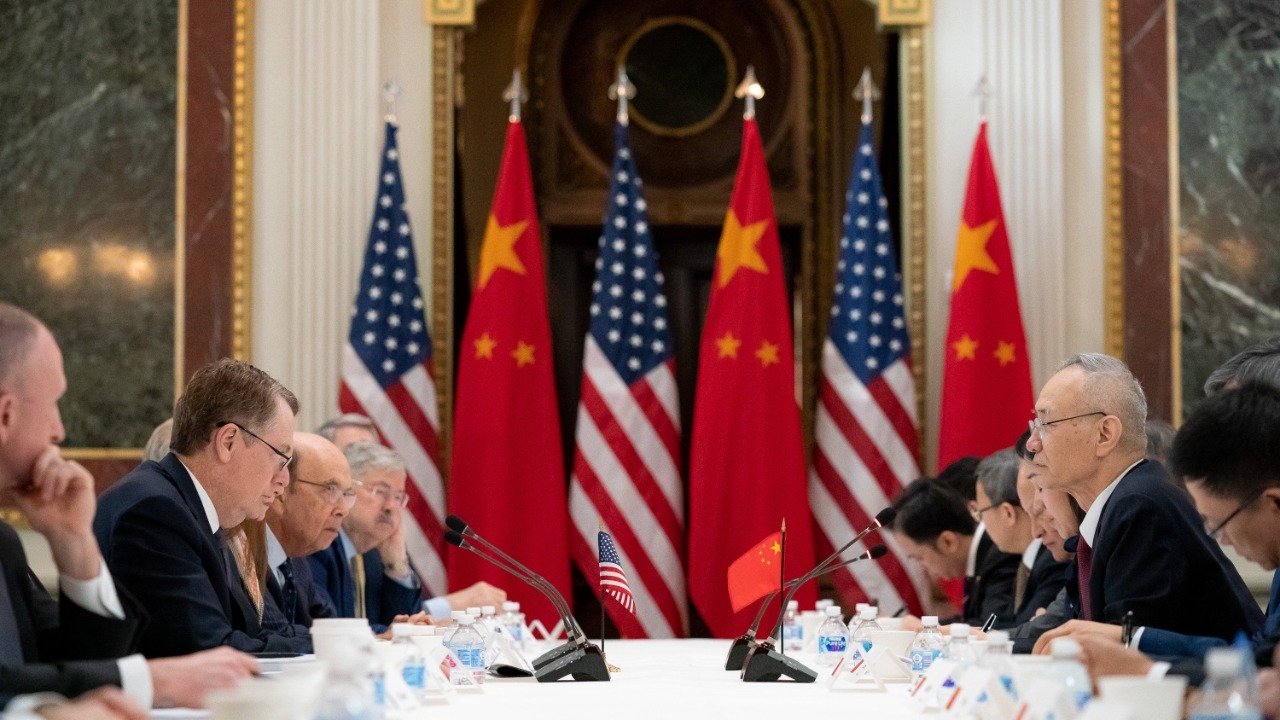
China’s reported move to push its banks out of United States government debt is colliding with one of the loudest inflation warnings on Wall Street. The combination of Beijing trimming its exposure to Washington’s IOUs and Peter Schiff talking about “soaring” prices is forcing investors to reassess how safe Treasurys and the dollar really are. I see a story that is as much about geopolitics and confidence as it is about bond yields and gold charts.
At the same time, the benchmark cost of US borrowing is slipping, not spiking, which shows how conflicted markets are about what comes next. Traders are watching every signal from Beijing, the Federal Reserve and the White House while trying to decide whether this is the start of a slow shift away from the dollar or just another scare that will fade once the next data release hits the screens.
China’s quiet retreat from US Treasurys
Beijing’s regulators have reportedly told major lenders to cut back on US government debt, a step that goes beyond routine portfolio tweaking. According to accounts of the directive, Chinese financial authorities instructed banks to limit new US Treasury purchases and gradually reduce existing exposure, effectively nudging the system to lean away from Washington’s bonds without triggering a disorderly fire sale. I read that guidance as a signal that the Chinese leadership wants less vulnerability to US fiscal and political shocks, and is willing to accept lower liquidity or higher risk elsewhere to get it, a shift that is detailed in one summary of the Chinese Treasury move.
Separate reporting reinforces that picture, describing how China has directed banks to cut US Treasury holdings as part of a broader reassessment of dollar assets. The same accounts link the policy to concerns about U.S. fiscal and political upheavals, suggesting that Beijing is factoring in not just debt levels but also the risk of sanctions or asset freezes in a more confrontational era. In that context, the decision by China to lean on its banks to reduce exposure to Treasury debt looks less like a short term trade and more like a strategic hedge against a more volatile relationship with Washington.
A geopolitical warning wrapped in a bond trade
For Beijing, telling banks to step back from US bonds is not only about returns, it is also about leverage. When a major creditor like China asks its institutions to dump or at least curb Treasurys and pause new purchases, it is effectively reminding Washington that its borrowing habit depends on foreign confidence. One analysis framed China asking its banks to move away from Treasuries and other dollar assets as a geopolitical warning, a way of signaling that financial ties can be tightened or loosened in response to strategic tensions.
That message lands at a time when the United States is already wrestling with questions about debt sustainability and the long term role of the dollar. If a large holder like China is seen to be structurally reducing its exposure, other sovereign investors may at least consider diversifying more aggressively, even if they move slowly. I see this as part of a broader pattern in which financial decisions, from reserve composition to payment systems, are increasingly used as tools in geopolitical competition rather than being treated as neutral market choices.
How bond markets are digesting the China shock
Despite the alarm around China’s reported shift, US government bond yields have not exploded higher. The yield on the US 10 Year Note Bond Yield has actually eased to 4.19%, a move that represents a 0.03 percent decrease from the previous close, according to recent market data. That suggests that, at least for now, other buyers are stepping in to absorb any selling and that investors still see Treasurys as a core safe asset, a dynamic reflected in the latest Year Note Bond figures.
Even so, traders are clearly on edge. Reports describe how US Treasuries have been under pressure from several directions, including spillover from a politically driven selloff in UK government bonds and a jumbo dollar issuance that added to supply. At the same time, there is evidence that China’s instruction to banks to curb purchases has weighed on sentiment, contributing to a more fragile tone in US Treasuries even as yields have remained relatively stable since late 2023.
Macro crosscurrents: yields, data and the consumer
While geopolitics grab the headlines, the day to day direction of bond yields is still being driven by economic data and expectations for the Federal Reserve. Investors are watching the 10 year Treasury yield inch lower as they look ahead to key releases, including figures on Retail sales for December that will help clarify how resilient household spending remains. Market commentary notes that the 10 year benchmark has been drifting as traders position for both the Retail numbers and fresh consumer price data, a pattern that shows up in coverage of the latest Treasury moves.
For ordinary Americans, the interplay between yields and data will ultimately show up in borrowing costs and inflation. If long term rates stay anchored even as China trims its holdings, mortgage and auto loan rates may remain manageable, but any renewed surge in yields could quickly feed into higher monthly payments. At the same time, softer Retail sales would point to a consumer that is already stretched, which could make any new inflation shock, whether driven by energy, food or currency shifts, even harder to absorb.
Peter Schiff’s “soaring” price warning
Into this mix steps Peter Schiff, who has built a career as an outspoken critic of US fiscal and monetary policy. In recent commentary, he has issued one of his starkest alerts yet, warning of a total collapse of the US dollar and predicting that consumer prices could soar as the system adjusts to what he calls a post dollar reality. One social media post described him as an Economist and long time market skeptic, highlighting his view that the current trajectory of debt and money creation is unsustainable and pointing to the need to prepare for a post dollar world.
Schiff has been equally blunt in more detailed interviews, arguing that the economy is only going to get worse in 2026 as policymakers keep relying on cheap money to keep the whole system afloat. In one discussion, he was introduced as Peter Schiff, economist and CEO of Euro Pacific Asset Management, and his warnings were juxtaposed with the performance of various digital assets, including tokens priced at $0.001581 with a 1.47% move, another at $0.0005471 with a 10.30% gain, and a third at $0.01512. I read that pairing as a way of underscoring how speculative markets have become while a prominent CEO is warning that the traditional economy is sliding toward a deeper crisis.
From Treasurys to gold: the Schiff playbook
Schiff’s answer to these risks is not subtle. He has been urging investors to shift away from dollar denominated assets and into hard money, especially gold and silver, arguing that the 2026 environment demands a different kind of diversification. One recent analysis framed his message as The Peter Schiff Warning, emphasizing Why the current Economic Forecast Demands a Shift toward Precious Metals and highlighting his view that traditional portfolios are too exposed to inflation and currency debasement. In that telling, a larger allocation to Precious Metals is not a niche trade but a core defensive move.
Market action has given him some support. Gold and silver have been rallying as the dollar shows signs of weakness, and Schiff has argued that this trend is set to continue. In one interview, he said he expects silver prices to trend higher from here, although he cautioned that it may take several months before the metal gets back above the 120 level, while also noting that gold is trading above 5,000 in his bullish scenario. Those comments, captured in coverage of the latest Feb rally, show how he connects the dots from central bank policy and foreign selling of Treasurys to a potential surge in precious metals.
What it all means for the dollar era
Put together, China’s reported retreat from US government debt and Schiff’s inflation alarm paint a picture of a financial order under strain, but not yet in free fall. On one side, Chinese regulators are quietly telling banks to reduce their reliance on Treasurys, a move that underscores how geopolitical risk is now baked into portfolio decisions. On the other, a high profile critic like Schiff is warning that the same debt that makes Washington vulnerable to foreign creditors will eventually trigger the kind of “soaring” prices that erode domestic purchasing power, a concern echoed in coverage that links his outlook to consumer prices.
For now, the bond market’s calm suggests that the dollar’s status as the world’s reserve currency is intact, even if it is being questioned more loudly. I see a world in which central banks and investors are slowly diversifying, from Treasurys into other assets and from cash into metals, while still relying on US markets as the core of the system. Whether that gradual shift turns into something more abrupt will depend on how Washington manages its fiscal path, how Beijing balances financial pragmatism with strategic signaling, and whether the inflation that Schiff fears actually materializes in the everyday prices that households pay.
More From The Daily Overview
*This article was researched with the help of AI, with human editors creating the final content.

Grant Mercer covers market dynamics, business trends, and the economic forces driving growth across industries. His analysis connects macro movements with real-world implications for investors, entrepreneurs, and professionals. Through his work at The Daily Overview, Grant helps readers understand how markets function and where opportunities may emerge.

