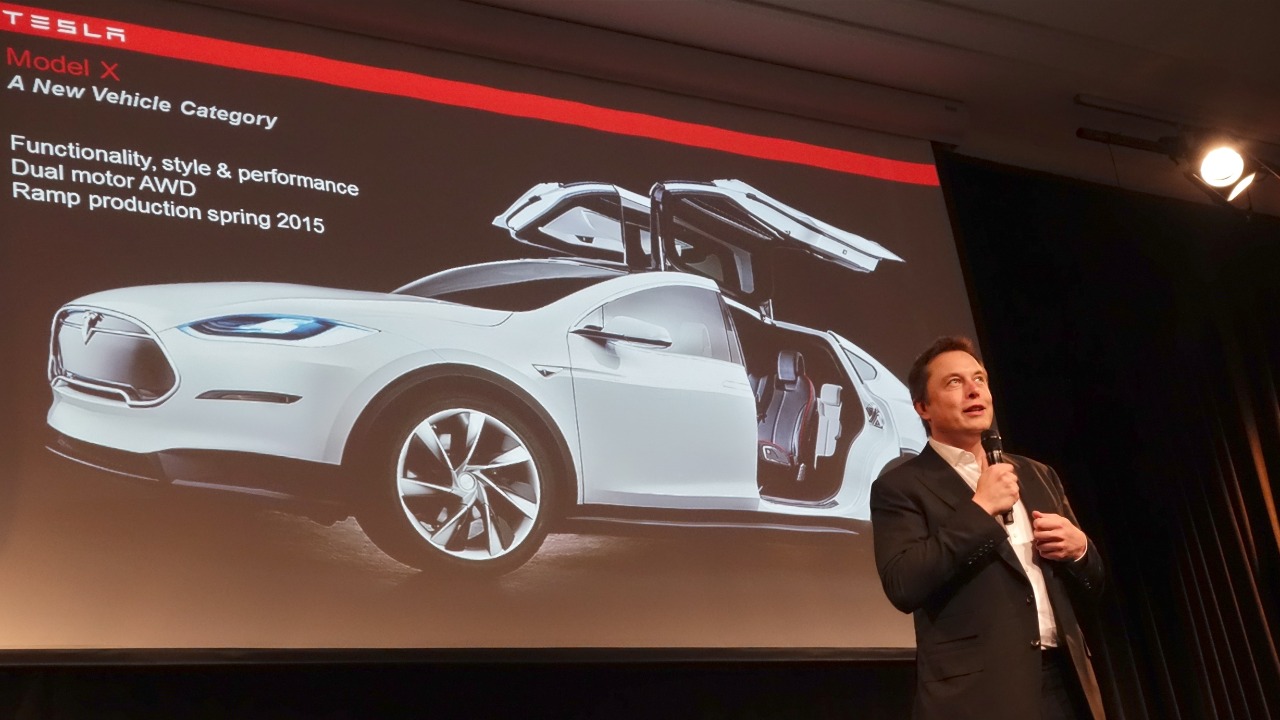
Tesla’s stock is back in the spotlight as Wall Street weighs whether the company’s long-promised robotaxi business is finally close enough to matter for valuation. One analyst now argues that if Tesla can show credible progress on fully autonomous ride-hailing, the shares could climb roughly a quarter from current levels as investors re-rate the company as a software and services platform rather than a pure automaker. The debate turns on a simple question with complex implications: how much of Tesla’s future value should be tied to a robotaxi network that does not yet exist at commercial scale.
Why one analyst sees 25% upside tied to autonomy
I see the latest bullish call on Tesla as a bet that the market is still underpricing the company’s software and data assets relative to its car-manufacturing footprint. The analyst’s 25% upside case hinges on Tesla convincing investors that its Full Self-Driving system is close to powering a paid robotaxi service, which would unlock high-margin recurring revenue on top of vehicle sales. That thesis leans on the idea that Tesla’s installed base of vehicles equipped with the necessary hardware can be upgraded via software to participate in a networked fleet, creating leverage that traditional automakers cannot easily match, a view reflected in recent TSLA forecasts.
Under this framework, the stock’s potential move is less about short-term delivery numbers and more about a shift in narrative from cyclical car demand to platform economics. The analyst points to Tesla’s ongoing investment in AI training infrastructure and its decision to keep pushing advanced driver-assistance features directly to customers as evidence that the company is positioning itself as a mobility services provider. That perspective is consistent with recent coverage that highlights Tesla’s focus on autonomy and software as key drivers of long-term value, including detailed breakdowns of its robotaxi ambitions and the way those ambitions are starting to shape investor expectations.
How Tesla’s robotaxi push is intensifying
For the 25% upside scenario to be credible, Tesla has to show that its robotaxi push is not just marketing but a concrete product roadmap. I read the company’s recent moves as an attempt to do exactly that, from scheduling high-profile autonomy events to emphasizing Full Self-Driving progress on earnings calls. Reporting on Tesla’s planned robotaxi unveiling describes a dedicated event focused on a purpose-built vehicle and network strategy, signaling that management wants investors to view autonomy as a distinct business line rather than a feature add-on, a message underscored in previews of the upcoming robotaxi event.
The operational side is evolving in parallel, with Tesla continuing to collect real-world driving data from its fleet and to roll out software updates that expand automated driving capabilities in more markets. Analysts tracking the company’s AI spending note that Tesla is ramping up investment in training compute and in-house chips, a necessary step if it intends to support a large-scale autonomous network. Coverage of Tesla’s broader AI and autonomy strategy, including its work on self-driving software, reinforces the impression that the robotaxi push is becoming central to how the company allocates capital and frames its future.
Risks, regulatory hurdles and what could derail the bull case
Even if I accept the logic behind a robotaxi-driven re-rating, the path to that upside is crowded with execution and regulatory risk. Tesla still needs to prove that its system can operate safely without human supervision in complex urban environments, and regulators will have to sign off on commercial deployment at scale. Recent reporting on autonomous vehicle oversight highlights how safety incidents and uneven state-level rules have slowed other players, a backdrop that will also shape Tesla’s rollout and is reflected in analyses of US self-driving regulation.
There is also the competitive landscape to consider, since Tesla is not alone in chasing robotaxi economics. Companies focused on geofenced robotaxi services are already operating limited commercial routes, and traditional automakers are partnering with tech firms to share the heavy lift of autonomy development. If rivals can demonstrate safer or more reliable performance, or if regulators favor more conservative deployment models, Tesla’s narrative advantage could narrow. Coverage comparing Tesla’s approach with other robotaxi competitors underscores that the market is still wide open, which means the 25% upside case is as much about Tesla out-executing its peers as it is about hitting internal milestones.
More From TheDailyOverview
- Dave Ramsey says these two simple questions show whether you’re rich or poor
- Retired But Want To Work? Try These 18 Jobs for Seniors That Pay Weekly
- IRS raises capital gains thresholds for 2026 and what’s new
- 12 ways to make $5,000 fast that actually work

Elias Broderick specializes in residential and commercial real estate, with a focus on market cycles, property fundamentals, and investment strategy. His writing translates complex housing and development trends into clear insights for both new and experienced investors. At The Daily Overview, Elias explores how real estate fits into long-term wealth planning.

