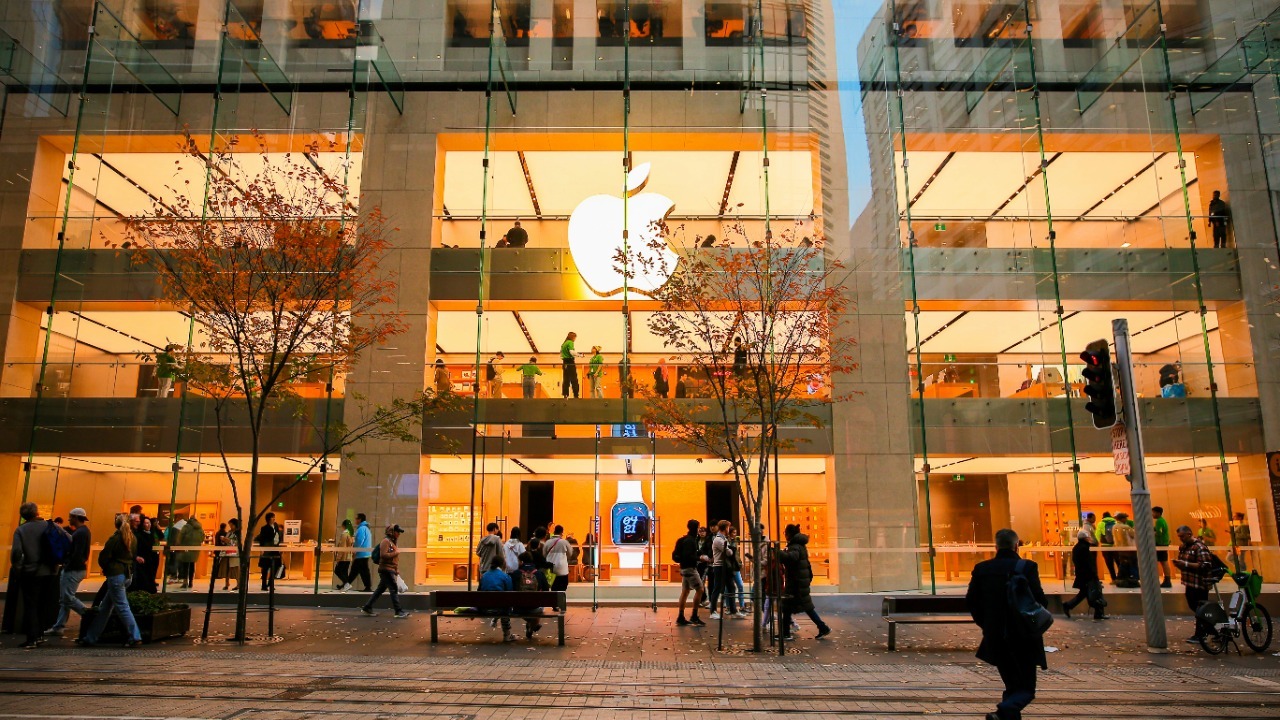
For two decades, Apple turned a handful of products into one of the most reliable wealth engines in markets, compounding the iPhone era into a services and wearables empire that reshaped consumer tech. That run is now entering a more complicated phase, as smartphone growth slows and investors look for the next leg of expansion. The company is responding not with a single moonshot but with a web of smaller, tightly integrated bets that could collectively define its next 20 years.
The iPhone engine is slowing, not stalling
The starting point for any honest look at Apple’s future is the iPhone, the product that minted much of the wealth of the past generation and now faces a more mature market. Research on the smartphone business notes that iPhone growth has cooled, even as Apple has been constantly able to “re-invent” and “innovate” around pricing and positioning to keep the franchise relevant. That mix of slower unit expansion and continued strategic creativity is the backdrop for everything else the company is trying to build.
What I see now is a deliberate shift from chasing sheer volume to extracting more value from each customer already inside the ecosystem. The same research points out that even if Apple has not delivered a once-in-a-generation hit on the scale of the original iPhone, it has repeatedly found ways to make premium features and services available in ways not easily accessible previously, from installment plans to trade-in programs. That approach turns a plateauing hardware category into a platform for higher-margin software, subscriptions, and accessories, which is why the next phase is less about replacing the iPhone and more about surrounding it.
Tim Cook’s era of many small bets
Under Apple Chief Executive Officer Tim Cook, the company is leaning into a portfolio of smaller, adjacent products instead of waiting for a single blockbuster to carry the stock for another decade. Reporting from Nov 9, 2024 describes how Apple Chief Executive Officer Tim Cook opened a product launch event that highlighted new glasses, home devices, mixed reality headsets, and AirPods, captured by Photographer David Paul Morris for a newsletter called The Starters. With the addition of these categories, the company is effectively building a mesh of experiences that keep users inside its hardware and software loop, even if no single device matches the iPhone’s peak impact.
I read that strategy as a conscious hedge against the risk of chasing one giant, speculative project. Instead of betting the balance sheet on a car or another all-or-nothing gamble, Apple is layering incremental hardware like advanced AirPods, home accessories, and head-worn displays on top of its existing base. The key is that each of these products is designed to plug into the same services, identity, and payment infrastructure, so every new device amplifies the value of the others. In that sense, the next wave of wealth creation is more likely to come from the compounding effect of many interlocking bets than from a single “next iPhone.”
AI and on-device intelligence as the new glue
If hardware is the visible surface of Apple’s next chapter, artificial intelligence is the invisible layer that could determine how much value those devices actually create. A detailed review dated Jul 10, 2025 describes how Apple AI Strategy is built around on-device processing, positioning the company for an Analysis of Dominance in what that report calls Device Intelligence, based on work by Klover. By keeping more AI workloads on the iPhone, iPad, and Mac instead of the cloud, Apple is trying to turn privacy and responsiveness into competitive advantages that are hard for the fragmented Android ecosystem to match.
In practical terms, that means the company is less focused on splashy chatbot demos and more on making everyday interactions smarter, from photo editing and notifications to health insights and accessibility tools. The same analysis argues that Apple’s on-device AI strategy could give it a structural edge in latency, battery life, and data protection, which are exactly the factors that matter when intelligence is woven into every tap and glance. If that thesis holds, the wealth story shifts from selling more screens to charging a premium for devices that quietly feel better to use because the intelligence is built in rather than bolted on.
Beyond the iPhone: glasses, foldables, and mixed reality
The most visible expression of Apple’s diversification is the push into new form factors that extend the ecosystem beyond the slab of glass in your pocket. Coverage of upcoming hardware notes that Apple is preparing a Foldable iPhone alongside other devices, with one commentator saying they have been very happy with their new iPhone Air but are already looking ahead to the next wave. The same reporting points to Apple Glasses as a potential extension of how the Apple Watch works today, suggesting a future where notifications, navigation, and contextual information move from wrist to face.
That roadmap lines up with the broader narrative that Apple is not just adapting to market shifts but trying to turn early revenue difficulties in new categories into long-term strengths. A separate analysis from Nov 5, 2024 argues that Although some could see this as a warning, it really emphasizes Apple and its strategy shift toward ground-breaking invention around devices like the Vision Pro headset and Apple Intelligence. In that framing, early mixed reality products are less about immediate profits and more about seeding a platform that could eventually host new kinds of apps, media, and commerce, much as the original iPhone did for mobile software.
Emerging markets and services as the quiet growth engine
While new devices grab headlines, the quieter story is how Apple is trying to squeeze more value out of markets and customers it has not fully penetrated. A report from May 31, 2023 highlights how the company is leaning on Services as a long-term opportunity to monetize its installed base, even as it navigates topics as varied as Best Covid and Travel Insurance Plans in broader coverage. According to Apple’s management, the company has been explicit about the potential for hundreds of millions of new users in countries like India, where the smartphone market is still expanding and average revenue per user has room to rise.
I see that emerging markets push as tightly linked to the services narrative. Once an iPhone or iPad is in a customer’s hand, Apple can layer on subscriptions for music, video, games, storage, and financial products, all of which carry higher margins than hardware. The same reporting notes expectations that the smartphone market in India could reach hundreds of billions of dollars by 2025, which would give Apple a much larger base to sell those services into. If that scenario plays out, the company’s next wave of wealth creation may come less from selling ever-pricier flagships in saturated markets and more from turning first-time buyers in places like India into long-term subscribers.
What the stock market is really pricing in
Investors have already started to handicap how this mix of slowing iPhone growth, new devices, AI, and services will translate into returns. An analysis titled Apple Stock In 2025, framed as a Prediction On Where It and its Price May Head, digs into AAPL and its Stock Key Metrics, including how revenue has grown and how the company has used stock splits such as a price 4-for-1 move to keep shares accessible. That kind of breakdown underscores how much of Apple’s valuation already assumes it can keep milking the iPhone while finding new profit pools in services and accessories.
From my vantage point, the market is effectively betting that Apple can thread a narrow needle. On one side is the risk that the company leans too hard on financial engineering and incremental upgrades, which could leave AAPL vulnerable if consumer demand softens or regulators clamp down on its app store economics. On the other side is the possibility that the combination of on-device AI, emerging markets, and new form factors like foldables and glasses unlocks fresh revenue streams that justify today’s multiples. The stock debate is really a referendum on whether Apple’s culture of disciplined iteration can still produce outsized returns in a world where the easy growth has already been harvested.
The near-term roadmap: 2026 and beyond
One way to gauge how Apple plans to navigate that tension is to look at the concrete product pipeline already taking shape. Reporting from Nov 1, 2025 says the early portion of the year should see the release of the iPhone 17e, an iPad (12th-generation) with an A18 chip, and an iPad Air refresh, with more ambitious hardware to follow later in the year. The same coverage notes that In the fall, the company is expected to introduce additional devices and even explore using a mixed reality headset as a camera in 2026, signaling that the experimentation around new interfaces is not slowing down.
Those specifics matter because they show Apple is not pausing to regroup while it figures out the next big thing. Instead, it is layering evolutionary updates like the iPhone 17e and A18-based tablets on top of more speculative work in mixed reality and wearables, all while deepening its AI and services stack. If the past 20 years were defined by a single product that transformed the company’s fortunes, the next era looks more like a portfolio play, where wealth is minted not by one breakthrough but by the compounding effect of many interconnected moves executed with the same discipline that made the iPhone era so lucrative.
More From TheDailyOverview
- Dave Ramsey warns to stop 401(k) contributions
- 11 night jobs you can do from home (not exciting but steady)
- Small U.S. cities ready to boom next
- 19 things boomers should never sell no matter what

Grant Mercer covers market dynamics, business trends, and the economic forces driving growth across industries. His analysis connects macro movements with real-world implications for investors, entrepreneurs, and professionals. Through his work at The Daily Overview, Grant helps readers understand how markets function and where opportunities may emerge.

