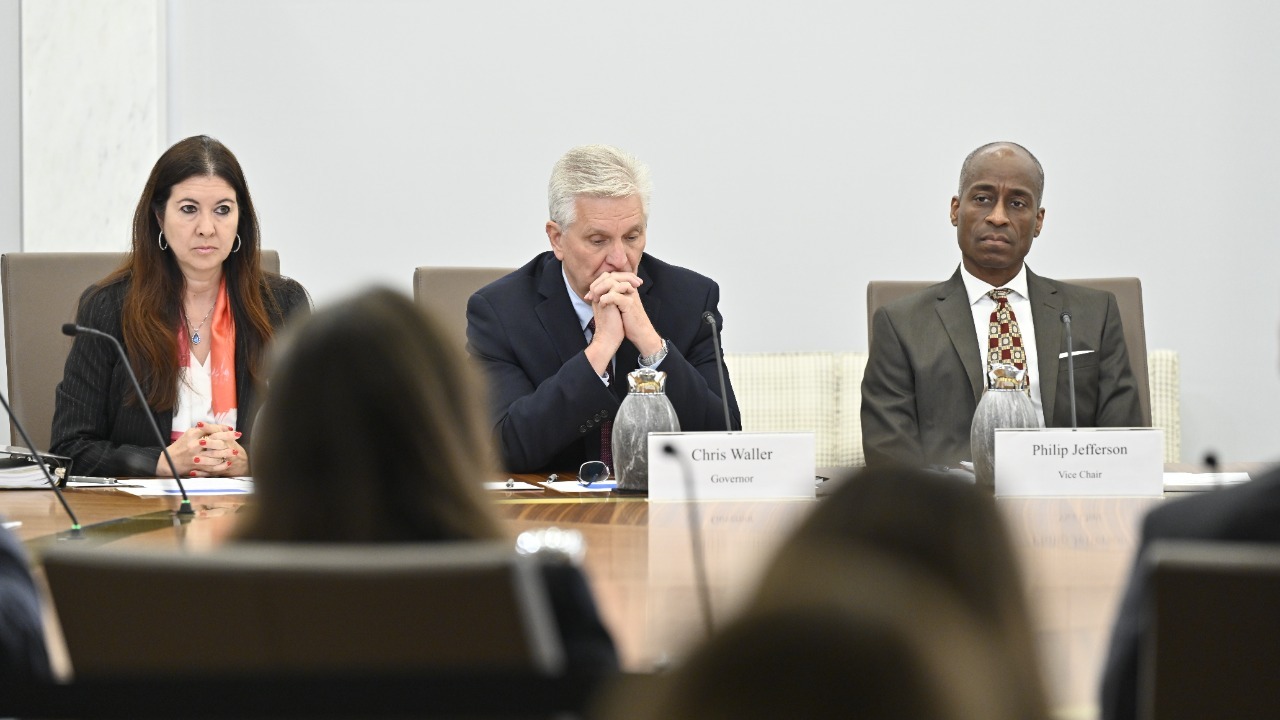
Fresh minutes from the Federal Reserve’s latest policy meeting point to a central bank that is far from united on whether to trim interest rates again in December, despite mounting political and market pressure for cheaper money. The record shows that while many policymakers still see scope for further easing over time, support for moving as soon as the December gathering is notably fragile.
Instead of a clear glide path to another cut, the documents reveal a committee wrestling with conflicting signals from inflation, growth and the labor market, and increasingly wary of overreacting to short term data. That tension is now rippling through Wall Street forecasts and rate markets, which are rapidly repricing the odds that the Fed will stay on hold into year end.
Fed minutes expose “strongly differing views” on December
The most striking takeaway from the minutes is how explicitly they describe a split over the timing of the next move. Officials acknowledged that “Participants expressed strongly differing views” on whether to cut at the December 9 to December 10 meeting, with some arguing that the central bank had already done enough for now and others warning that waiting too long could risk a sharper slowdown later. That language, captured in the formal record of the Federal Open Market Committee, underscores that the debate is no longer about the direction of policy in the abstract but about whether a December step is justified at all, a nuance reflected in the way Participants are described as weighing a rate cut in December.
Within that divide, the minutes indicate that “Most participants noted that, against the backdrop of still elevated inflation and uncertainty about its trajectory, it would be prudent to proceed carefully,” a formulation that helps explain why backing for a December move is so tepid. While “most” members of the committee still judged that additional easing would likely be appropriate over time, they were less convinced that the December calendar slot was the right moment, a hesitation that tracks with reporting that Most participants noted that, against a backdrop of political and market scrutiny, moving too quickly could backfire.
Most officials want more cuts, but not necessarily now
Beyond the December question, the minutes make clear that the broader bias on the committee still leans toward additional easing over the coming year. Policymakers discussed scenarios in which growth slows further and inflation edges closer to the Fed’s target, conditions under which “Most officials supported more rate cuts but not necessarily in December,” a distinction that matters for investors trying to time the next move. That nuance is captured in the summary that the Fed minutes: Most officials supported more rate cuts but not an immediate step at the upcoming meeting.
At the same time, another strand of the discussion stressed that while “most” members saw room for further easing, a vocal minority worried that cutting again in December could send the wrong signal about the Fed’s confidence in the expansion. That tension is echoed in separate reporting that, while “most” members of the Fed thought lowering rates at the December meeting would be appropriate as the central bank navigates a complex backdrop, others argued that the committee should wait and reassess after more data, a dynamic captured in accounts noting that While “most” members of the Fed leaned toward another 25 basis point cut, the consensus on timing was far weaker.
Deepening fault lines inside the Federal Reserve
The minutes also highlight how unusually sharp the internal disagreements have become. Many officials at the Federal Reserve did not think the central bank should lower interest rates in December when they met earlier this fall, and several were against a cut altogether, a level of resistance that signals a meaningful hawkish bloc. That resistance is captured in accounts noting that Many officials at the Federal Reserve were skeptical of the case for another move and saw risks in appearing too reactive.
Outside the minutes themselves, the tone from senior policymakers reinforces that picture of a divided institution. Federal Reserve Chairman Jerome Powell is described as facing a committee where views on the December decision are “possibly the most” split since the early 1990s, with some members focused on inflation risks and others more attuned to growth. That fracture is evident in coverage of how Federal reserve officials sharply split over a rate cut amid economic uncertainty following the Federal Open Market Committee meeting in October.
Markets scale back expectations for a December move
Investors have been quick to adjust to the Fed’s more hesitant tone. Odds of a December rate cut remained low following the release of delayed jobs data, with markets last pricing only a modest chance that policymakers will move again this year and instead expecting the target range to stay around 3.75% to 4.00% for longer. That repricing is evident in trading where Odds of a December rate cut are described as low even after investors digested the latest labor figures.
Wall Street forecasters are making similar shifts. Morgan Stanley drops call for December Fed rate cut after strong jobs data, a move that underscores how resilient hiring and wage numbers have complicated the case for immediate easing and pushed some analysts to push their expectations into next year. The decision by Morgan Stanley to walk back its December Fed call after strong jobs data, reported on Nov 19, 2025 and updated on November 20 at 9:41 AM PST, highlights how signs of a resilient economy are eroding the urgency for another cut.
Hawkish voices grow louder as inflation worries linger
Even as some officials remain open to further easing, a cluster of hawkish voices is pushing back against the idea of a near term move. One account of the minutes notes that participants saw “continued jobs weakness” alongside rising concern that inflation could prove sticky, and that this mix produced “strongly differing views” about the December decision, with some arguing that inflation risks should carry more weight. That balance of risks is reflected in reporting that Participants also expressed “strongly differing views” about the upcoming December rate decision as inflation worries rise.
Regional leaders are amplifying that caution. In Cleveland, Hammack Holds Hawkish Line, with the Cleveland Fed President Warns Against Rate Cuts Despite Mixed Jobs Report, arguing that inflation is still too close to comfort and that cutting prematurely could undermine the progress made so far. That stance, described in coverage of how Hammack Holds Hawkish Line and the Cleveland Fed President Warns Against Rate Cuts Despite Mixed Jobs Report, shows how even “mixed” labor data can be interpreted as a reason to stay patient rather than to rush into another cut.
Powell’s balancing act and the politics of patience
For Jerome Powell, the minutes crystallize a delicate balancing act heading into the final meeting of the year. On one side are market participants and some colleagues who see room for a modest December adjustment to keep the expansion on track, and on the other are officials who fear that another move so soon after the October Rate Decision Fueled Pushback Over Possible December Cut could stoke doubts about the Fed’s inflation-fighting resolve. That dynamic is evident in accounts of how the Conversation around the Fed and its October Rate Decision Fueled Pushback Over Possible December Cut, with markets reacting to even small shifts in tone.
At the same time, Powell must navigate public expectations that have been shaped by years of ultra-low rates and by investors who still hope for a “Christmas” surprise. Some coverage notes that it is looking increasingly likely that Jerome Powell’s Christmas gift to markets will be an economic lump of coal rather than another rate cut, as officials emphasize that inflation is “close” to target but not yet comfortably there. That framing, captured in analysis that Nov minutes show Jerome Powell weighing whether a Christmas move is wise, reinforces the sense that patience, rather than another quick cut, is now the default setting for a divided Fed.
More From TheDailyOverview
- Dave Ramsey warns to stop 401(k) contributions
- 11 night jobs you can do from home (not exciting but steady)
- Small U.S. cities ready to boom next
- 19 things boomers should never sell no matter what

Grant Mercer covers market dynamics, business trends, and the economic forces driving growth across industries. His analysis connects macro movements with real-world implications for investors, entrepreneurs, and professionals. Through his work at The Daily Overview, Grant helps readers understand how markets function and where opportunities may emerge.

