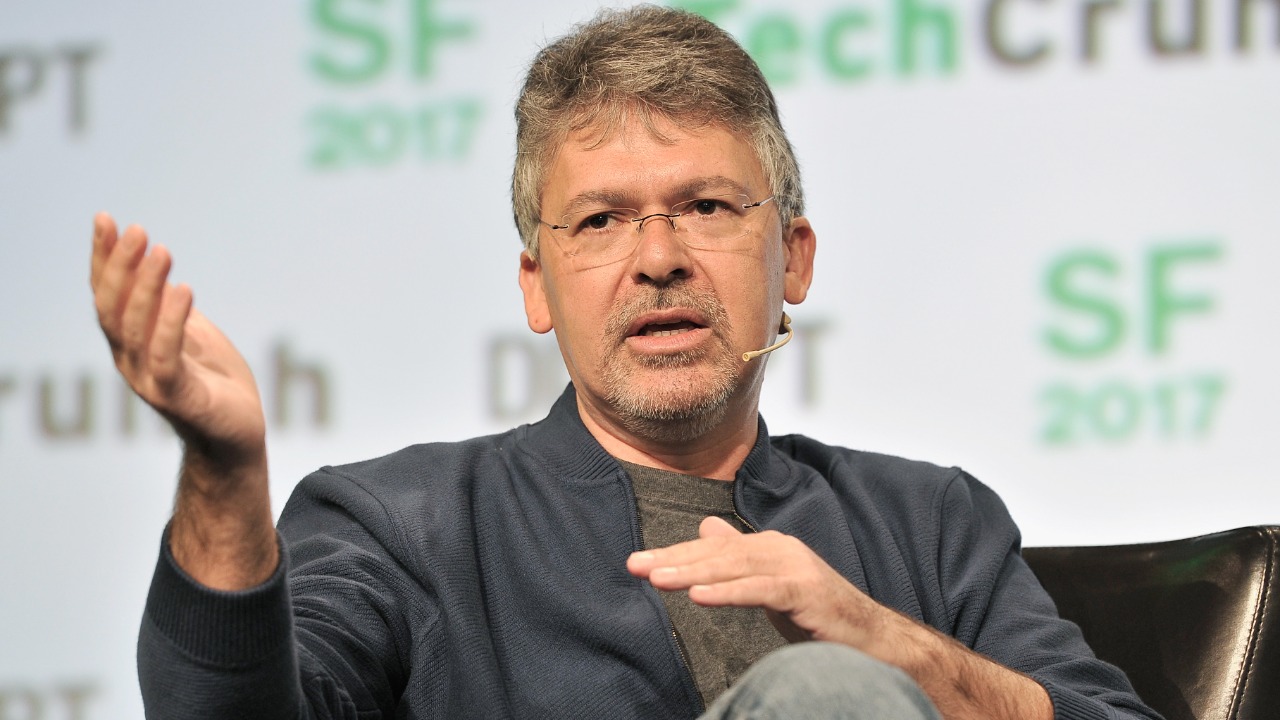
Apple’s top artificial intelligence executive is exiting just as the company is trying to prove it can still shape the next era of computing. The abrupt departure of John Giannandrea, the senior vice president who has overseen machine learning and core AI, lands at a moment when Apple is under pressure to show it can keep pace with rivals that have moved faster on generative tools and cloud-based models.
His exit is not just a personnel change, it is a stress test of Apple’s entire AI strategy, from Siri on the iPhone to the broader Apple Intelligence push meant to rival OpenAI and Google. With leadership reshuffling and a new figure stepping in from the outside, the company now has to convince investors, developers, and users that this is a reset rather than a retreat.
The sudden exit of John Giannandrea
Apple Inc confirmed that John Giannandrea, its senior vice president for Machine Learning and AI Strategy, is stepping down from his role, a move that immediately raised questions about continuity at the heart of the company’s most important technology bet. The company described the change as a leadership transition, but the timing and the lack of a long runway for succession planning underscore how abruptly Apple’s AI chief is leaving. In corporate filings and internal communications, Apple has framed Giannandrea’s departure as part of a broader leadership reshuffle at Apple Inc, even as it reiterates its commitment to machine learning across the product line.
Giannandrea’s role has been central to Apple’s AI identity. After joining from Google to lead machine learning and AI strategy, he became the public face of the company’s efforts to embed intelligence into everything from photo search to on-device translation. Apple has now acknowledged that its AI chief is leaving at a time when the company is still trying to catch up in generative models and cloud-scale infrastructure, a reality reflected in reports that Chief John Giannandrea To Step Down was communicated to investors as a material leadership change. The decision, announced on a Monday according to multiple accounts, signals that Apple’s board and executive team are willing to make high-profile moves to reset their AI roadmap.
Siri setbacks and the search for accountability
Giannandrea’s departure is closely tied to frustration over Siri, the voice assistant that once helped define the iPhone but has since become a symbol of Apple’s AI lag. Internal reviews and external criticism have converged on the same point: Siri has not kept pace with conversational systems from competitors, and its limitations have become more glaring in an era of large language models. Reporting on the leadership change has explicitly linked his exit to Siri setbacks, suggesting that Apple’s board wanted a clearer line of accountability for why its flagship assistant has struggled to evolve.
Those setbacks have had real strategic consequences. While Apple has focused on privacy-preserving, on-device models, rivals have raced ahead with cloud-based assistants that can write code, summarize documents, and integrate deeply with productivity suites. The perception that Siri has fallen behind has weighed on Apple’s reputation as a software innovator and has fed a narrative that the company is reactive rather than leading in AI. The decision to move on from Giannandrea, who was responsible for the machine learning systems underpinning Siri, reflects a belief inside Apple that new leadership is needed to overhaul the assistant’s architecture and restore confidence in its AI direction after what one report described as a Chief Steps Down After Siri Failure moment.
A former Microsoft AI leader steps in
Apple is not leaving the AI helm vacant. The company is elevating Amar Subramanya, an AI researcher with a background at Microsoft and Google, to take over Giannandrea’s responsibilities. Subramanya is described as a former Microsoft AI VP, a credential that signals Apple’s desire to bring in leadership steeped in large-scale cloud and enterprise AI systems rather than relying solely on internal promotion from its traditional hardware and software ranks. His experience at Microsoft and Google gives him direct exposure to the architectures and deployment models that have powered some of the most widely used AI services in the world.
Subramanya’s appointment is also notable for what it says about Apple’s willingness to tap external talent to fix its most visible AI problems. The company has confirmed that Apple’s AI chief is leaving and being replaced by a former Microsoft exec, and that Amar Subramanya, who previously worked at Microsoft and then at Google, will now lead the AI organization. For developers and investors, that combination of Microsoft and Google experience suggests Apple is trying to import best practices from the very companies it is chasing in generative AI, even as it maintains its own emphasis on privacy and tight hardware integration.
Apple Intelligence, investor pressure, and a crisis of confidence
The leadership shake-up comes as Apple is trying to reposition its entire software stack around Apple Intelligence, a suite of features meant to bring generative capabilities to the iPhone, iPad, and Mac. Apple Intelligence was pitched as a way to put the company alongside AI leaders like OpenAI and Google, but early reactions have been mixed, with some investors and users questioning whether the features are ambitious enough. Reports on the leadership change have noted that Apple’s artificial intelligence chief is stepping down just as Apple Intelligence is being rolled out more broadly, underscoring the tension between the company’s marketing narrative and the internal reality of a team in transition.
That tension has been building for months. Earlier this year, senior AI researchers were reported to be leaving Apple amid what was described as Senior AI researchers desert Apple amid ‘a crisis of confidence’, a phrase that captured the sense that the company’s internal culture and tooling were not keeping up with the demands of cutting-edge AI work. Combined with investor anxiety about Apple being left behind on the technology, these departures have created a feedback loop: doubts about strategy fuel talent losses, which in turn make it harder to execute that strategy. Giannandrea’s exit, and Subramanya’s arrival, now sit squarely in the middle of that loop, and the way Apple manages this transition will either reinforce or break the narrative of a company struggling to adapt.
Playing catch-up in a market Apple once defined
Apple’s AI leadership change is happening against a backdrop of intensifying competition in consumer devices and services. The company that once set the standard for mobile interfaces is now described as playing catch-up in AI, particularly as it relates to generative assistants and developer tools. One account of the transition notes that Apple AI chief leaving as iPhone maker plays catch-up reflects a broader concern that the iPhone maker has been left behind on the technology that is now reshaping search, productivity, and entertainment. While Apple has integrated machine learning into features like camera processing and on-device dictation, it has not yet delivered a generative assistant that can match the breadth and flexibility of systems from its biggest rivals.
That lag matters because AI is no longer a side feature, it is becoming the primary interface for how people interact with their devices. If Siri cannot reliably summarize a long email thread, draft a presentation in Keynote, or coordinate tasks across Apple’s ecosystem as fluidly as assistants tied to competing platforms, users may increasingly look elsewhere for those capabilities. Reports that Apple’s AI chief abruptly steps down have therefore been read not just as a human resources story but as a signal that Apple recognizes the urgency of closing this gap. The company’s challenge now is to translate that urgency into visible improvements in Siri, Apple Intelligence, and the underlying developer frameworks that power third-party apps.
What the reshuffle signals about Apple’s next AI chapter
For all the drama around Giannandrea’s exit, the most important question is what this reshuffle signals about Apple’s next AI chapter. The company has already indicated that AI will remain a core strategic priority, with machine learning teams embedded across hardware, software, and services. The decision to move on from Giannandrea, who had become synonymous with that strategy, suggests that Apple’s leadership believes a different mix of skills and risk tolerance is needed to compete in a world defined by rapid model iteration and cloud-scale training. Internal memos have framed the change as part of a broader leadership reorganization at NASDAQ:AAPL, reinforcing that this is not an isolated move.
At the same time, the company is trying to reassure investors that it is not losing control of its AI narrative. Official statements have emphasized that Apple on Monday said the head of its artificial intelligence efforts is leaving while reiterating that AI remains central to the future of the iPhone, iPad, and Mac, a message consistent with the acknowledgment that Apple Inc is undergoing a significant leadership transition. The real test will come over the next product cycles: whether Amar Subramanya can stabilize a team that has seen senior departures, overhaul Siri’s capabilities, and turn Apple Intelligence from a defensive response into a platform that once again lets Apple define how consumers experience the next wave of AI.
More From TheDailyOverview
- Tennessee loses $2.6B megafactory and faces major layoffs
- Retired But Want To Work? Try These 18 Jobs for Seniors That Pay Weekly
- What to do with your pennies after the U.S. stops minting them
- Home Depot CEO warns of a troubling customer trend in stores

Grant Mercer covers market dynamics, business trends, and the economic forces driving growth across industries. His analysis connects macro movements with real-world implications for investors, entrepreneurs, and professionals. Through his work at The Daily Overview, Grant helps readers understand how markets function and where opportunities may emerge.

