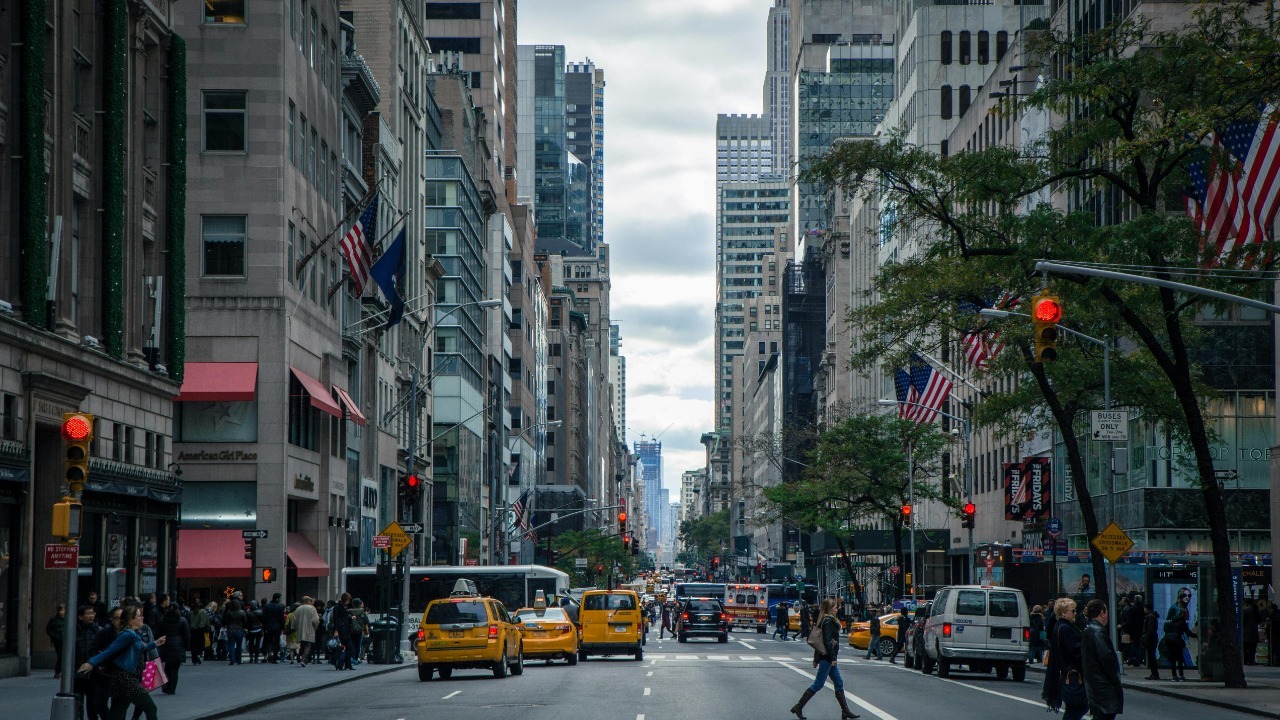
Across the United States, a once unthinkable shift is underway as obsolete office towers are reborn as housing at a pace that would have sounded fanciful before the pandemic. Nowhere is that transformation more visible than in New York, where a deep office slump and a chronic housing shortage are colliding to turn conversion projects from niche experiments into a central part of the city’s growth story. I see that pivot reshaping not only skylines but also the politics of land use, as policymakers and developers race to prove that empty desks can be traded for front doors at scale.
The surge in office-to-residential projects is not a cosmetic tweak to the market, it is a structural reallocation of space that is beginning to define how central business districts function. New York City’s experience is emerging as a template for other urban cores, with its mix of aging towers, transit access and regulatory reforms offering a real-time case study in how far adaptive reuse can go before it hits physical and financial limits.
New York City pulls ahead in the national conversion race
New York City has long been shorthand for dense, mixed-use urban life, but the current wave of conversions is rewriting what that density looks like. As traditional office demand softens, the city is leaning into its role as the country’s most closely watched laboratory for adaptive reuse, with planners and investors treating the five boroughs as a proving ground for turning surplus workspace into badly needed apartments. That shift is particularly visible in the core of New York City, where the balance between commercial and residential square footage is being recalibrated floor by floor.
Recent reporting makes clear that NYC now leads the United States in office-to-residential activity, with a pipeline of projects that would have been unimaginable a decade ago. One analysis finds that NYC leads the US in office-to-residential conversions, with thousands of homes set to arrive in a single famous neighborhood and Roughly half of the national conversion volume concentrated in the city’s most active districts. A companion account notes that the same pattern holds across the broader metro, with NYC leads the US in office-to-residential conversions and Roughly similar shares of new units clustered in a handful of marquee projects, including a 35 story tower at 750 Third Ave that opened its doors in 2024 as a residential address.
Record-breaking national momentum, with New York at the center
The New York surge is unfolding against a national backdrop that is already historic in scale. Across the country, office-to-apartment projects are on track to deliver a Record Breaking wave of new homes, with one tally projecting Record Breaking 71K Units Set to Emerge From Office Apartment Conversions nationwide in 2025 alone. That same research notes that New York ranks in the top tier of metros by unit count, with thousands of apartments either under construction or in advanced planning, and third place marked at 4,388 units for one competing city, underscoring how concentrated the activity has become in a small group of urban cores.
Industry analysts describe the current year as a turning point, with conversion activity in New York City itself hitting unprecedented levels. A detailed market update reports that office-to-residential conversions surge to record levels in New York City, driven by elevated vacancy, attractive economics and policy changes that have lowered barriers to entry that developers previously faced. A separate account aimed at builders echoes that view, noting that New York City is seeing residential conversions surge to record levels as Developers accelerate projects to meet growing housing demand while adapting to persistently high office vacancies, helped by tax incentives, zoning tweaks and streamlined approvals that have all lowered barriers for redevelopment.
Manhattan’s conversion engine and the geography of change
Within the city, Manhattan has emerged as the undisputed engine of the conversion boom, reflecting both its concentration of older office stock and its enduring appeal as a place to live. The borough’s grid is dotted with towers that no longer fit the needs of modern corporate tenants but sit on transit-rich blocks that are ideal for apartments, a mismatch that is now being resolved project by project. Analysts tracking Office Residential Trends in Manhattan describe Conversion Momentum Accelerates as a defining feature of the current cycle, with Cushman reporting that conversion proposals have multiplied and that thousands of units could be delivered if all planned projects advance.
On the ground, that momentum is visible in the pace of deals and filings. One recent snapshot notes that Manhattan continues converting offices into housing at a record clip, with Manhattan le the pack in outcompeting massive US metros and even one nearby suburb not far behind in its own adaptive reuse push. Another report highlights how policy has helped unlock specific districts, pointing out that the rezoning of Midtown South has already yielded results, with a partnership acquiring a 1 million square foot office building for conversion and a new Cushman analysis identifying zoning flexibility and housing demand as key drivers of this trend.
Policy shifts, market pressures and the housing puzzle
The conversion wave is not happening in a vacuum, it is the product of overlapping policy choices and market pressures that have made adaptive reuse more attractive than holding out for a traditional office rebound. Over the past several years, New York City officials have gradually expanded the toolkit for turning commercial buildings into homes, from targeted rezonings to tax abatements and code adjustments that recognize the quirks of older towers. A detailed review of New York City Office Residential Conversions Here What We Know notes that Metro Loft was behind the largest office-to-residential project in the city and catalogs how changes in state and local rules have opened the door for similar deals, particularly in Lower Manhattan and Midtown.
At the same time, the city’s housing shortage has turned conversions from a nice-to-have into a potential missing piece of the supply puzzle. Between 2020 and 2024, filings for the conversion of 26 office properties signaled a Surge in Conversions Between 2020 and 2024 in New York City, and a Promising 2025 pipeline suggests that adaptive reuse could meaningfully expand the city’s housing inventory if projects stay on track. A broader market perspective reinforces that view, describing a Sharp rise in office-to-residential conversions across NYC since the pandemic, with vacancies still elevated and many landlords opting to reposition their buildings rather than chase a shrinking pool of large corporate tenants.
From individual towers to a new urban model
What began as a handful of opportunistic deals is now large enough to reshape how central New York functions, and the scale of the pipeline hints at a more residential future for some of the city’s most iconic business districts. A comprehensive CBRE analysis estimates that if all current, proposed and rumored conversion projects proceed as planned, approximately tens of thousands of housing units could be created, a shift that would support a more livable and balanced urban future by bringing round-the-clock activity to areas that once emptied out after office hours. That kind of scale is already visible in specific addresses, such as the former office building at 160 Water Street in the Financial District, where a recent conversion delivered a 24 story tower with 160 Water Street Financial District Now le 588 units and helped push the total from 30 office-to-rental conversions to over 10,000 apartments citywide.
Outside observers are already treating New York’s experience as a playbook for other cities wrestling with the same twin crises of empty offices and unaffordable housing. One widely shared discussion among urbanists argues that office-to-residential conversions are booming and NYC is showing how the playbook keeps expanding, from financing structures to design solutions that make deep floor plates livable. The same dynamic is visible in specific neighborhoods beyond Manhattan’s core, including areas like Downtown Brooklyn and Long Island City, where clusters of former commercial buildings are being repositioned as mixed-use hubs that blend new apartments with ground floor retail and public space.
For now, the numbers suggest that New York’s lead in conversions is secure, but the real test will be whether these projects deliver on their promise of more inclusive, resilient neighborhoods rather than simply swapping one form of exclusivity for another. If the current pipeline of New York City conversions continues to move from rendering to reality at anything like today’s pace, the city’s experiment in turning surplus office space into homes will not just be a response to crisis, it will be a defining feature of how twenty-first century downtowns evolve.
More From TheDailyOverview
- Tennessee loses $2.6B megafactory and faces major layoffs
- Retired But Want To Work? Try These 18 Jobs for Seniors That Pay Weekly
- What to do with your pennies after the U.S. stops minting them
- Home Depot CEO warns of a troubling customer trend in stores

Elias Broderick specializes in residential and commercial real estate, with a focus on market cycles, property fundamentals, and investment strategy. His writing translates complex housing and development trends into clear insights for both new and experienced investors. At The Daily Overview, Elias explores how real estate fits into long-term wealth planning.

