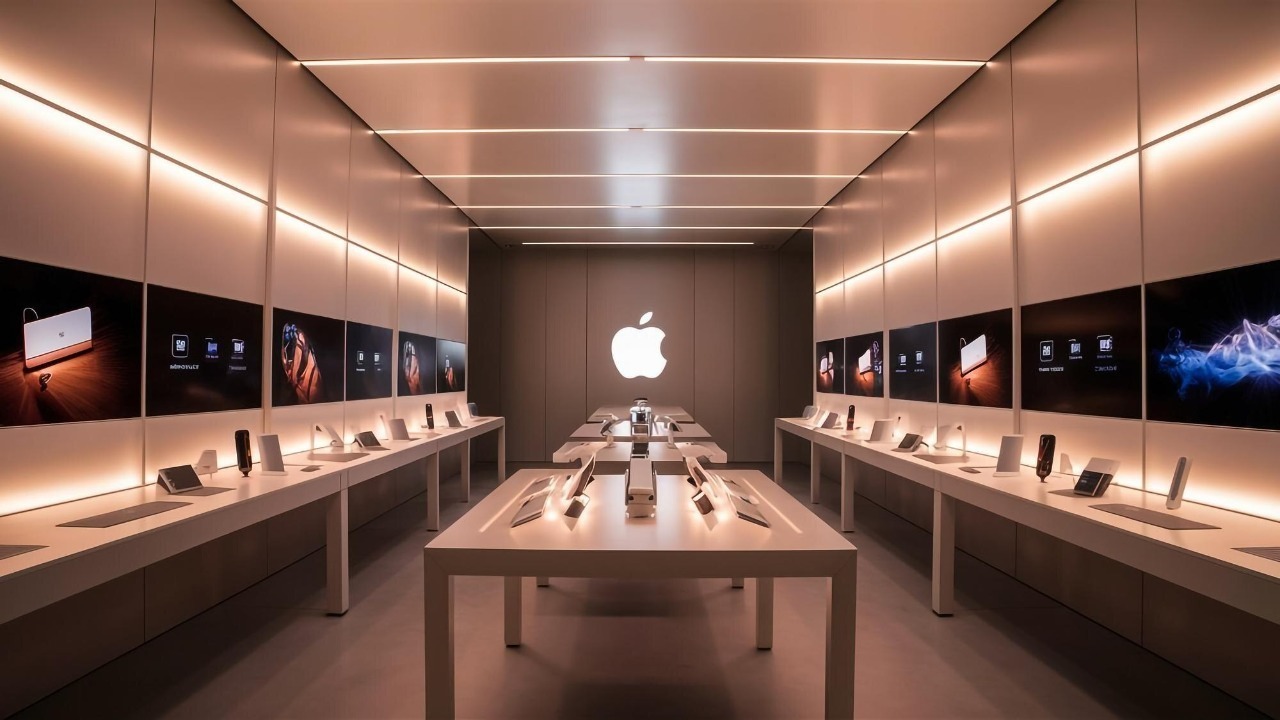
Apple has scheduled a press event for March 4, 2026, and Apple-focused reporting expects it to feature at least one lower-priced product. Rumors have also pointed to a budget MacBook for spring 2026, and some coverage has speculated that Apple could extend its new “e” branding to a future entry-level iPhone. The history of Apple’s affordable hardware launches suggests any revenue boost from lower-priced devices can fade within a few quarters, raising the central question hanging over the spring lineup: can entry-level hardware deliver sustained growth rather than a short-lived bump?
The iPhone 16e Set the Template for Affordable iPhones
Apple’s current entry-level iPhone strategy took shape early last year when it replaced the long-running iPhone SE line with the iPhone 16e, a device positioned as “a powerful new member of the iPhone 16 family.” Priced at $599, the phone carried the A18 chip, support for Apple Intelligence, and Apple’s first in-house cellular modem, dubbed the C1. Those specs represented a significant jump from the aging SE hardware, and the naming shift itself signaled that Apple wanted budget buyers to feel they were purchasing a mainline iPhone rather than a stripped-down alternative.
The move was explicitly tied to growth concerns. Apple rolled out the $599 device in a bid to rekindle demand at a time when premium iPhone sales were slowing in key markets. That framing is important because it establishes the commercial logic Apple is likely repeating with the iPhone 17e. A lower price point attracts first-time buyers and Android switchers, but it also risks cannibalizing sales of higher-margin flagship models. The tension between volume and average selling price has defined every budget iPhone cycle Apple has run, and there is little reason to expect the dynamic will change this time.
March 4 Event Signals a Dual-Product Push
Apple has announced a special event on March 4, 2026, described as a press experience spanning New York, London, and Shanghai. The multi-city format suggests the company wants global media coverage for whatever it introduces, and Apple-focused reporting links the date to both the iPhone 17e and a low-cost MacBook. Staging a simultaneous affordable iPhone and affordable Mac launch would be unusual for Apple, which typically separates product categories across different events to maximize individual attention and narrative control.
Bundling the two products together could reflect a deliberate strategy to frame the spring quarter as a growth story across both the iPhone and Mac revenue lines. Apple’s regulatory filings break out net sales by product category for iPhone and Mac, but they don’t isolate the impact of any single model; any “budget-launch lift” is typically inferred by analysts from broader quarterly results. The question for investors and analysts is whether two simultaneous affordable products can generate a combined effect large enough to move the needle on total revenue, or whether the gains simply redistribute demand that would have gone to higher-priced models later in the year.
What the Low-Cost MacBook Adds to the Equation
The rumored MacBook represents Apple’s first real attempt at a sub-MacBook Air price tier in years. In a MacRumors rumor report, the device is described as a 12.9-inch notebook targeting a spring 2026 launch window. The same report also relays analyst commentary that the laptop could use an A18 Pro-class chip and come in multiple color options, which would position it as a consumer-friendly machine rather than a stripped-down education device. If accurate, the combination of a capable processor and a mid-size screen could appeal to students, casual users, and buyers in emerging markets where MacBook Air pricing remains a barrier.
Yet the same risk that applies to the iPhone 17e applies here. A cheaper MacBook could pull sales away from the MacBook Air rather than expanding the total addressable market. Apple’s geographic revenue exposure, documented in its annual and quarterly SEC filings, shows that markets like Greater China and parts of Southeast Asia have been growth targets for years. A budget Mac could perform well in those regions without necessarily adding net new revenue if it simply replaces Air purchases in developed markets. The strategic value depends on whether Apple can reach genuinely new customers or merely offer existing ones a cheaper path to the same ecosystem.
Historical Pattern Points to a Short-Lived Bump
The most instructive precedent is the iPhone SE cycle. In past iPhone SE cycles, Apple appeared to get a near-term lift in demand that later normalized over subsequent quarters. The mechanism is straightforward: pent-up demand from price-sensitive buyers gets satisfied quickly, and once that pool is drained, the budget model settles into a steady but modest contribution to the overall mix. There is no evidence from Apple’s public financial disclosures that any prior low-cost launch produced a structural change in the company’s revenue trajectory, even when the initial response looked strong.
Apple’s own risk factors, disclosed in its SEC filings, acknowledge that product mix shifts can compress margins. A quarter with a higher share of lower-priced iPhones and Macs will look different from one dominated by premium models, even if total units shipped are higher. Wall Street tends to reward Apple for revenue growth and margin stability simultaneously, and a budget-heavy quarter can satisfy the first metric while undermining the second. That tension helps explain why past affordable launches have produced brief stock rallies followed by renewed focus on the next flagship cycle, where Apple can showcase higher average selling prices and premium features.
Can Entry-Level Devices Support a Long-Term Growth Story?
The broader concern is that Apple may be caught in a loop. Each budget product generates headlines and a quarter of solid unit numbers, but the long-term growth story still depends on services revenue and premium hardware upgrades. If the iPhone 17e and the low-cost MacBook follow the pattern set by the iPhone 16e and earlier SE models, they will likely front-load demand from cost-conscious buyers without fundamentally changing the slope of Apple’s revenue line. In that scenario, the spring quarter looks strong, the fall flagship cycle regains center stage, and the entry-level hardware recedes into the background as a supporting player.
For the strategy to break that cycle, Apple would need these devices to do more than just clear inventory or fill price gaps. The company has increasingly tied hardware launches to ecosystem hooks such as on-device AI, iCloud storage, and subscription bundles, and an entry-level iPhone or Mac that fully supports those services can generate recurring revenue long after the initial sale. If the 17e and the budget MacBook arrive with modern chips, long software support windows, and full access to Apple’s latest software features, they could gradually expand the base of users paying monthly for services. That outcome would not erase the risk of margin compression in the near term, but it would make each budget-cycle bump more meaningful to Apple’s long-run growth narrative.
More From The Daily Overview
*This article was researched with the help of AI, with human editors creating the final content.

Grant Mercer covers market dynamics, business trends, and the economic forces driving growth across industries. His analysis connects macro movements with real-world implications for investors, entrepreneurs, and professionals. Through his work at The Daily Overview, Grant helps readers understand how markets function and where opportunities may emerge.

