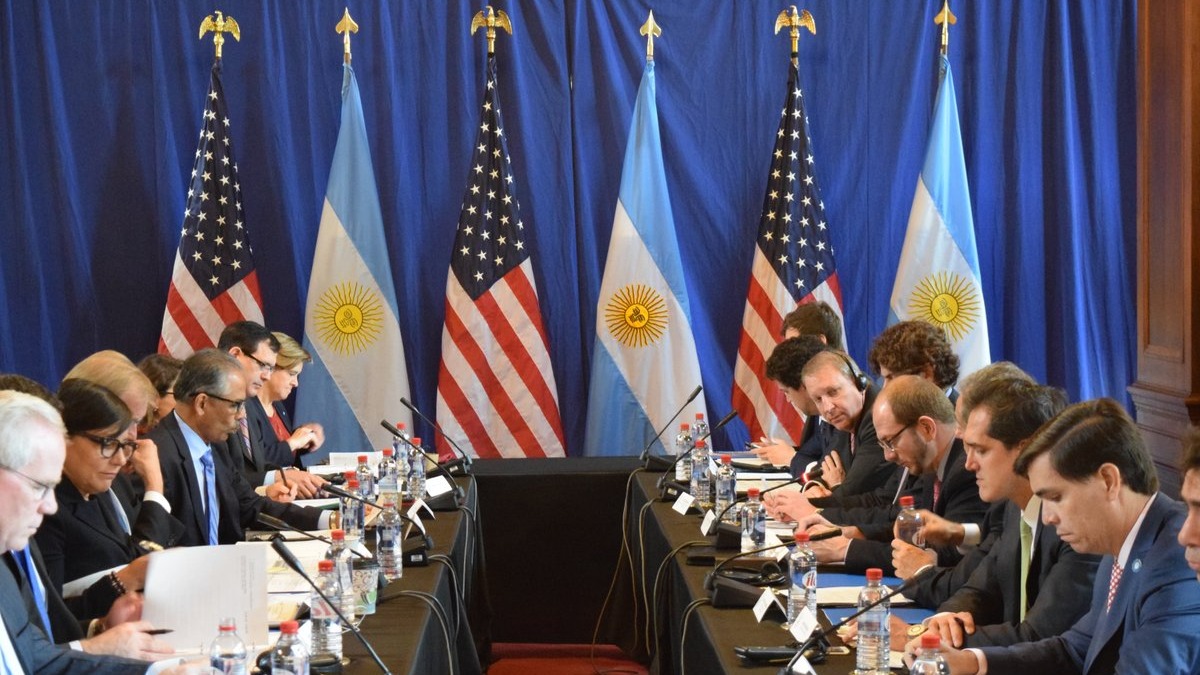
The new trade pact between Argentina and the United States does more than trim customs paperwork. It scraps hundreds of tariffs, rewrites regulatory rules and locks the two presidents into a shared economic project that could reshape South America’s second‑largest economy and deepen Washington’s footprint in the region. For President Javier Milei, it is the clearest sign yet that his radical market agenda now has a powerful partner in the White House, while for President Donald Trump it offers a fresh showcase of deal‑making with a key commodities supplier and security ally.
By tying tariff cuts to investment guarantees and strategic cooperation on sectors from autos to lithium, the agreement turns a traditionally transactional relationship into something closer to a long‑term alliance. I see it as both a bet on Argentina’s ability to overhaul its economy and a test of how far the United States is willing to go in backing a libertarian reformer whose success or failure will echo across Latin America.
The deal that slashes tariffs and rewires market access
At the core of the accord is a commitment by Argentina and the United States to scrap hundreds of tariffs on each other’s goods, turning what had been a patchwork of preferences into a broad, rules‑based framework. According to Takeaways by Bloomberg AI, Argentina and the US agreed to eliminate duties across a wide range of industrial and agricultural products, a shift that will immediately lower costs for exporters on both sides. The U.S. Trade Representative has highlighted that American exports will receive preferential tariff treatment in Argentina, a point reinforced in detailed summaries of the new trade and investment agreement.
On the Argentine side, the foreign ministry has committed to scrapping trade barriers on more than 200 categories of imports, a sweeping concession that will open its market to U.S. manufacturers and farmers. Sensitive sectors are not exempt, but they are handled through quotas rather than blanket protection. Reporting on the negotiations notes that more politically sensitive imports, like vehicles, live cattle and dairy products, will enter tariff‑free under government quotas that expand volumes, with beef shipments, for example, rising to 100,000 tons per year according to detailed Concessions.
Regulatory alignment and investment protections
Tariffs are only half the story, because the pact also rewrites how Argentina treats U.S. standards and investors. In a major shift, Argentina has agreed to accept U.S. safety and regulatory standards for imported goods, including autos, medical devices and other industrial products, which should cut compliance costs and speed up approvals for American firms according to detailed Argentina coverage. That kind of regulatory alignment is rare for a country that has historically guarded its autonomy in setting technical rules, and it signals how far Milei is prepared to go to attract capital and technology.
The investment chapter is anchored in a formal U.S.–Argentina Agreement on Reciprocal Trade and Investment, which sets out protections for investors, dispute‑settlement mechanisms and a schedule of phased tariff cuts. The Embassy in Buenos Aires has framed the accord as a tool to deepen two‑way investment and support job creation in both countries, while in WASHINGTON officials have stressed that it complements a broader push to strengthen supply chains in the Americas. At the signing ceremony, Ambassador Jamieson Greer joined Argentina’s Minister of Foreign Affairs to underline that the agreement is designed to be long‑lasting, with a detailed tariff schedule that businesses can plan around.
Milei’s domestic gamble and Trump’s strategic calculus
For Argentine President Javier Milei, the pact is both a policy milestone and a political risk. Earlier in his term, Milei avoided a currency devaluation and won a decisive election victory that sent markets rallying, giving him a mandate to pursue sweeping liberalization. The new trade deal, which slashes hundreds of reciprocal tariffs between the countries, is being touted by his government as proof that his ideological bet on closer ties with Washington is paying off, a narrative echoed in reports that describe it as a breakthrough for the libertarian president and a key step in his effort to open the Argentine economy according to Milei focused coverage.
On the U.S. side, President Trump is using the agreement to showcase his administration’s ability to secure better access for American exporters while locking in a friendly government in Buenos Aires. Official summaries describe how Argentina and the have reached an expansive trade deal that the U.S. Trade Representative has also confirmed, underscoring Washington’s view that the accord is a win for American workers. In my view, the political calculus is clear: Trump gains a high‑profile success in Latin America, while Milei secures external backing for a domestic overhaul that will be painful in the short term but, if it works, transformative.
Concessions, criticism and the risk of backlash
The scale of the liberalization is already reviving old arguments about who wins and who loses from free trade. Argentina’s foreign ministry has acknowledged that its decision to remove barriers on more than 200 import categories is a significant concession, and local manufacturers are warning that they will struggle to compete with American producers, a concern captured in reporting that notes how these Concessions could revive criticism of Milei’s agenda. More politically sensitive imports, including vehicles, live cattle and dairy products, will enter tariff‑free under government quotas, a design that tries to balance consumer gains with protection for vulnerable sectors but still represents a sharp break from Argentina’s protectionist past according to detailed More analysis.
Critics in both countries are also scrutinizing the broader political implications of the alliance. Some Argentine opposition figures argue that accepting U.S. regulatory standards and opening critical sectors to foreign capital risks eroding sovereignty, while in Washington skeptics question whether deepening ties with a volatile economy is worth the potential exposure. Coverage that evaluates the pact notes that these concerns are not hypothetical, since concessions on quotas and standards could become flashpoints if unemployment rises or if specific industries feel squeezed, a point underscored in evaluation of the political alliance. I expect those tensions to shape how quickly the agreement is implemented and how durable the new consensus really is.
From soybeans to lithium: a broader strategic alignment
Beyond tariffs and factory floors, the pact sits atop a wider strategic realignment that stretches from agricultural exports to critical minerals. Earlier this week, Argentina and the signed a Framework Instrument for Strengthening the Supply of Critical Minerals Mining and Process, a mouthful of a title that signals how central lithium, copper and other inputs have become to the relationship. That framework is designed to channel U.S. investment into Argentine mining and processing capacity, while giving American manufacturers more secure access to the raw materials that underpin electric vehicles and advanced electronics, according to detailed summaries of the Framework Instrument for.
Transport and logistics are being pulled into the partnership as well. Late last year, negotiators reached a separate understanding to deepen what they called “bi‑national” cooperation on trade and infrastructure, a move that aims to streamline how goods move between the two countries and to prepare for higher volumes once the tariff cuts take full effect, according to Key Takeaways that urged readers to Stay on top of developments and to Get updates on how Argentina fits into regional supply chains. When I put all these pieces together, the picture that emerges is not just a trade deal but a deliberate attempt to lock in a long‑term alliance that spans commodities, manufacturing, logistics and investment rules, with both governments betting that closer integration will pay off economically and strategically.
More From The Daily Overview
*This article was researched with the help of AI, with human editors creating the final content.

Grant Mercer covers market dynamics, business trends, and the economic forces driving growth across industries. His analysis connects macro movements with real-world implications for investors, entrepreneurs, and professionals. Through his work at The Daily Overview, Grant helps readers understand how markets function and where opportunities may emerge.

