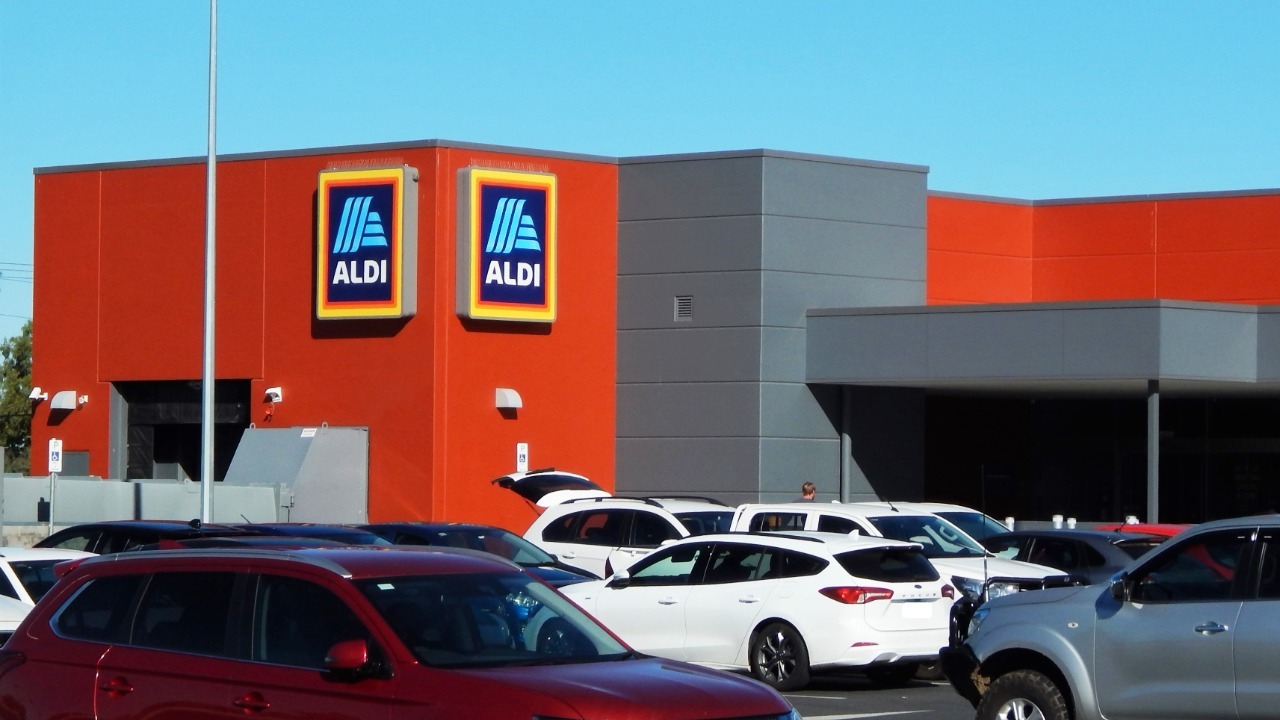
As grocery bills climb and shoppers trade brands for bargains, a German discount chain is quietly redrawing the American supermarket map. Aldi, long a niche player in the United States, is now expanding at a pace that rivals the country’s biggest retailers and is reshaping how and where millions of Americans buy food. Its rise is not flashy, but it is relentless, and it is forcing competitors to rethink everything from pricing to store design.
What looks like a modest neighborhood store with quarter-operated carts is in fact a tightly engineered machine built to win on price. Aldi’s latest expansion blitz, timed to its 50th year in the U.S., shows how a company built on no-frills efficiency can turn inflation anxiety into market share, one small-format box at a time.
Inflation pain meets a German playbook
Food inflation has turned the weekly shop into a stress test for household budgets, and that pressure is pushing shoppers toward retailers that can reliably undercut traditional supermarkets. I see Aldi leaning directly into that anxiety, positioning itself as the place where a cart of basics simply costs less, even if the assortment is narrower and the experience more stripped down. Reporting on the chain’s U.S. strategy describes a “German” operator that is betting big on cheaper groceries as Americans feel squeezed, with Aldi using its European discount model to meet a very American cost-of-living crisis.
That model is built on a few simple levers: a heavy reliance on private labels, a limited number of SKUs, and a store footprint that is smaller and cheaper to run than a typical big-box grocer. Analysts describe how the German chain has amassed a cult following around those low prices and house brands, turning what used to be a trade down into something closer to a savvy insider move. In an era when shoppers are scrutinizing every line of the receipt, Aldi’s stripped-back formula is no longer a curiosity at the edge of the market, it is a direct answer to a national affordability problem.
A 180-store sprint that reaches from Colorado to Maine
The clearest sign that Aldi is no longer content to be a regional bargain hunter’s secret is its latest store buildout. The company has said it will open 180 new locations across the United States this year, a figure that turns a slow burn into a national land grab. Internal messaging frames this as part of a broader decision by ALDI US to Doubles Down on Growth, with Plans to Open New Stores as part of a five year, multibillion dollar expansion.
That 180-store push is not just about filling gaps in existing markets, it is also about planting flags in new territory. The company has detailed how the openings are part of a U.S. expansion plan that includes entering Colorado and Maine, turning Maine into Aldi’s 40th US state. Local coverage has zeroed in on the details, from whether any of the Expansion will land in Ohio to whether shoppers asking “Are any in Ohio?” or “Any in New Jersey?” will see a store open near them.
From cult favorite to fastest-growing chain in America
What started as a bargain hunter’s tip has now become a mainstream force. Analysts describe how Aldi, the German Grocery Store, now sees over a half million Americans pass through its aisles, with a pipeline that has at times added more than two stores a week. Separate analysis notes that the The German grocer is now the fastest growing chain in America, with the Budget friendly Aldi brand announcing that it will open 180 more stores this year.
Digital behavior tells a similar story. App analytics show that ALDI has seen the largest gains among major grocers, with resurrected and retained users jumping sharply and one metric of returning shoppers rising by 43% year over year. That digital loyalty matters because it locks in repeat trips and online orders, turning occasional bargain visits into a habit. When I look at those numbers alongside the physical expansion, it is clear that Aldi is not just adding stores, it is deepening its relationship with shoppers who are increasingly comfortable planning their entire weekly shop around the chain.
How Aldi keeps prices low while rivals scramble
The mechanics behind Aldi’s low prices are not glamorous, but they are ruthlessly consistent. The chain leans on a limited assortment, a lean staffing model, and a store layout that minimizes labor and waste, all of which allow it to undercut traditional supermarkets and even pressure giants like WalMart. Earlier coverage framed Aldi as the German chain that was beating the Arkansas based giant at its own game, using relentless efficiency rather than splashy promotions to win on everyday prices.
That discipline extends into how Aldi invests in growth. As it marks its 50th year in the U.S., executives have talked about using the anniversary to accelerate store openings and improve the shopping experience, with one briefing noting that Aldi plans to be in at least 31 states by the end of 2026. Another analysis of the company’s strategy highlights how Aldi leadership has pledged to stay focused on “keeping things simple and delivering real value” as it adds 180 new stores this year, a reminder that the chain sees expansion and cost discipline as two sides of the same coin.
The quiet rivalry with Lidl and the rest of the aisle
Aldi is not the only German discounter with American ambitions, but it is the one executing most cleanly. Its compatriot Lidl has struggled to find the same traction, cycling through leadership and strategy resets just as Aldi doubles down. Industry reporting notes that Jan saw the departure of Lidl US’s chief executive after a brand relaunch that emphasized fresh departments and low prices, while a separate account describes how Lidl US CEO marked the fourth leadership change since the company entered the market. Another assessment quotes insiders saying There is still no clear articulation of “what we are doing and why,” a stark contrast to Aldi’s single minded focus on price and scale.
Against that backdrop, Aldi’s own expansion looks even more aggressive. One analysis framed the chain as America’s fastest growing grocery chain, with Aldi planning to open 180 stores over a similar time frame as rivals are closing underperforming locations. Another report on the Quick Summary of Aldi’s U.S. push noted that the company is in the middle of its biggest expansion yet, with plans to add over 200 net new stores in one year. When I line up those figures with the leadership churn at Lidl and the margin pressures facing traditional chains, the quiet rivalry looks less like a two horse race and more like a story of one German discounter seizing the moment while another struggles to keep pace.
More From The Daily Overview
*This article was researched with the help of AI, with human editors creating the final content.

Grant Mercer covers market dynamics, business trends, and the economic forces driving growth across industries. His analysis connects macro movements with real-world implications for investors, entrepreneurs, and professionals. Through his work at The Daily Overview, Grant helps readers understand how markets function and where opportunities may emerge.