Nvidia is on the verge of regaining access to one of its most important growth markets, as Beijing prepares to approve imports of the company’s H200 artificial intelligence chips. For investors, the move could reshape expectations around Nvidia’s China revenue, the durability of U.S. export controls, and the broader race to supply the world’s data centers with cutting edge silicon.
The apparent breakthrough comes after months of regulatory back‑and‑forth between Washington and Beijing over how powerful U.S. chips can be and where they can be used. I see three questions that matter most for shareholders: how big the China H200 opportunity really is, what strings are attached by both governments, and how this decision fits into the political fight now building around Nvidia’s role in the global AI boom.
Why China’s H200 approval matters for Nvidia’s growth story
The clearest signal of the stakes is that it appears China is ready to sign off on H200 imports after nearly a year of negotiations over performance thresholds and end‑use rules. For Nvidia, that would reopen a market that had been effectively frozen for its most advanced accelerators, even as Chinese cloud providers and internet platforms raced to match the AI capabilities of rivals in the United States and Europe. The H200 is not Nvidia’s absolute top‑end product, but it is a powerful data center chip designed for training and running large language models, and it sits close to the line that U.S. officials have tried to draw around what can be shipped to Chinese buyers.
Behind the regulatory headlines is a simple commercial reality: Chinese demand is enormous. A Reuters report indicates that Nvidia Corporation has already received orders for 2,000,000 H200 chips from Chinese customers, with the potential revenue estimated at about 12,000,000,000 dollars. That figure, if realized, would validate chief executive Jensen Huang’s argument that demand for Nvidia’s accelerators is still running ahead of supply and would give the company a powerful new lever to support data center revenue as other regions gradually normalize their own AI build‑outs.
How U.S. export rules and Trump’s stance shape the deal
Any investor trying to handicap the durability of China H200 sales has to start in Washington, where the Trump Administration has been recalibrating export controls rather than scrapping them outright. Earlier this year, The Trump administration placed new security requirements on Nividia’s semiconductor sales to China, tightening oversight of where the chips can be deployed and how they are monitored. At the same time, officials effectively lowered the bar for exports by allowing shipments of a powerful Nvidia AI chip that is not the company’s most advanced product, signaling a willingness to trade some performance for greater control.
Those conditions were spelled out in more detail when Sales of a Powerful Nvidia AI Chip to China Gets the Greenlight, With Conditions, and when officials clarified that the new rules lower the bar for exports but still prohibit use of the chips for military purposes and block their re‑export from China to other jurisdictions. In parallel, President Donald Trump has signaled that he wants Nvidia to sell powerful AI chips to Beijing, with the Trump Administration planning to grant licenses that would allow Nvidia to sell its H200 chips to China, which are far more capable than some earlier export‑compliant designs, even as China hawks in Congress push back.
Political risk: Washington’s China hawks and the next bill to watch
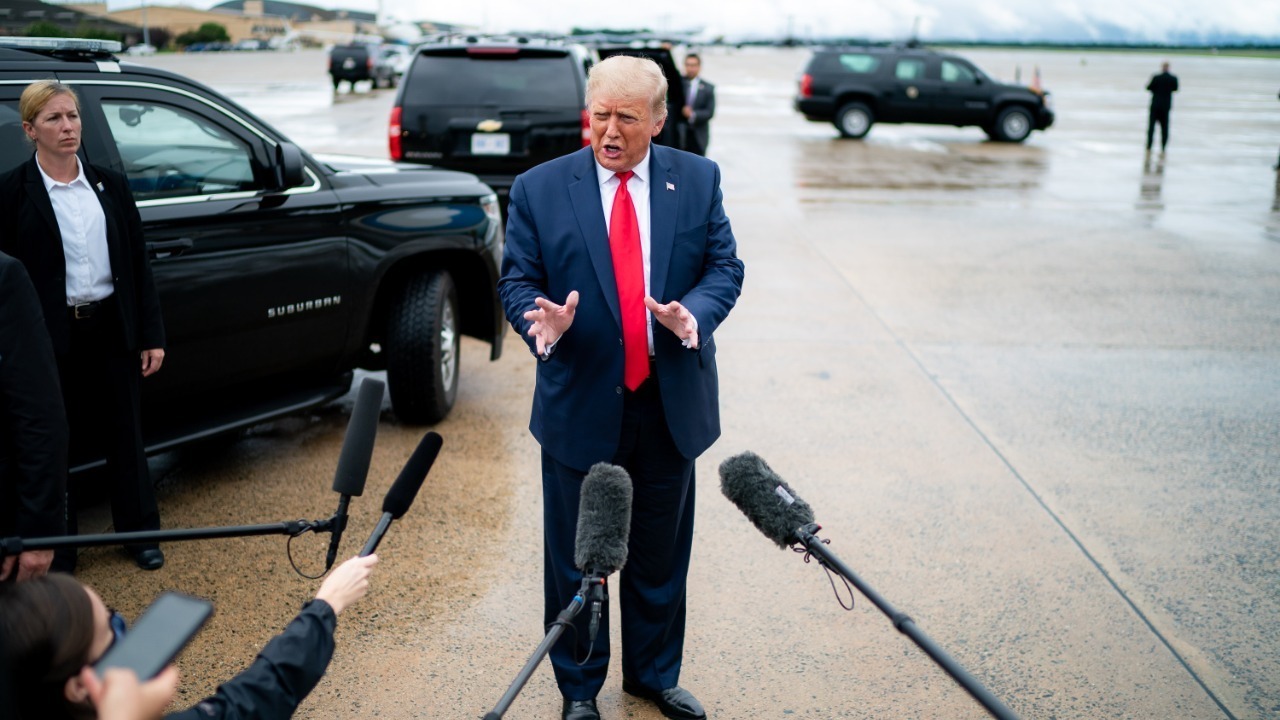
The political fight around Nvidia’s China business is not theoretical, it is already producing draft legislation that could reshape the company’s addressable market. Jan Sacks and those in the Trump administration who support more Nvidia shipments overseas have argued that U.S. chip restrictions have sometimes hurt American companies more than they have slowed Chinese AI development, but they face resistance from lawmakers who want tighter controls. According to one account, Sacks and Trump are contending with a bill backed by members of the opposition party that would limit the administration’s ability to loosen export rules without congressional oversight.
At the same time, the bill described in another report comes as the Trump Administration plans to grant licenses allowing Nvidia to sell its H200 chips to China, which are far more powerful than some of the earlier export‑compliant parts, and it is already drawing support in both the House and Senate. That means any investor betting on a long, smooth ramp of H200 sales into Beijing has to factor in the risk that Congress could still tighten the screws, even if the White House is currently more permissive. I see this as a classic policy tug‑of‑war: the Trump Administration is leaning toward commercial engagement, while China hawks are trying to lock in a harder line that would outlast any single president.
What Beijing’s greenlight and early market reaction signal
On the other side of the Pacific, regulators appear to be preparing their own conditions for H200 imports, but the direction of travel is clearly toward approval. A detailed account of the negotiations notes that China will not be allowed to use the chips for military purposes and is not allowed to re‑export them, mirroring the security concerns raised in Washington. For Beijing, accepting those constraints in exchange for access to high performance accelerators reflects a pragmatic calculation: domestic alternatives are improving but still lag Nvidia’s ecosystem of software and tools, and Chinese tech giants want to keep pace with global AI leaders rather than wait for fully homegrown solutions.
Markets have already started to price in this shift. Nvidia shares edged higher after a report signaled that China may greenlight H200 chip orders, with traders reacting to signs that regulators in Beijing were ready to approve imports of Nvidia’s H200 chips into China after the long regulatory pause. The move in the stock following that Nvidia report was modest rather than euphoric, which I read as a sign that investors are cautiously optimistic but still aware of the policy overhang and the possibility that any new flare‑up in U.S.‑China relations could put the arrangement back under review.
Key portfolio takeaways: upside, constraints and what I am watching next
For long‑term shareholders, the potential approval of H200 imports into China looks like a clear earnings tailwind, but one that comes with unusually high policy risk. The reported 2,000,000 unit order book and 12,000,000,000 dollar revenue opportunity from Chinese customers would be material even for a company of Nvidia’s size, and it would help diversify growth beyond early adopters in the United States and Europe. At the same time, the chips heading into China are explicitly not Nvidia’s most advanced product, and they are subject to strict conditions on military use and re‑export, which caps both pricing power and strategic leverage compared with unconstrained markets.
In my view, the most important variables to monitor from here are legislative developments in Washington, any sign that Beijing is pushing back on end‑use monitoring, and how quickly Chinese buyers actually take delivery of the H200 volumes they have reportedly ordered. I would also watch how Nvidia positions the H200 relative to its broader product stack, including how it markets the chip alongside other data center product lines that remain fully unrestricted. For now, I see the emerging compromise, reflected in reports that Key Points to a China approval are already in place, as a net positive for Nvidia and its shareholders, but one that demands closer attention to geopolitics than most semiconductor stories ever have.
More From The Daily Overview
*This article was researched with the help of AI, with human editors creating the final content.

Grant Mercer covers market dynamics, business trends, and the economic forces driving growth across industries. His analysis connects macro movements with real-world implications for investors, entrepreneurs, and professionals. Through his work at The Daily Overview, Grant helps readers understand how markets function and where opportunities may emerge.