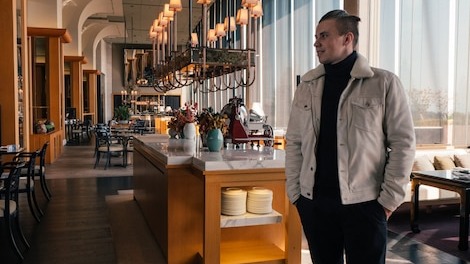
Across the United States, the hollowed-out shells of department stores are being reborn as velvet-rope destinations. As legacy anchors retreat from malls, private members’ clubs and invitation-only lounges are moving in, turning once public retail corridors into curated, closed-door social worlds for the affluent. The shift is reshaping not just how these properties look, but who they are really for.
What began as a niche experiment in luxury retail is now a full-fledged real estate strategy, with club operators signing long leases, hospitality brands scouting former anchor boxes, and landlords betting that exclusivity can succeed where mass-market fashion failed. The result is a quiet but profound reordering of American mall life, from West Palm Beach to Beverly Hills.
The new anchor tenants: members only
For high-end mall owners, the appeal of private clubs is straightforward: they can fill large footprints, commit to long-term leases, and promise a steady flow of high-spending visitors without diluting a property’s luxury positioning. Reporting on retail real estate shows that as traditional anchors close, landlords are increasingly courting private concepts that can occupy entire former department store levels and function as new traffic engines for surrounding boutiques, a pattern that is now visible in multiple retail centers.
The broader retail backdrop helps explain why this model is gaining traction. Analysts tracking the sector note that last year, Last year, Retail Dive tracked more than 40 deals across the industry, the vast majority involving acquisitions or sales, underscoring how much of the old department store model is being dismantled or absorbed. A separate outlook notes that, From the trajectory of the department store segment to the rise of generative AI, there are long-term trends that will continue to reshape physical retail, and landlords are looking for tenants that can weather those shifts rather than chase fleeting footfall.
Luxury retailers turn into club operators
Some of the most aggressive adopters of the club model are luxury retailers themselves, which are no longer content to rely on seasonal collections and window displays to keep wealthy clients engaged. Sep reporting on the evolution of store-based hospitality notes that Saks Fifth Avenue is actively working to expand its exclusive Saks Fifth club-style offerings, using private dining rooms, concierge services, and invitation-only events to keep top customers coming back for more.
The logic is that in the luxury world, being a thriving business now means far more than just selling expensive products to a wealthy clientele. As one analysis put it, When it comes to luxury, the real goal is to build lasting relationships, and private clubs are a way to do that in a controlled environment that feels more like a home than a store. That same impulse is visible in Europe, where Why luxury retailers are investing in private clubs is tied to experiments like Harrods using members-only spaces and masterclasses hosted by brand partners to test what modern loyalty might look like.
From dead malls to curated districts
At the property level, the shift to clubs is often part of a broader attempt to “de-mall” aging complexes and reposition them as mixed-use districts. In Plano, Texas, a viral update captured the scale of change when one post declared, Goodbye, Willow Bend. Hello, New District, as Reports confirmed that most of the mall structure at Shops at Willow would be torn down and replaced with a one billion dollar mixed-use project that includes an open-air hotel concept and other non-retail uses.
Elsewhere, owners are layering clubs into still-functioning malls as part of incremental refreshes. In California, Shops at Mission is expanding with an outdoor shopping and dining village, a plan described in a local update that began with Getting your Trinity Audio player ready and went on to detail how The Shops at Mission Viejo will add new restaurants, public spaces, and even facilities for young adult job training. In that kind of environment, a private club can serve as both a prestige tenant and a bridge between retail, hospitality, and office-style amenities.
Clubs scale up, from Beverly Hills to Miami
The club sector itself is expanding at a pace that would have seemed improbable a decade ago. A recent list of openings highlighted how The New Members spaces arriving in the United States Clubs Opening This Year include Biba in West Palm Beach, a new outpost of Zero Bond in Las Vegas, and 55 Seventy in Houston, illustrating how operators are targeting both coastal luxury markets and fast-growing Sun Belt cities. A companion social media post celebrated Eight new members-only clubs and noted that founders were Thrilled to be featured in The Observer, underscoring how much cultural cachet these spaces now carry.
On the West Coast, the scale of some new projects rivals the department stores they are replacing. In Beverly Hills, a New 65,000-Square-Foot Square Foot Private Members Club Just Opened in Beverly Hills, complete with multiple dining rooms, wellness facilities, and event spaces that would be at home in a luxury resort. In Miami, a sky-high Italian restaurant and members-only venue called See inside Seia is set to open in 2026, with Miami’s skyline as a backdrop and an Italian menu from some of the city’s Michelin-starred darlings, a concept that dovetails neatly with the hospitality-heavy direction of many redeveloped malls.
Hotels, civic clubs and hybrid spaces
The clubification of retail is not limited to pure-play members’ brands. Boutique hotels and civic organizations are also using club formats to anchor redevelopment projects and historic buildings. In West Palm Beach, Hotel Biba has become a touchpoint in conversations about how hospitality can blend with neighborhood culture, and references to Untitled redevelopment concepts around the property hint at how hotel-branded clubs might slot into mixed-use plans. In Grand Rapids, civic leaders have unveiled plans for a Commerce Club in a historic building, with Phase Two of club set to include outdoor and rooftop space, a full-service restaurant, and other amenities that could easily sit alongside retail or office tenants.
In New York and beyond, urban social clubs are increasingly intertwined with shopping districts. The downtown institution Zero Bond has become shorthand for a certain kind of power networking, and its expansion plans, referenced in Untitled planning documents, show how club brands are thinking nationally. In the same city, Stylus NYC and its related Untitled concepts illustrate how design-forward spaces can double as both creative hubs and semi-private lounges, while in Florida, Seia Miami and its own Untitled planning references show how club dining rooms are being woven into broader hospitality ecosystems.
More From TheDailyOverview
*This article was researched with the help of AI, with human editors creating the final content.

Elias Broderick specializes in residential and commercial real estate, with a focus on market cycles, property fundamentals, and investment strategy. His writing translates complex housing and development trends into clear insights for both new and experienced investors. At The Daily Overview, Elias explores how real estate fits into long-term wealth planning.