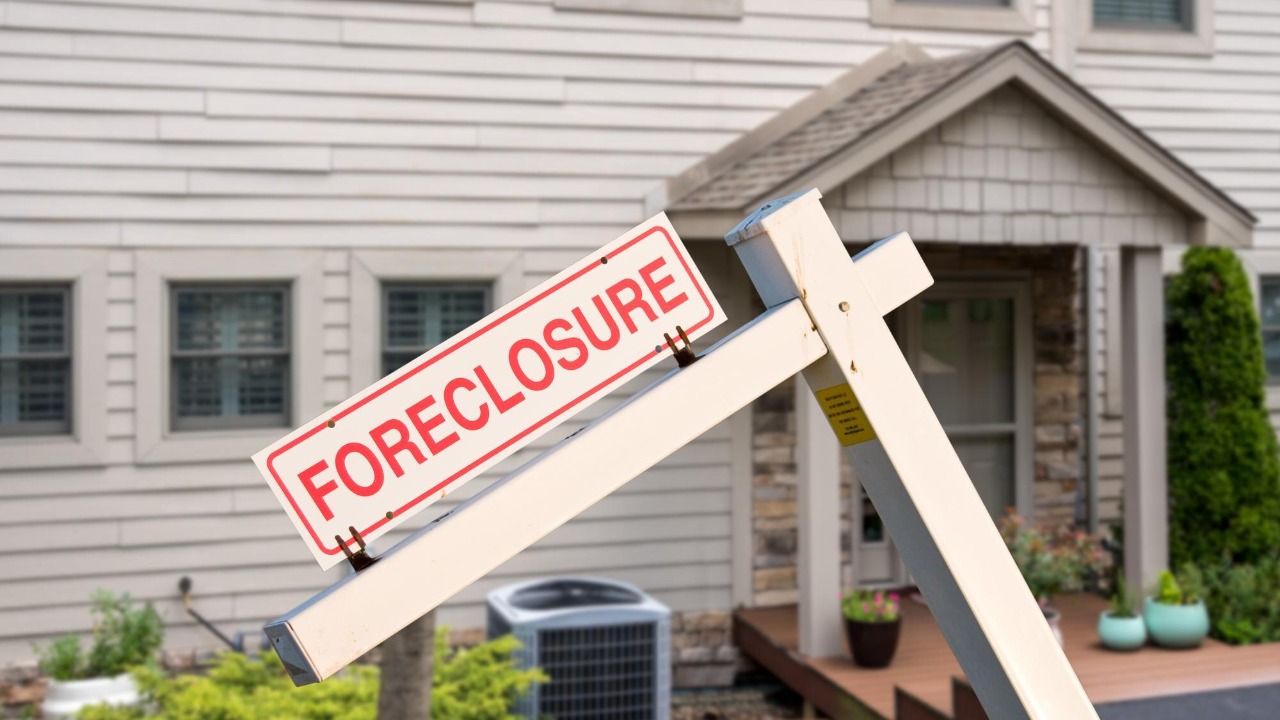
The United States is sliding into a harsher phase of its housing crunch, with banks repossessing an estimated 367,000 homes as strained borrowers fall behind and lenders move to collect. That surge in forced sales is colliding with high prices, elevated mortgage rates and a deep shortage of properties, creating a crisis that is both acute for vulnerable households and stubbornly structural for the wider economy.
Even as some analysts predict a slightly warmer housing market in 2026, the pain from this wave of repossessions is likely to intensify before it eases, particularly in high cost regions and among lower income owners who stretched to buy during the pandemic boom. I see a market where headline averages can look stable while the ground is quietly giving way under those with the least room to maneuver.
The foreclosure spike behind 367,000 lost homes
The headline figure of 367,000 homes taken back by lenders is the clearest sign yet that the era of ultra cheap money is over and the bill is coming due. Reports on the US housing crisis describe how Banks have repossessed 367,000 properties as the job market wobbles, a scale of loss that is already reshaping neighborhoods and local economies. Parallel coverage of the same trend notes that lenders have seized 36 times more homes in some pockets than local officials had expected, underscoring how quickly distress can snowball once missed payments start to pile up.
Behind those totals is a clear acceleration in Foreclosures, which are described as rising 14 percent from a year earlier as banks and other lenders move more aggressively after a period of pandemic era leniency. Data specialists back up that picture, with ATTOM reporting in its Year End review that overall foreclosure activity climbed in 2025 compared with the previous year. Even so, analysts stress that the share of properties in trouble is still far below the worst of the last crash, a nuance that matters for understanding both the scale of the current crisis and the limits of the comparison with 2008.
Why foreclosures are rising even as the market “stays strong”
One of the most striking contradictions in the current moment is that foreclosures are rising while the broader housing market still looks resilient on paper. Industry data shows that Foreclosure filings represent just 0.26% of all housing units, a level that one report notes is historically low even after a 14 percent annual increase. Yet that same analysis warns that filings jumped 57 percent on an annual basis for certain loan types, particularly among borrowers with government backed mortgages, a sign that stress is concentrated among those with thinner financial cushions, as detailed by Sarah Wolak in a report from New York.
Specialists tracking the trend argue that the direction of travel matters more than the absolute level. One analysis notes that While overall levels remain below those seen before the pandemic, the ongoing rise in both foreclosure starts and completions suggests mounting financial strain in high cost housing markets. Another breakdown of the data concludes that Overall foreclosure levels are still nowhere near the peaks of 2008, but the fastest increases are hitting metros where prices and property taxes soared during the boom. That is how a national market can look “stable” while specific communities absorb the brunt of the damage.
High rates, weak wages and a chronic supply crunch
Behind the foreclosure numbers sits a simple affordability problem: too many households are paying too much of their income to keep a roof over their heads. Forecasts for 2026 suggest that Mortgage Rates Are 6.3% in the coming year, which is far below the peaks of the 1980s but still roughly double the cost of borrowing that many buyers enjoyed just a few years ago. Analysts note that Mortgage rates only began falling in the latter half of 2025, and that even modest declines leave monthly payments painfully high for households whose wages have not kept pace.
At the same time, the country is still grappling with a severe shortage of homes. Federal Reserve chair Jerome Powell has warned that a Supply crunch has left the nation short by between 1.5 and 5.5 million units, and that Great Financial Crisis the number of households formed has outpaced the number of homes built. That imbalance means that even as some owners are forced out through foreclosure, the overall market remains tight, keeping prices elevated and limiting the ability of distressed borrowers to trade down to something more affordable.
Regional flashpoints and who is getting hit hardest
The pain from rising repossessions is not evenly distributed. Analysts highlight that Foreclosures continued to rise in 2025, with Florida leading the nation in total cases according to data from the real estate analytics firm ATTOM. That pattern reflects how pandemic era migration and investor demand pushed prices in Sun Belt states to levels that local incomes could not sustain once ultra low rates disappeared. In those markets, even a small shock to employment or health can tip a household from barely managing to default.
Nationally, the burden is falling heaviest on borrowers who bought with minimal down payments or relied on more flexible underwriting. Reports on the 2025 foreclosure landscape show that Jan data from ATTOM points to a clear uptick in distress among lower income and minority communities, even as the national average remains relatively low. Coverage of the broader housing crisis notes that Jan has been particularly brutal for owners in high cost metros, where even those who never missed a payment are struggling because of where they live and the taxes and insurance bills that come with it.
What 2026 holds: a “reset” that may not feel like relief
Looking ahead, I see a market that is likely to feel very different depending on which side of the ledger you are on. Some analysts argue that 2026 will mark the start of a broader adjustment, with Redfin describing a set of Predictions that amount to a Welcome to Great Housing Reset, where price growth slows and affordability gradually improves as incomes catch up. Another forecast from a major listings platform expects Home Sales To in Low Gear as a fragile Balance Holds between buyers and sellers, with transaction volumes still well below pre pandemic norms.
Others see a modest thaw rather than a full reset. Economists at Zillow have laid out a set of 2026 Housing Market Predictions that point to more sales and a bit more stability, but not a dramatic drop in prices. A separate analysis of the same outlook notes that Home values are expected to rise by just 1.2% in 2026, a far cry from the double digit surges of the pandemic years but still an increase that keeps ownership out of reach for many renters. Even the more optimistic projections from Zillow and its 2026 Housing Market Predictions suggest a market that warms up rather than one that truly cools down for stretched buyers.
For households already on the edge, that means the wave of repossessions is unlikely to recede quickly. The combination of a still tight supply, mortgage rates that remain elevated by recent standards and only modest price growth will keep pressure on those who bought at the top of the market or who face income shocks. As I read the data from Jan and the warnings from Jan about structural shortages, the message is blunt: without a serious push to build more homes and shore up vulnerable borrowers, the seizure of 367,000 properties may be a grim preview rather than the peak of the housing pain.
More From The Daily Overview

Elias Broderick specializes in residential and commercial real estate, with a focus on market cycles, property fundamentals, and investment strategy. His writing translates complex housing and development trends into clear insights for both new and experienced investors. At The Daily Overview, Elias explores how real estate fits into long-term wealth planning.

