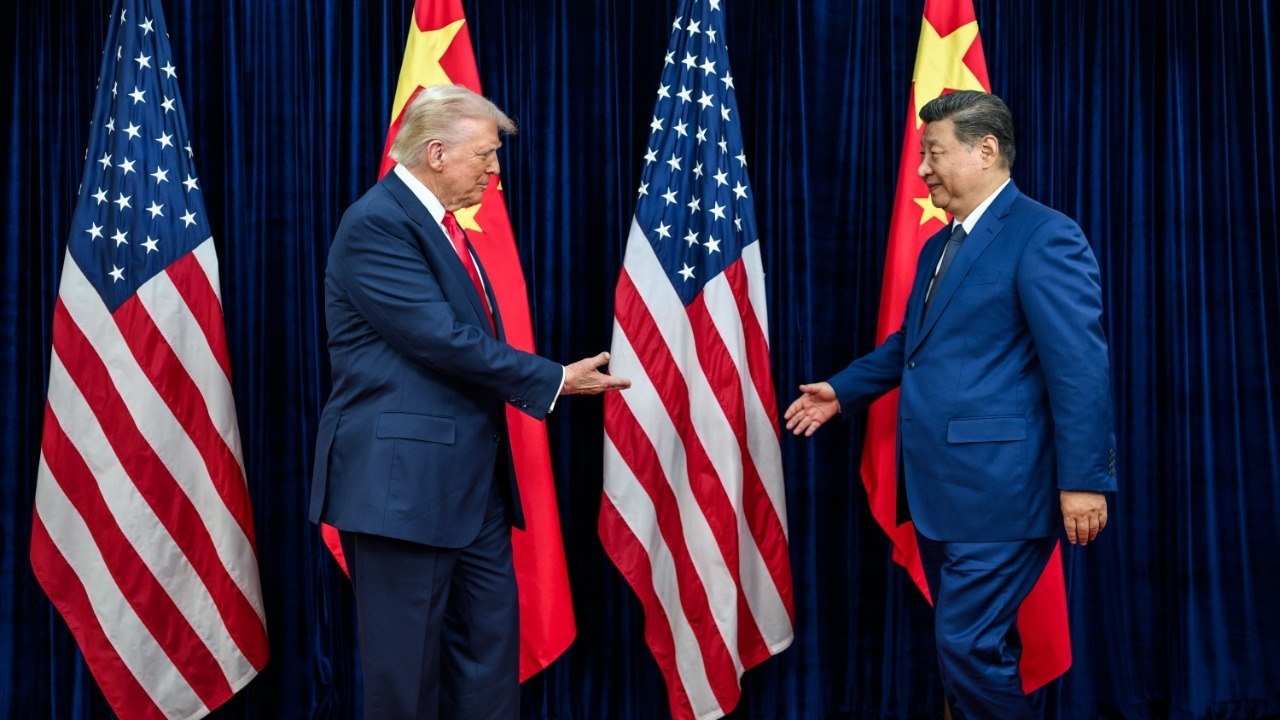
Global opinion is coalescing around a stark judgment of President Donald Trump’s second term: his “America first” agenda is not restoring U.S. primacy so much as clearing space for rival powers. A sweeping new poll of tens of thousands of people across major regions finds that the country gaining stature from Washington’s turmoil is not the United States itself, but China. The findings suggest a world that increasingly expects Beijing, not Washington, to shape the next decade of geopolitics.
The survey data does more than bruise national pride. It points to a structural shift in how allies and adversaries alike are hedging their bets, recalibrating security ties, and rethinking trade in anticipation of a more assertive Chinese role. If that perception hardens, it could outlast any single administration and redefine what power means in the twenty first century.
What the global poll actually shows
The core finding is blunt: when asked which major power is likely to grow in influence over the next decade, respondents overwhelmingly pointed to China rather than the United States. In a research project that interviewed 26,000 people across 21 countries, nearly every region outside the West anticipated expanding Chinese global influence. The same survey found that many of those polled see that rise as a fact to be managed rather than resisted, even when they describe Beijing as a rival or adversary. That is the backdrop for the headline claim that Trump is, in effect, making China look stronger in the world’s eyes.
The methodology matters here. The project was a cross border survey of the same 26,000 people, conducted before the latest iteration of the U.S. National Security Strateg was published, which means respondents were reacting to lived policy rather than fresh messaging from Washington. In most countries, people have already downgraded their expectations of the U.S. president, and Fewer people than a year ago say he is good for global affairs. Those attitudes, taken together, indicate that global publics largely agree on one thing: the balance of perceived momentum is tilting toward Beijing.
Europe’s disillusionment and the ally problem
Nowhere is the reputational damage clearer than in Europe, where trust in the Trump Administration has eroded from skepticism into something closer to estrangement. One analysis of the same polling project notes that Europe stands out as a region where confidence in the Trump Administration has fallen sharply, with Only a small minority of Europe’s citizens still expressing faith in Washington’s leadership. A separate breakdown finds that just 16% of Europeans now see the U.S. as an ally, according to a survey that used the same 26,000 person sample. For a continent that once anchored its security on American guarantees, that is a profound shift.
The same research shows that Optimism about the European Union’s own clout is limited, and that Most Europeans, precisely 46%, do not believe the EU is a power able to deal on equal terms with the United States or China. That vacuum of confidence makes it easier for Beijing to present itself as a pragmatic alternative partner, especially when Washington is seen to be imposing crushing tariffs or berating allies. In that sense, the erosion of faith in America is not just about Trump’s rhetoric, it is about a structural opening for a rival power.
How “America first” is read outside the West
Outside the Western alliance system, Trump’s “America first” agenda is being interpreted less as a coherent strategy and more as a signal that Washington is stepping back from its traditional role as global hegemon. The same cross national polling finds that in most non Western countries, China‘s rise is seen as something that suits people living in those societies. The report notes that Life without a hegemon is how most people in these regions now imagine the future of global geopolitics, a striking departure from the post Cold War assumption that U.S. dominance was both inevitable and desirable.
That perception is reinforced by the way Trump’s policies have targeted allies as well as adversaries. One account describes Donald Trump’s ally bashing and economy busting second stint in the White House as a dynamic that is putting America on the back foot while a powerful and repressive Asian nation consolidates its position. Another analysis of the same polling stresses that Fewer people than 12 months ago think the U.S. president is good for global affairs, and that global publics largely agree on this downward reassessment. When the world sees Washington as unpredictable and self absorbed, Beijing’s disciplined, long term messaging about China’s rise can look like a safer bet, even to those who remain wary of its intentions.
The one country getting stronger in the world’s eyes
One of the more counterintuitive findings in the polling is that, while the United States is losing some of its shine, it is not always China that benefits directly. A separate poll on global perceptions of major powers found that Trump is making one country in particular look stronger in the world’s eyes, and that country is India. The research notes that the poll came as the Trump administration has struck a markedly different tone in its relations with its traditional allies, most of whom now see the U.S. as an adversary or rival in some policy areas. Against that backdrop, India’s image as a rising democratic power and potential counterweight to China has improved.
In that same survey, While fewer than half of respondents said they believe the U.S. will become stronger, many said they think it will remain influential, and the country that saw the biggest jump in perceived future strength was India, with 54 percent expecting it to grow more powerful. That does not contradict the broader story of China’s rise, which is documented in the multi country survey of 26,000 people, but it does suggest that Trump’s disruptive approach is encouraging a more multipolar mindset. Instead of a single successor to U.S. dominance, publics are imagining a crowded field in which Beijing, New Delhi and others all gain relative weight.
What this means for U.S. power at home and abroad
The reputational hit abroad is colliding with a crisis of confidence at home. Separate research on public trust in institutions finds that Experts see a widening partisan gap in confidence in science and evidence based policymaking, a divide that has remained broadly similar in every survey since 2021. That erosion of shared facts makes it harder for any administration to craft a coherent long term strategy for dealing with China or India, let alone to persuade allies that Washington can be relied upon. When domestic polarization is visible to the world, it feeds the impression that the United States is distracted and inward looking.
At the same time, Trump’s foreign policy theatrics, from tariff fights to talk of buying Greenland, have reinforced a narrative of unpredictability that unnerves partners. One detailed account of the new polling notes that Europe now sees China as a relatively safer bet in some areas of cooperation, precisely because Beijing projects consistency even when its policies are coercive. Another commentary argues that Donald Trump’s approach is, in practice, accidentally making that powerful and repressive Asian nation look more capable on the world stage. When I look across the data, from the 26,000 person survey to the India focused poll, the throughline is clear: Trump’s presidency is not just reshaping America’s image, it is accelerating a world in which U.S. power is one influence among several, rather than the uncontested center of gravity.
More From The Daily Overview

Silas Redman writes about the structure of modern banking, financial regulations, and the rules that govern money movement. His work examines how institutions, policies, and compliance frameworks affect individuals and businesses alike. At The Daily Overview, Silas aims to help readers better understand the systems operating behind everyday financial decisions.

