Major League Baseball is minting record revenues, yet the system that prints the money is starting to misfire. The richest clubs are pulling away, local TV cash is wobbling, and the sport is drifting toward a labor showdown that mirrors broader economic strains in the United States. I see a league where the financial engine still hums at the top, but the belts are snapping further down the line, leaving both players and smaller markets exposed.
The result is a sport that looks less like a competitive league and more like a case study in American inequality. As the gap between the haves and have-nots widens, the pressure is building on the collective bargaining agreement, on regional sports networks, and on fans who are being asked to pay more to watch a product that feels increasingly predetermined.
The Dodgers as symbol of a distorted market
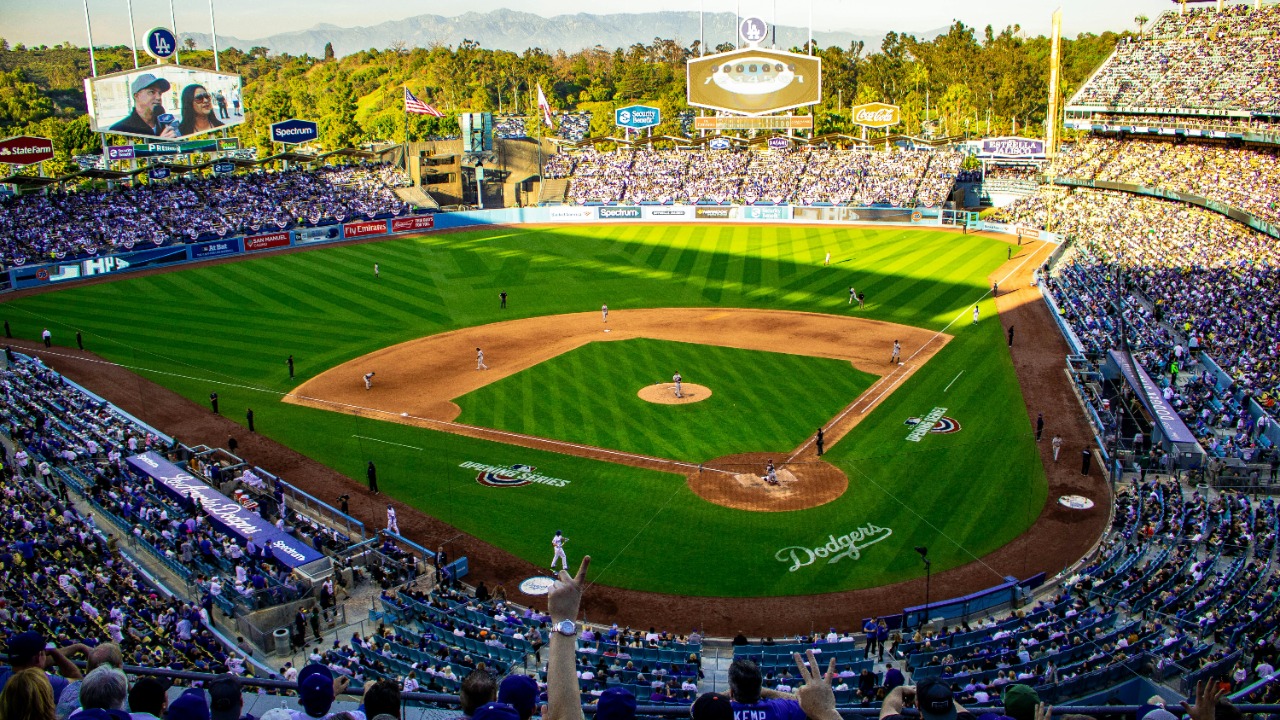
Nothing captures baseball’s skewed economy quite like The Dodgers’ current spending spree. The Dodgers, MLB’s two-time defending champions, have committed a four-year, $240 m deal to outfielder Kyle Tucker, a pact that is explicitly reported as $240 million and that sits on top of an already massive payroll anchored by multiple stars, turning their roster into a financial outlier that other clubs simply cannot chase. That contract is not just another big-market splash, it is a signal that the top of MLB’s system is operating on a different plane from the rest of the league, with The Dodgers using their revenue muscle to lock in Kyle Tucker while mid-tier teams scour the bargain bin.
During the 2025 season, the Dodgers became a shorthand for the sport’s economic divide, with their spending cited as a symbol of how far the richest clubs have pulled away from the pack and how hard it has become for smaller markets to keep their own stars from reaching free agency. I see that dynamic echoed in leaguewide payroll tables, where the top clubs sit tens of millions of dollars above the median and the bottom tier operates on a fraction of that level, a pattern that leaves fans in those markets wondering whether their teams are truly trying to win or simply surviving inside a warped system.
A widening wealth gap and the case for a cap
The structural problem is not just that some teams spend more, it is that the gap between the top and bottom has become a “Chasm of Inequality” that threatens the basic idea of competitive balance. On Opening Day, the contrast between the richest and poorest clubs was framed as a crisis of legitimacy, with the biggest payrolls dwarfing those of rebuilding teams and creating a perception that only a handful of franchises can realistically chase a title. When I look at those disparities, I see a league that increasingly resembles the broader American economy, where the top tier accumulates more and more leverage while the rest are told to be patient and trust a system that rarely pays them back.
Some analysts argue that the only way to close that gap is to adopt a true salary cap and floor, pointing to other leagues where hard caps have helped compress the distance between the richest and poorest clubs. One detailed examination of the problem framed it as a threat to MLB’s competitive integrity, noting that a club with a payroll of just $70M is trying to compete with giants that spend multiples of that figure and suggesting that a cap-and-floor system could force both sides toward a more sustainable middle. I find that argument gaining traction not just among small-market executives but also among fans who are tired of watching the same handful of superteams dominate October.
Record revenues, fragile foundations
On the surface, the money looks too good for anyone to complain. MLB Team Record Sponsorship Revenues Exceed $2 Billion For 2025, a figure that underscores how attractive the sport remains to brands in categories like technology, entertainment, media, and talent. Team valuations have also climbed, with one analysis noting that MLB has been facing revenue pressure in some areas but still supports franchise values that trail only The NBA, the NFL, and the NHL among North American leagues, even as those other sports lean on hard salary caps to stabilize their economics. From the owners’ perspective, the balance sheet still looks healthy, which is part of why they have been reluctant to overhaul a system that continues to enrich the top tier.
Yet those headline numbers mask a more fragile reality underneath. MLB has been facing revenue challenges tied to local media, with Part of what is causing spending discrepancies for MLB ( Major League Baseball ) teams identified as the uneven flow of regional sports network money that props up big markets while leaving others exposed. The RSN problem As the Dodgers’ Kasten noted, with The RSN model under strain, teams that once relied on guaranteed cable checks are suddenly confronting cord-cutting, streaming fragmentation, and the risk that their games will be harder to find, all of which could erode the very cash flows that justify today’s record sponsorships and valuations.
The RSN crash and the scramble for local cash
The most immediate crack in baseball’s money machine is showing up in local TV. Earlier this month, Open Extended Reactions detailed how 9 MLB teams decided to end their original deals with Main Street Sports Group, a regional sports network operator whose financial instability had become impossible to ignore, and those clubs are now scrambling to secure new distribution that can keep their games on air and their balance sheets intact. In parallel, another report noted that nine MLB teams “cancelled” their Main Street local broadcast deals amid growing uncertainty about the network’s future, a move that underscores how quickly the old RSN model is unraveling for both sides of the partnership.
As the Dodgers’ Kasten and other executives have acknowledged, the collapse of that model is not just a media story, it is a core driver of the spending gap that now defines the league. When I connect those dots, I see a system where a handful of clubs still enjoy robust local media revenue while others are forced into short-term fixes, often at lower rights fees, which in turn limits their ability to invest in players and facilities. That feedback loop makes it even harder for small and mid-market teams to keep pace with The Dodgers and other heavyweights, and it raises the risk that future downturns in the broader economy will hit those vulnerable clubs first and hardest.
Labor war on the horizon
All of this is heading toward a showdown at the bargaining table. With the current CBA set to expire following the 2026 season, there is already an expectation of a work stoppage, and some voices are urging the MLBPA to call the owners’ bluff and push for a cap paired with a meaningful salary floor that would guarantee a higher baseline of spending across the league. From what I see, that is a remarkable shift, since players have historically treated any form of cap as a red line, but the combination of stagnant wages for the middle class of players and runaway spending at the very top has scrambled the usual alliances.
On the ownership side, the rhetoric is hardening as well. One detailed piece on the looming fight described how With the CBA expiring after this season, They must address both the Dodgers problem and the Nationals problem, shorthand for a system where one franchise spends at a level that distorts the market while another slashes payroll to the bone, and floated the idea of a cap and salary floor system as a potential solution. I read that as a sign that some owners are prepared to risk a lockout to force structural change, even as others quietly benefit from the current luxury-tax framework and might resist any deal that limits their ability to outspend rivals.
More From The Daily Overview

Grant Mercer covers market dynamics, business trends, and the economic forces driving growth across industries. His analysis connects macro movements with real-world implications for investors, entrepreneurs, and professionals. Through his work at The Daily Overview, Grant helps readers understand how markets function and where opportunities may emerge.

