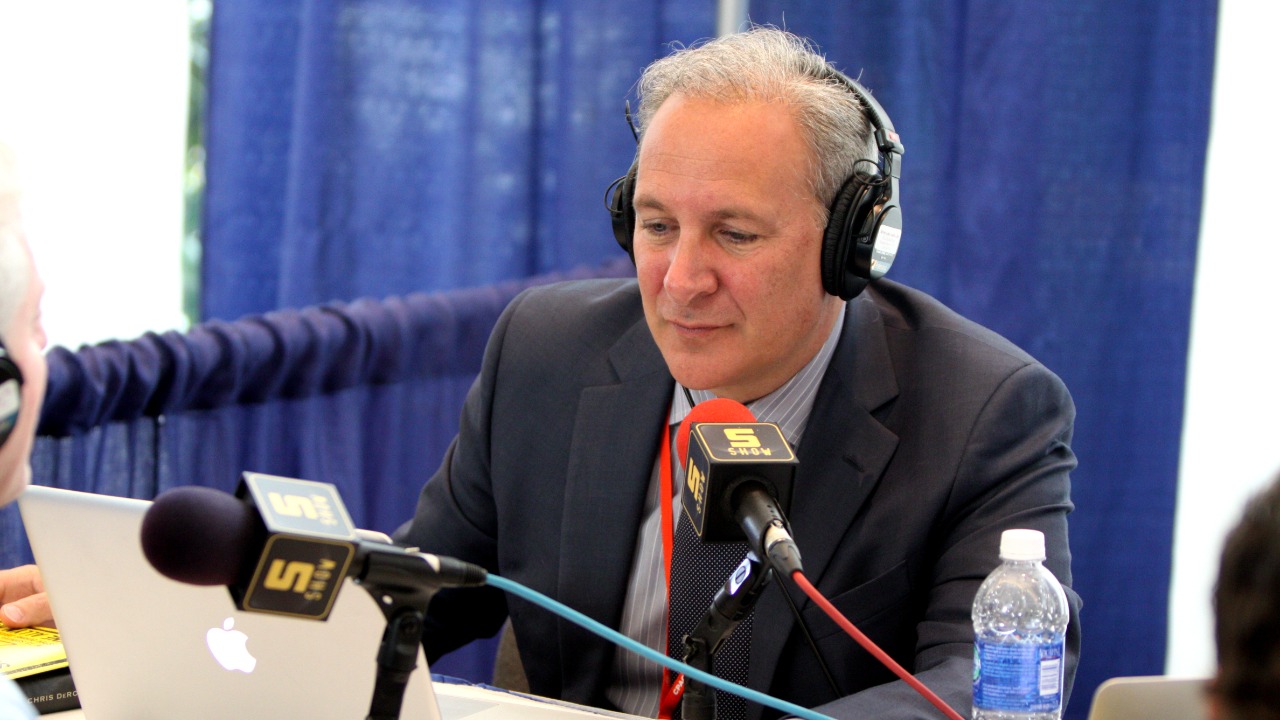
Peter Schiff has spent years warning that Bitcoin is a speculative mirage, but his latest barrage of forecasts ties the cryptocurrency’s fate directly to what he sees as a looming financial crisis. In his telling, the next phase of market stress will not send investors deeper into digital assets, it will expose Bitcoin’s structural weaknesses and trigger steep losses. I see his current campaign as less about a single price call and more about a broader argument that the crypto boom has distorted capital away from what he considers real stores of value.
That argument has sharpened as Bitcoin’s price has swung violently and traditional safe havens like gold and silver have started to move in ways Schiff interprets as an early warning signal. He is now stitching together concerns about overleveraged crypto investors, frothy Bitcoin-linked equities, and a fragile U.S. economy into one overarching thesis of an approaching reckoning for digital assets.
Schiff’s crash call and the “economic crisis” backdrop
At the core of Schiff’s alarm is a simple claim: Bitcoin is not just due for a correction, it is poised for a severe breakdown that will coincide with broader economic trouble in the United States. He argues that years of easy money and delayed fiscal reforms have inflated asset prices across the board, and that Bitcoin, in his view, sits at the most speculative end of that spectrum. In his recent commentary, he has linked an expected Bitcoin collapse to what he describes as an impending U.S. Economic Crisis, warning that the same forces that lifted crypto will reverse as financial conditions tighten.
Schiff’s critique is not limited to macroeconomics, it is also philosophical. He has repeatedly insisted that Bitcoin fails the test of money because it lacks intrinsic value and, in his view, does not function reliably as a medium of exchange. That skepticism underpins his belief that when stress hits the financial system, investors will migrate toward assets with long histories as stores of value rather than digital tokens whose track record is measured in little more than a decade. He frames Bitcoin’s rise as a symptom of speculative excess, not a durable monetary revolution, and sees the coming downturn as the moment when that distinction will matter.
From “fake asset” to “much lower than $50K”
Schiff’s language around Bitcoin has grown more caustic as prices have wobbled. During a recent pullback, he described Bitcoin as a “fake asset” and accused mainstream financial media of amplifying bullish narratives by, in his words, Hosting Bitcoin Shills. In his view, coverage that highlights institutional interest and exchange traded products while downplaying volatility encourages retail investors to chase rallies without understanding the risks. I read this as part of a broader frustration with how Bitcoin has been normalized in traditional finance, something Schiff sees as dangerously misleading.
He has paired that rhetorical escalation with specific price predictions. In one recent forecast, he said Bitcoin would fall “Much Lower” than $50K, arguing that the current cycle’s floor is far below levels many long term holders consider safe. He has also suggested that high profile corporate buyers are distorting perceptions of risk, contending that figures like Michael Saylor are so committed to the narrative that they, in his words, “Doesn’t Care” about traditional shareholder value metrics. Whether one agrees with that assessment or not, it underscores Schiff’s belief that Bitcoin’s institutionalization has not reduced risk, it has concentrated it in new corners of the market.
Targeting Bitcoin-linked equities and ETFs
Schiff’s warnings now extend well beyond the coin itself to the ecosystem of stocks and funds built around it. He has singled out traders who are rotating out of precious metals into Bitcoin exposure, arguing that this shift reflects a dangerous misunderstanding of how assets behave in a crisis. In a recent critique, he said investors who are “Taking Profits In Gold, Silver And Buying Bitcoin” ETFs and related names like And MSTR Stock are making a “Big Mistake,” arguing that they are swapping historically defensive assets for vehicles that are tightly correlated with speculative sentiment. As an economist, he frames this as a misalignment between perceived safety and actual risk.
His criticism of Bitcoin proxy plays is especially sharp when it comes to MicroStrategy. Schiff has directly confronted Michael Saylor’s strategy, pointing to the company’s heavy Bitcoin exposure and the volatility that has followed. He has highlighted that MSTR suffered a 50% drawdown in 2025, and he argues that this is a preview of “worse returns” if Bitcoin’s price breaks lower again. In his telling, shareholders are no longer simply buying a software company, they are effectively leveraged participants in the crypto market, and many do not fully appreciate that transformation.
“Good News” fatigue and the end of the Bitcoin narrative boom
Beyond price levels and corporate strategies, Schiff is also attacking what he sees as narrative exhaustion in the crypto space. He has suggested that the era of relentless positive headlines for Bitcoin is fading, arguing that the “Good News” cycle that once propelled each new rally has lost its power. In one recent assessment, he said the Bitcoin “Good News” period is over in 2026, a view echoed in coverage from MEXC Exchange and other crypto focused outlets that have tracked how bullish announcements now struggle to generate the same sustained upside. I interpret this as Schiff arguing that sentiment is structurally weaker, even when the headlines look favorable.
That narrative fatigue matters because Bitcoin has historically been highly sensitive to stories about institutional adoption, regulatory clarity, and technological upgrades. Schiff’s contention is that after multiple boom and bust cycles, investors are less willing to chase each new promise, and that this erosion of enthusiasm will leave the market more vulnerable when macro conditions deteriorate. In his view, the combination of thinning liquidity, over owned Bitcoin proxies, and a tired storyline sets the stage for a sharper downturn than many participants expect.
Gold, silver, and the “harbinger” of a brewing storm
Schiff’s confidence in a coming Bitcoin reckoning is rooted in what he sees happening in traditional safe havens. He has argued that recent moves in gold and silver are a “Harbinger” of a larger financial storm, and he explicitly calls this pattern “Not A Positive For Bitcoin.” In his latest comments, he said what is “Happening Now In Gold, Silver” signals that investors are quietly repositioning for stress, and he expects that shift to accelerate as concerns about debt, inflation, and growth intensify. He frames this as a rotation back toward tangible assets and away from speculative digital plays, a trend he believes will deepen as the storm gathers.
That perspective is consistent with his long standing view that precious metals are the ultimate hedge against monetary and fiscal missteps. When he describes gold and silver as a Harbinger Of Brewing Financial Storm, he is effectively arguing that the market is already starting to price in the risks he has been warning about. In that framework, Bitcoin is not a competitor to gold but a speculative overlay that will be discarded when fear replaces greed. Whether that rotation unfolds as dramatically as he predicts will depend on how severe any coming downturn proves to be, but his message is clear: he sees the metals rally as a warning, not a sideshow.
More From The Daily Overview

Grant Mercer covers market dynamics, business trends, and the economic forces driving growth across industries. His analysis connects macro movements with real-world implications for investors, entrepreneurs, and professionals. Through his work at The Daily Overview, Grant helps readers understand how markets function and where opportunities may emerge.

