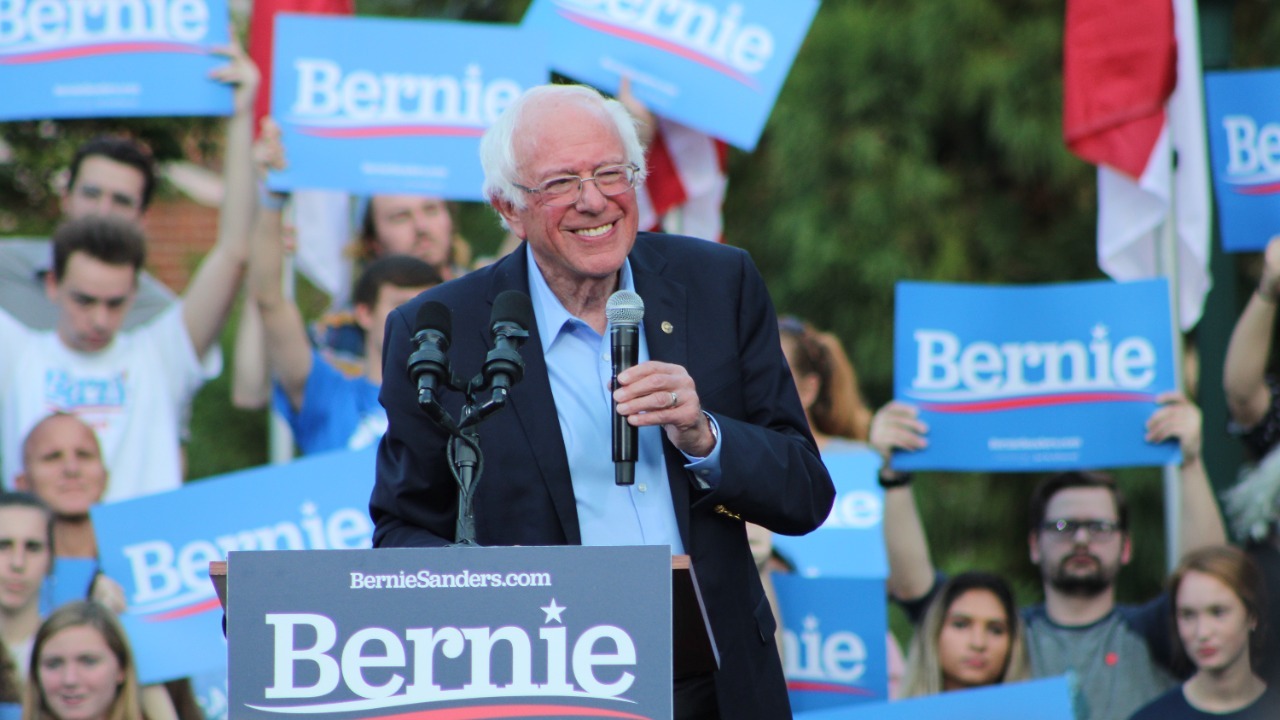
Bernie Sanders is preparing to take his long-running war on concentrated wealth to California voters, backing a one-time levy on fortunes measured in billions rather than millions. At the same time, his own finances are under renewed scrutiny, with public estimates putting his net worth in the low single-digit millions, a fraction of the fortunes he wants to tax. The contrast between a self-described democratic socialist worth roughly $2 million to $3 million and the billionaires he is targeting is shaping the political narrative around the new campaign.
That tension raises a deeper question about credibility and power in American politics: does Sanders’ relative modesty make him a more persuasive messenger for a billionaire tax, or does any personal wealth undercut his populist brand? His financial disclosures, book earnings and real estate holdings tell a story of a politician who became a millionaire late in life through mainstream channels, not speculative bets, and that story is central to how voters will judge his latest push.
What Sanders is worth today
As of February, public estimates of Sen. Bernie Sanders’ wealth cluster in a narrow band that would be familiar to many upper-middle-class professionals, not to the ultra-rich. One widely cited breakdown states that, As of February, estimates of Sen. Bernie Sanders’ net worth range from $2 million, attributed to Finance Monthly in Dec 2025, to $3 million, with liquid investments reportedly between $250,000 and $500,000, figures that place him comfortably above the median American household but far below the billionaire class he is targeting with new taxes. That spread reflects the inherent fuzziness of valuing retirement accounts, book royalties and home equity, but it still anchors him in the realm of single-digit millions.
Earlier assessments point in the same direction, suggesting that Sanders crossed into millionaire territory only after his national profile exploded. One analysis from 2019 pegged his wealth at about $2.5 m, describing his net worth as roughly $2.5 million and emphasizing that the bulk of it came from his salary as a senator and a series of successful book deals rather than from large stock portfolios or private companies. Taken together, these snapshots show a politician whose finances have grown with his fame but remain modest compared with the tech founders and hedge fund managers who dominate the top of the wealth distribution.
How he made his money
The architecture of Sanders’ fortune is straightforward: decades of public-sector pay, a late-career publishing boom and relatively conservative asset holdings. One detailed review notes that he earns a yearly salary of $174,000 as a senator and that his total reported assets were less than $750,000 in 2015, before his first presidential run vaulted him into the national spotlight. That baseline underscores how quickly his finances changed once he became a fixture on the national stage, with book advances and royalties transforming him from a long-serving public official with limited savings into a millionaire.
Those books, which turned his stump speeches into bestsellers, are central to the story. According to one profile, Vermont Senator Bernie Sanders has an estimated net worth of around $3 million, with Sanders and his wife, Jane O’Meara Sanders, currently owning two homes and having previously owned a third, while his post-2016 income was significantly boosted by book advances and royalties that followed his rise as a national figure. Another financial breakdown, Based on recent public disclosures and estimates as of 2026, puts Bernie Sanders’ net worth at roughly 2-2.5 million, listing Key assets such as a Primary home in Vermont, a Washington, D.C. rowhouse and retirement accounts, which together paint a picture of wealth built through conventional, transparent channels rather than opaque investment vehicles.
Homes, lifestyle and the “three houses” attack
For critics, Sanders’ real estate portfolio has long been a convenient shorthand for alleged hypocrisy, encapsulated in the familiar taunt that a socialist should not own multiple homes. The reality is more prosaic. Detailed reporting notes that Bernie Sanders has an estimated net worth of around $3 million and that Sanders and Jane Meara Sanders currently own two homes, a primary residence in Vermont and a property in Washington, D.C., after previously owning a third vacation home that has since been sold. That pattern is not unusual for senior members of Congress who split their time between their home states and the capital, and it situates Sanders closer to a well-off professional couple than to the rarefied world of private jets and superyachts.
His broader lifestyle also undercuts the caricature of a champagne socialist. Earlier coverage of his finances highlighted that, in 2016, Sanders was reportedly earning standard speaking fees and that his financial disclosures did not show sprawling business interests or luxury assets, a point underscored in a review that framed him as a 77-year-old lawmaker with a net worth of about $2.5 m, or roughly $2.5 million, built primarily from his government salary and book income rather than from corporate board seats or equity stakes. For voters trying to decide whether his billionaire tax push is self-serving or principled, the distinction between owning a couple of houses and commanding a ten-figure fortune is not a minor detail, it is the core of his argument that he is challenging a different economic universe.
The California billionaire tax push
Sanders’ personal finances are under the microscope now because he is about to headline a high-stakes tax fight on the West Coast. Local radio reporting describes how KFI AM 640, branded as KFI AM 640 – SoCal News: More Stimulating Talk, has been covering plans for Sen. Bernie Sanders to formally kick off a campaign to place a one-time tax on billionaires on the California ballot, with organizers racing to gather enough signatures to qualify for the November vote. The measure would target fortunes at the very top, aiming to convert a slice of extreme wealth into funding for public services in a state that is home to some of the richest individuals on the planet.
Supporters frame the proposal as a moral and fiscal corrective after decades of tax policy that, in their view, favored capital over labor. One advocacy-focused report quotes Sanders arguing that Our country needs access to hospitals and emergency rooms, not more tax breaks for billionaires, a line that links the levy directly to keeping hospitals and emergency departments open in communities that have seen facilities close or consolidate. A separate explainer on the debate, titled Billionaire Tax Coming to California and Beyond in its video description, notes that a proposed tax on billionaires would represent a significant shift in state fiscal policy and could be the first such levy in nearly 50 years, raising the stakes for both supporters and opponents who see California as a bellwether for national trends.
Populist credibility versus billionaire power
Sanders’ allies argue that his relatively modest net worth actually strengthens his hand in this fight, because he is not asking voters to endorse a tax that would hit his own balance sheet in any meaningful way. One widely shared analysis of his finances, As of February, estimates of Sen. Bernie Sanders’ net worth range from $2 million to $3 million with investments capped at about $500,000, underscores that he is orders of magnitude poorer than the billionaires whose combined wealth he has described as reaching into the trillions. In a recent interview about the California effort, Sanders said he had listened closely to concerns on both sides and had been at the negotiating table focused on bringing tech entrepreneurs into the conversation, while also pointing to a group of billionaires with a combined wealth of $2 trillion as evidence of how concentrated modern fortunes have become.
More From The Daily Overview
*This article was researched with the help of AI, with human editors creating the final content.

Grant Mercer covers market dynamics, business trends, and the economic forces driving growth across industries. His analysis connects macro movements with real-world implications for investors, entrepreneurs, and professionals. Through his work at The Daily Overview, Grant helps readers understand how markets function and where opportunities may emerge.

