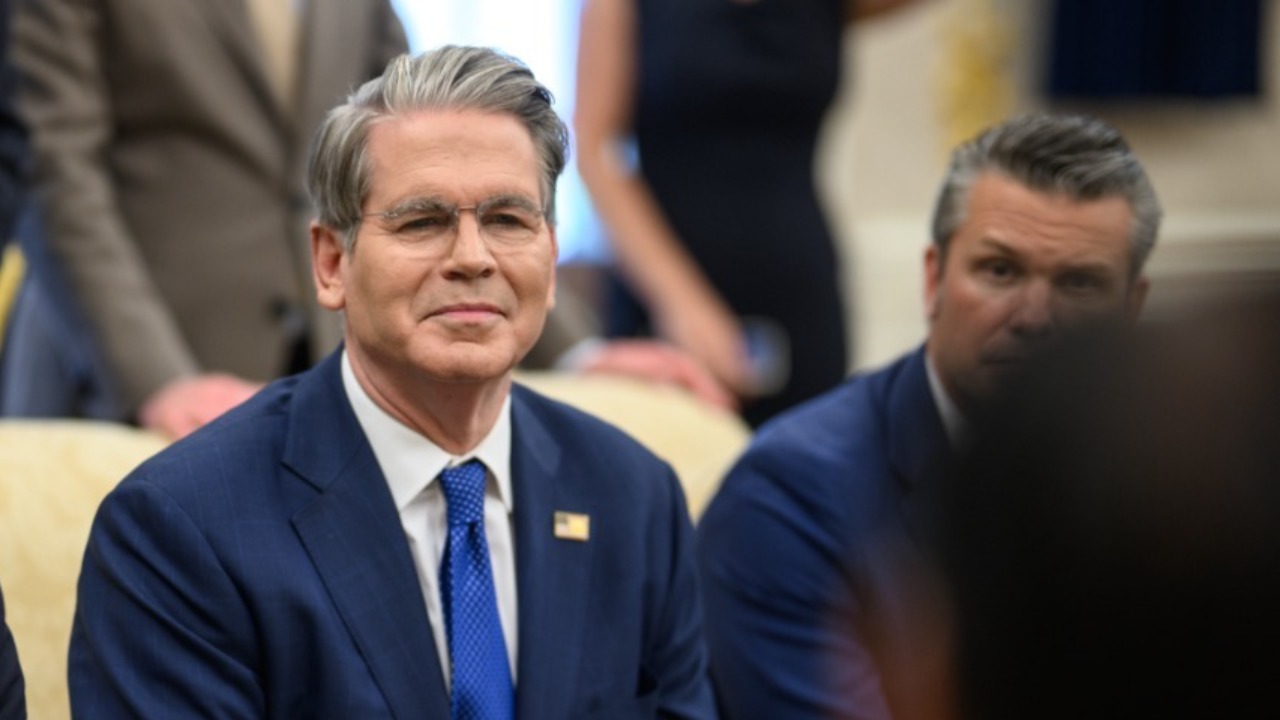
Private money is starting to flow toward a new kind of “Trump account” for children, and the people behind the idea are betting that this is only the beginning. The concept blends long-term savings with a political brand that already dominates the national conversation, creating a fresh test of how far donors and families are willing to go in tying kids’ financial futures to the Trump name.
How Bessent’s vision fits into the Trump-era money map
I see Dec Bessent’s expectations for rising private contributions as part of a broader realignment of how money moves around the Trump ecosystem. Instead of focusing only on campaign checks or super PACs, the attention is shifting toward vehicles that look more like household finance tools, framed as a way to help children build assets over time. That is where the “Trump accounts” come in, positioned as savings-style arrangements that can attract donors who want to signal loyalty to President Donald Trump while also claiming to support kids’ futures.
In public comments, Dec Bessent has described these Trump-branded accounts for children as a structure that can receive private contributions and then grow over years, a model that borrows the language of long-term investing rather than short-term political giving. Reporting on Bessent’s remarks makes clear that he expects more private contributions to flow into these Trump accounts, and that he sees them as a way to channel private capital into children’s financial lives while still orbiting the Trump brand.
Why private contributions are central to the Trump account model
At the heart of Bessent’s pitch is the idea that private donors, not public budgets, will drive the growth of these accounts. I read that as a deliberate choice: it keeps the initiative aligned with conservative skepticism of government programs while inviting wealthy supporters to step in as benefactors. The more that private money fills these accounts, the more they can be framed as proof that the Trump movement can build parallel financial structures without leaning on federal appropriations.
That logic helps explain why Bessent is already talking about a future wave of contributions rather than a one-off launch. He is not just describing a static pot of money, he is forecasting a pipeline in which individuals and organizations repeatedly top up children’s balances. In his view, the novelty of a Trump-branded account for kids is itself a fundraising tool, something that can persuade donors to give again and again because it feels more tangible than a generic check to a political committee. The expectation of rising private inflows is therefore baked into the model, not an afterthought.
The “novel idea” pitch and what it reveals about donor psychology
When Bessent calls the Trump accounts a “pretty novel idea,” he is not just talking about financial engineering, he is appealing to donors’ desire to feel like they are part of something new. I see that language as a way to differentiate these accounts from traditional college funds or 529 plans, even if the underlying mechanics may share familiar features. The Trump branding, combined with the promise of helping children, turns what might otherwise be a routine savings product into a political statement wrapped in a family-friendly package.
In one account of his remarks, Bessent said, “I’m hopeful that there will be many others that will come forward because it’s a pretty novel idea and it does make you feel good to give,” a line that captures how much this strategy leans on emotion as well as finance. By stressing that it “does make you feel good to give,” he is signaling that these contributions are meant to deliver psychic returns as well as financial ones, inviting donors to see themselves as patrons of the next generation rather than just backers of a political brand. That framing, detailed in coverage of his comments on the novel idea, is central to why he believes more private cash will follow.
How Trump branding reshapes children’s savings narratives
Attaching the Trump name to children’s accounts changes the story families and donors tell themselves about saving. Instead of a neutral bank product, the account becomes a symbol of alignment with President Donald Trump’s political and cultural project, something that can be mentioned at family gatherings or shared on social media as a badge of identity. I see that as both a strength and a risk: it can energize supporters who already admire Trump, but it also narrows the appeal to households comfortable tying their kids’ finances to a polarizing brand.
For parents and grandparents who are already in Trump’s corner, the branding may actually make it easier to start saving, because it wraps a sometimes dull topic, long-term financial planning, in a familiar narrative. The account can be presented to a child as a gift “from the Trump world,” a story that might resonate in families where Trump rallies, slogans, and memorabilia are already part of daily life. At the same time, the overt political association could deter others who prefer to keep their children’s financial tools separate from partisan identities, a tension that will shape how far Bessent’s expectations for private inflows can realistically go.
Financial literacy ambitions and the role of Treasury voices
Beyond the branding, Bessent and his allies are trying to position these Trump accounts as a gateway to better financial literacy for children. That is where the involvement of figures like Treasury’s Lavorgna becomes important, because it signals that the initiative is not only about collecting donations but also about teaching kids how money works. When a Treasury official like Lavorgna is cited in connection with the accounts and financial literacy, it suggests an effort to give the project a policy-adjacent sheen rather than leaving it purely in the realm of political marketing.
I read that emphasis on financial literacy as a way to broaden the coalition behind the accounts. If the narrative is that Trump-branded accounts help children learn about saving, investing, and compound interest, then educators, community leaders, and even some skeptics might find common ground on the educational value, even if they bristle at the politics. The reporting that connects Treasury’s Lavorgna to discussions of financial literacy around these accounts underscores that the backers want to be seen as building a bridge between Trump’s political base and mainstream concerns about kids’ money skills, not just creating another partisan fundraising tool.
How these accounts intersect with existing savings tools
From a practical standpoint, I see the Trump accounts as an attempt to sit alongside, rather than replace, existing savings vehicles like 529 college plans, custodial brokerage accounts, or even simple high-yield savings accounts. The difference is not necessarily in the tax treatment or the underlying investments, which remain largely unverified based on available sources, but in the narrative wrapper that tells donors and families what the money is “for.” In that sense, the Trump accounts function more like a branded scholarship fund or a cause-based savings pool than a purely technical innovation.
That positioning matters because it shapes how financial advisers, banks, and fintech apps might respond. If the accounts are seen as a niche product for Trump-aligned households, mainstream institutions may keep them at arm’s length, leaving the infrastructure to smaller firms or bespoke platforms that specialize in politically themed products. On the other hand, if the accounts prove that there is strong demand for branded, mission-driven savings tools for children, larger players could eventually adapt the model, even if they avoid explicit partisan labels. For now, the Trump accounts serve as a test case for how far political branding can travel into the realm of kids’ long-term finances.
Donor motivations: legacy, loyalty, and leverage
When I look at Bessent’s confidence that more private money will flow into Trump accounts, I see three overlapping motivations for donors: legacy, loyalty, and leverage. Legacy is about leaving something concrete behind for children, whether they are relatives, community members, or beneficiaries chosen by a foundation. Loyalty is about signaling continued support for President Donald Trump and his circle, especially for donors who have already maxed out traditional political contributions. Leverage is about using money to shape the next generation’s relationship with the Trump brand and with financial institutions more broadly.
The quote in which Bessent says the idea “does make you feel good to give” captures how these motivations blend into a single emotional payoff. A donor can tell themselves that they are helping a child, backing Trump, and investing in a broader movement all at once, which is a powerful combination for people who already see politics as central to their identity. That is why the accounts are framed not just as a financial product but as a story about who the donor is and what kind of future they want to build, a story that Bessent is betting will unlock more private contributions over time.
Political risk and reputational questions for families
For all the upside that Bessent sees, there are clear political and reputational risks for families who sign on. Tying a child’s savings to the Trump name could look like a smart move in a household that expects Trump’s influence to remain strong for decades, but it could feel like a burden if the political winds shift or if the brand becomes more controversial in the child’s social or professional circles. I see that as a key uncertainty: the same branding that attracts donors today could become a liability for the account holders tomorrow.
There is also the question of how children themselves will feel about having their early financial life linked to a political figure they did not choose. As they grow older, some may embrace the association, especially if they share their family’s views, while others may resent it or seek to distance themselves. Those dynamics are not unique to Trump, but the intensity of his political profile amplifies them. Bessent’s optimism about future private inflows assumes that families will accept those trade-offs, or at least that the benefits of extra savings will outweigh any discomfort with the branding.
What Bessent’s bet signals about the future of Trump-aligned finance
Stepping back, I see Bessent’s expectations for more private cash in Trump accounts as a signal that Trump-aligned finance is moving into a new phase. The focus is no longer limited to campaign cycles or election-year fundraising, it is expanding into multi-decade products that aim to shape how children save, learn, and think about money. If the accounts succeed in attracting sustained private contributions, they could become a template for other political figures who want to turn their brands into long-term financial platforms.
At the same time, the experiment will test how durable the Trump brand really is when it is attached to something as personal and slow-moving as a child’s savings account. Donors may be eager to write the first checks, but the true measure will be whether those accounts are still being funded, managed, and talked about when today’s children are old enough to open their own brokerage apps or apply for student loans. Bessent is betting that the answer will be yes, and that more private money will keep flowing. The next few years of contributions, and the stories families tell about these accounts, will reveal whether that bet pays off.
More From TheDailyOverview
- Tennessee loses $2.6B megafactory and faces major layoffs
- Retired But Want To Work? Try These 18 Jobs for Seniors That Pay Weekly
- What to do with your pennies after the U.S. stops minting them
- Home Depot CEO warns of a troubling customer trend in stores

Silas Redman writes about the structure of modern banking, financial regulations, and the rules that govern money movement. His work examines how institutions, policies, and compliance frameworks affect individuals and businesses alike. At The Daily Overview, Silas aims to help readers better understand the systems operating behind everyday financial decisions.