President Donald Trump’s signature savings program for children is moving from concept to scale at remarkable speed, with Treasury Secretary Scott Bessent signaling that the real action is only just beginning. As Trump’s branded investment accounts surge past the 500,000 mark, Bessent is sketching out a future in which tens of millions of families, employers, philanthropists and even governments channel long-term capital into these portfolios.
The early numbers give the initiative political momentum, but they also raise hard questions about who benefits, how the money is invested and what guardrails will govern a program that blends public subsidy with private markets. I see three big storylines emerging at once: rapid adoption, ambitious projections and a growing web of financial and political interests around the “Trump Accounts” experiment.
Half a million sign-ups and a White House betting on scale
Scott Bessent is not talking about a slow pilot. He is talking about a rush. Treasury officials say that roughly 500,000 children already have Trump-branded accounts, a figure that would be impressive for a mature workplace retirement platform, let alone a brand-new program aimed at babies and young kids. Bessent has framed that early wave as proof of pent-up demand for simple, government-seeded investment vehicles that parents can open at birth and then forget about for decades. The White House is leaning into that narrative, with aides casting the accounts as a flagship affordability measure at a time when household budgets are squeezed by housing, childcare and student debt.
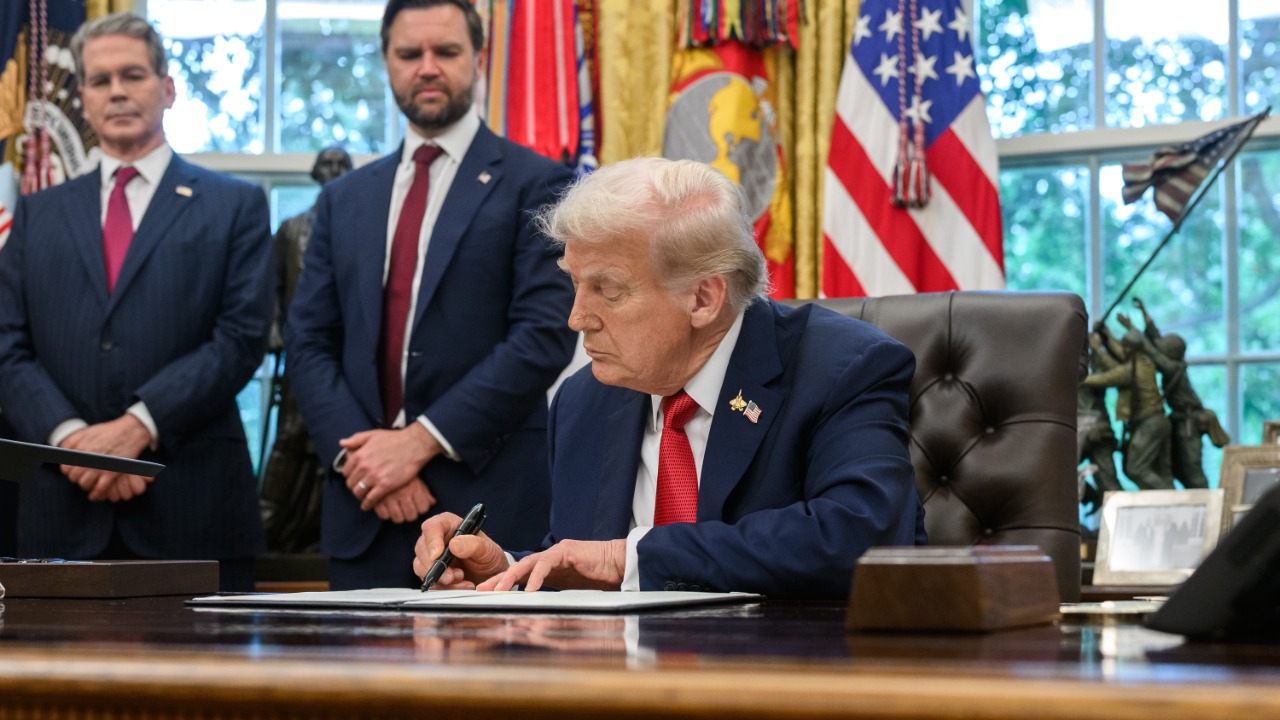
The political stagecraft around the rollout underscores how central the initiative has become to Trump’s economic message. Trump is expected to appear at a high-profile event at 11 a.m. EST alongside Bessent and White House Press Secretary Karoline Leavitt, a trio that blends presidential branding, Treasury technocracy and communications muscle. In parallel, Bessent has been telling investors and reporters that more donations from wealthy backers are in the pipeline, suggesting that the initial government seed money is only one layer of a much larger capital stack he expects to build.
Inside the Trump Accounts design: index funds, kids and corporate money
Under the hood, the Trump Accounts are built to look less like a bank product and more like a stripped-down retirement plan for children. The funds in each account must be invested in mutual funds or exchange-traded funds that track the S&P 500 or another broad index, a constraint that steers families away from stock-picking and toward diversified market exposure. That design choice is doing double duty. It simplifies the decision-making burden for parents who may have little investing experience, and it channels a growing stream of public and private contributions into the same large-cap benchmarks that already dominate American retirement portfolios.
The contribution architecture is more complex, and it is where the program’s ambitions really show. Treasury officials have described a system in which parents, employers and philanthropists can all add money, with tax treatment that is still being fleshed out. A key plank is the ability for companies to make contributions of up to $2,500 per employee per year into Trump-branded accounts for workers’ children, a feature that the Treasury department is pitching as a new kind of family benefit. At the same time, the White House has highlighted the accounts as a response to the lack of savings vehicles for many American children, with Karoline Leavitt arguing that the program is designed to appeal across party lines.
Bessent’s million-dollar promise and the IRS guardrails
Bessent has not been shy about dangling eye-catching projections. He has argued that, with steady contributions and market growth, some Trump Accounts could be worth more than $1 million by the time a child turns 21, a claim that rests on the power of compounding in equity index funds. That kind of number is politically potent, especially for a president who has long equated stock market performance with national success. It also raises expectations that the program will deliver life-changing sums for at least a slice of participants, even though actual outcomes will depend on market returns that no Treasury secretary can control.
Behind the scenes, regulators are trying to make sure the structure can handle the flows Bessent is courting. Keith Boislard from the IRS has said that Certain governmental entities and charities may also make qualified general contributions to Trump Ac, and that employer contributions will count toward the employee’s taxable income. That last detail matters. It means the accounts are not a pure tax shelter, and it gives the Internal Revenue Service a clear line of sight into how much corporate America is routing into the program. It also hints at a broader ecosystem in which city governments, school districts and nonprofit foundations could all become recurring funders, turning the accounts into a nexus of public and private capital.
From $1,000 seeds to a 25 million user ambition
The initial design of the program revolves around a modest but symbolically powerful government stake. Treasury Secretary Scott Bessent has described Trump Accounts as a “Real novel, innovative approach,” with the federal government putting $1,000 into each eligible child’s account as a starting balance and then challenging private donors to match or exceed that seed. In public remarks, he has highlighted early philanthropic commitments, including gifts from wealthy families that he says will be spread across communities, citing examples like Susan and David initiatives in Connecticut to illustrate how local giving can plug into the national framework. Those details surfaced as Bessent used a Treasury briefing to pitch the program as a partnership between Washington and private wealth.
Even with only 500,000 accounts open so far, Bessent is already talking about an order-of-magnitude expansion. The Treasury secretary predicts that 25 million children will ultimately take advantage of the new Trump Accounts for kids, a figure that would cover a large share of the country’s under-18 population. In that scenario, employer contributions of up to $2,500 per employee per year could become a standard benefit in corporate America, especially in sectors that already compete aggressively on perks. The projection, laid out in an interview with reporter Julie Tsirkin, is aggressive, but it aligns with the White House’s broader push to make Trump-branded savings tools a default feature of American family finance rather than a niche product for the affluent.
Politics, markets and the next phase of “huge moves”
For all the talk of compounding and index funds, the Trump Accounts are also a political instrument, and Bessent is using the early adoption numbers to argue that the administration has found a rare point of bipartisan resonance. White House aides have emphasized that the accounts are meant to serve both Democrats and Republicans, and that the branding is less about partisanship than about associating the program with Trump’s long-standing focus on markets. At the same time, the requirement that funds track the S&P 500 or another index ties the fortunes of millions of children directly to equity performance, a choice that will look prescient in bull markets and far more fraught in prolonged downturns. The investment rules, laid out in detail in Jan coverage of the program, are meant to mitigate that risk by avoiding concentrated bets, but they cannot eliminate market volatility.
Bessent’s hints at “huge moves” ahead are best understood in that context. He has repeatedly stressed that the 500,000 early sign-ups are only a starting point, and that additional philanthropic commitments and employer participation will be announced later on Wednesday, according to Bess reporting. Separate dispatches from News and Jan note that Bessent says 500,000 have signed up for Trump accounts and that more donations are coming, reinforcing the sense that the program is entering a second phase in which scale, not just design, will be the main story. If the Treasury secretary’s 25 million user ambition proves even roughly accurate, the Trump Accounts will not just be another policy line item. They will be one of the largest experiments in state-backed, market-based wealth building the United States has ever attempted.
More From TheDailyOverview
*This article was researched with the help of AI, with human editors creating the final content.

Elias Broderick specializes in residential and commercial real estate, with a focus on market cycles, property fundamentals, and investment strategy. His writing translates complex housing and development trends into clear insights for both new and experienced investors. At The Daily Overview, Elias explores how real estate fits into long-term wealth planning.

