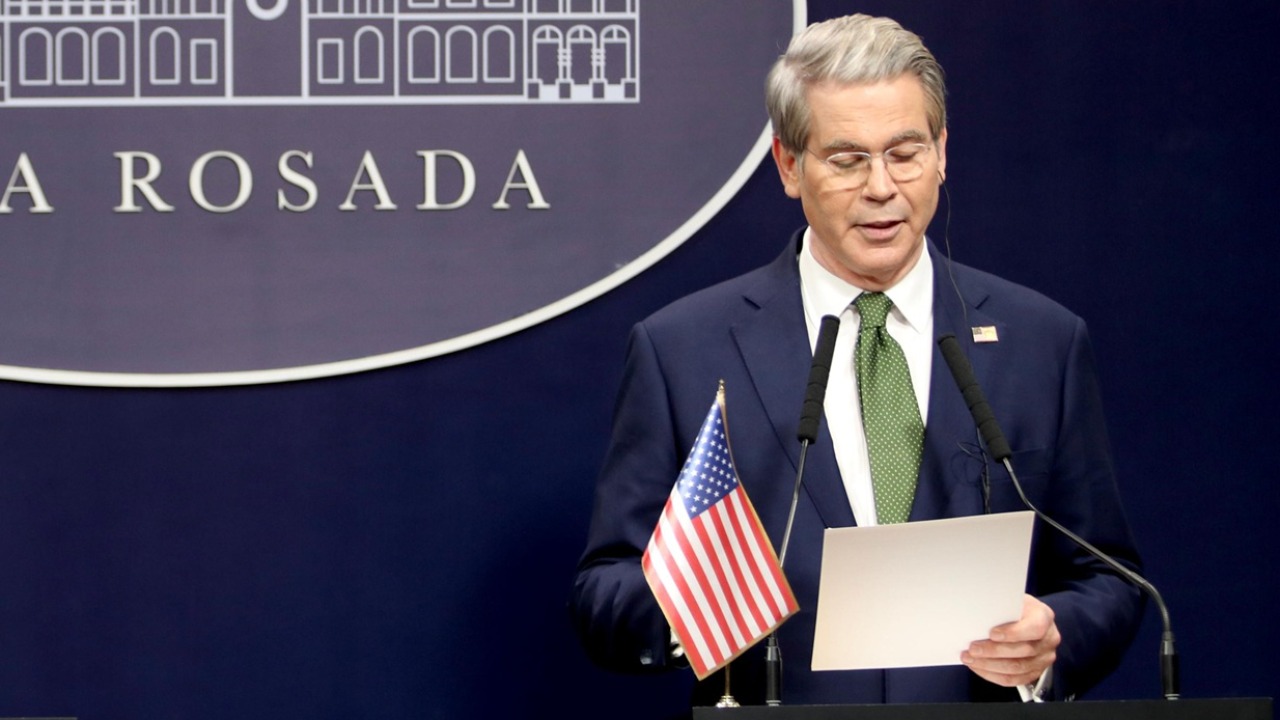
The Trump administration is dangling a new round of direct payments, with Treasury Secretary Scott Bessent promising that any fresh stimulus would focus on households earning less than $100,000. The proposal, framed as a dividend from higher tariffs, is pitched as a way to cushion Americans from rising prices while turning trade policy into a cash benefit. Whether those checks ever arrive, and who exactly qualifies, now hinges on a mix of legal, political, and economic tests that are still unfolding.
What Bessent is promising and who would qualify
Treasury Secretary Scott Bessent has drawn a clear income line around the administration’s latest idea for direct relief, saying the checks would likely be limited to households earning less than $100,000. I read that threshold as both a political and economic signal, designed to reassure middle class families that they are the intended beneficiaries while excluding higher earners who are less likely to feel squeezed by tariffs or inflation. By tying eligibility to that specific $100,000 cutoff, Bessent is also sketching out a program that looks more like targeted relief than a universal dividend, even as the White House sells it as a broad-based win for working Americans.
At the same time, Bessent has been careful to stress that he cannot write the checks on his own. In his public comments, he has underscored that Congress ultimately controls federal spending, a reminder that any promise of cash is still contingent on lawmakers signing off. The administration is presenting the plan as a way to recycle tariff revenue into households’ pockets, but the legal authority to move that money out the door still runs through Capitol Hill, which is why Bessent’s vow to focus on families under $100,000 is best understood as an opening bid rather than a final blueprint, even as he outlines the income cap in detail as Treasury Secretary Scott Bessent.
The $2,000 promise and the tariff funding question
Behind Bessent’s income cap is a more eye-catching number: $2,000. The administration has floated that figure as the size of the individual rebate, positioning it as a kind of annual return on the tariffs President Trump has imposed on imports. In public remarks, Bessent has sounded cautiously optimistic, saying “we will see” about $2,000 rebate checks to Americans, a phrase that captures both the ambition of the plan and the uncertainty around it. The idea is to convert trade policy, which usually feels abstract, into a concrete payment that shows up in bank accounts, but that depends on whether tariff revenue is both legally available and politically acceptable as a funding source.
That legal question is not academic. The Supreme Court is currently weighing Trump’s tariffs, and the outcome will shape how much money is actually on the table for any rebate scheme. If the Court narrows the administration’s tariff authority or constrains how those funds can be used, the $2,000 figure could prove more aspirational than real. For now, the White House is treating tariff revenue as a pool of “free” money that can be redirected to households, yet the final word on that premise will come from the justices reviewing the trade actions and from lawmakers who must authorize any large-scale disbursement to $2,000 rebate checks.
White House confidence versus legal and legislative reality
Inside the administration, the public tone has grown increasingly confident that the payments are coming. A top aide has already said that disbursement will start “very soon,” and Top White House economic adviser Kevin Hassett has echoed that sense of urgency. That messaging is designed to reassure Americans that the plan is more than a talking point, especially for those who have already mentally spent a potential $2,000 on rent, car repairs, or holiday bills. It also reflects the political incentive for President Trump’s team to show quick, tangible benefits from his tariff strategy, which has otherwise been criticized for raising costs on consumers.
Yet even as the White House projects momentum, officials acknowledge that the final decision lies elsewhere. The Supreme Court is still reviewing the tariffs in this context, and Congress has not yet passed the legislation that would authorize the checks. That gap between confident rhetoric and unresolved process is why I see the current moment as a high stakes waiting game: the administration is effectively betting that the courts will uphold Trump’s trade moves and that lawmakers will be willing to convert that authority into a new entitlement-like payment. Until those pieces fall into place, the promise of $2,000 checks for Americans remains a plan on paper, no matter how often aides like Top White House economic adviser Kevin Hassett talk up imminent disbursement.
The key procedural hurdle before any checks go out
Even with Trump and the White House firmly behind the idea, the plan is not yet law, and that distinction matters more than any press conference. Senior officials, including Treasury Secretary Scott Bessent, have been clear that there is a crucial step that must occur before any $2,000 dividend payment checks can happen. That step is congressional approval of a specific mechanism to move tariff revenue into a rebate program, complete with eligibility rules, distribution methods, and safeguards against fraud. Without that statutory framework, the Treasury Department cannot simply flip a switch and send out money, no matter how much political pressure the president applies.
The legislative process also opens the door to changes that could reshape the program Bessent has sketched. Lawmakers might push to lower or raise the $100,000 income cap, adjust the $2,000 amount, or convert the checks into a tax credit instead of a direct payment. They could also attach unrelated priorities, from deficit reduction targets to new trade conditions, which would complicate the path to passage. That is why the “key step” before any checks can go out is not just a procedural box to tick, but a full scale negotiation over how to design and pay for what the administration is currently describing as $2,000 checks for many people, a negotiation that will determine whether the promise of a tariff dividend survives contact with Despite Trump and White House.
What the checks would mean for households under $100,000
If the plan clears the courts and Congress, the impact on households under $100,000 would be immediate and concrete. For a family earning $60,000, a $2,000 payment is more than a month’s rent in many parts of the country, or the difference between keeping an aging 2015 Honda Civic on the road and taking on a new car loan at higher interest rates. For a single parent making $45,000, it could cover several months of child care or pay down high interest credit card debt that ballooned as prices rose. In that sense, the checks would function as both a political statement about who the administration wants to help and a practical buffer against the very cost pressures that tariffs can exacerbate.
There is also a broader macroeconomic angle. Direct payments to middle and lower income households tend to be spent quickly on essentials like groceries, utilities, and transportation, which can give a short term boost to local businesses from Walmart to neighborhood diners. At the same time, using tariff revenue to fund those payments effectively recycles money that importers (and ultimately consumers) have already been paying through higher prices. I see that as a circular flow: tariffs raise costs on the front end, then the government returns some of that money on the back end, with the distribution skewed toward those under $100,000. Whether that trade off feels fair will depend on how clearly families can see the link between what they pay at the store and what eventually arrives in their bank accounts.
More From TheDailyOverview

Julian Harrow specializes in taxation, IRS rules, and compliance strategy. His work helps readers navigate complex tax codes, deadlines, and reporting requirements while identifying opportunities for efficiency and risk reduction. At The Daily Overview, Julian breaks down tax-related topics with precision and clarity, making a traditionally dense subject easier to understand.

