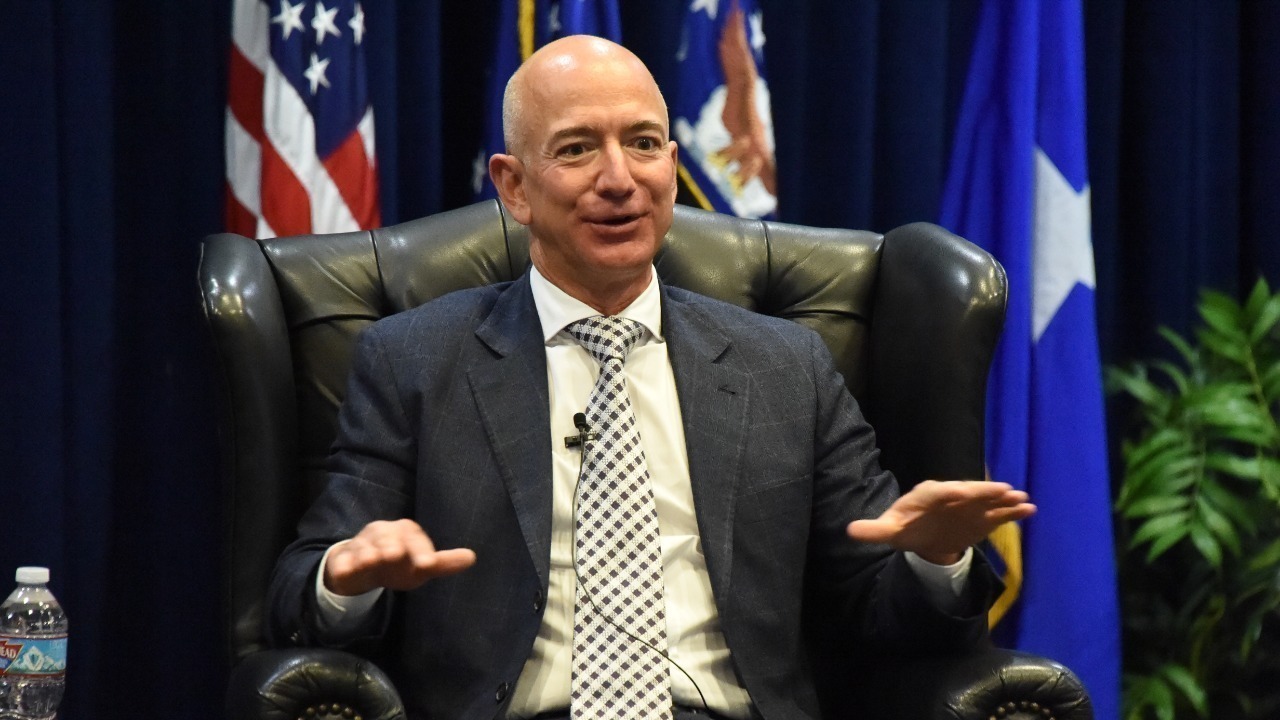
Jeff Bezos has been unusually blunt about how ordinary investors should navigate a shaky economy, urging people to hold off on big-ticket purchases and keep more cash on hand. At the same time, he has highlighted a handful of businesses he believes can ride out volatility, a mix that reveals how one of the world’s richest investors thinks about risk, resilience and long-term growth.
I see a clear throughline in his recent comments: avoid stretching your household or portfolio for flashy bets, and instead lean into companies with durable cash flows, strong competitive positions and room to compound over many years. His caution on consumer spending and his enthusiasm for a few select stocks are two sides of the same conservative playbook.
Why Bezos is telling consumers to hit pause on big purchases
Bezos has framed the current environment as one where households should prioritize flexibility over ambition, especially when it comes to discretionary spending. He has suggested that people thinking about buying a new car, upgrading major appliances or taking on other large expenses might want to “wait a bit” and see how the economy develops, arguing that preserving optionality is more valuable when the outlook is cloudy. That guidance reflects the same mindset he applied at Amazon during downturns, when he focused on conserving cash and avoiding commitments that would be hard to unwind if conditions worsened.
His warning is rooted in the reality that higher borrowing costs and persistent inflation can quickly turn a manageable purchase into a financial strain. When interest rates climb, financing a 2024 Ford F-150 or a high-end Samsung refrigerator can lock a family into years of elevated payments, just as other costs like rent, groceries and utilities are also rising. By urging consumers to delay those commitments, Bezos is effectively telling them to build their own buffer, similar to how companies shore up balance sheets before a potential recession, a stance that aligns with broader concerns about household debt and economic uncertainty documented in recent reporting.
How his Amazon track record shapes this cautious playbook
Bezos’s advice carries weight because it mirrors the conservative discipline that helped Amazon survive multiple downturns while still investing for the long term. During past slowdowns, he was willing to trim costs, pause some expansions and focus on core operations, even as he kept pouring resources into strategic bets like Amazon Web Services and logistics automation. That balance between prudence and selective aggression is visible in how Amazon navigated the pandemic boom and subsequent reset, cutting tens of thousands of jobs and scaling back warehouse growth when demand normalized, while still funding cloud, advertising and Prime Video as long-term engines of profit.
Investors who watched Amazon’s evolution from an online bookstore to a sprawling infrastructure and services platform have seen how this approach can pay off over decades rather than quarters. The company’s willingness to endure short-term margin pressure in exchange for durable competitive advantages has been documented in detailed analyses of its earnings history and capital allocation choices. When Bezos now tells consumers to be careful with leverage and big-ticket spending, he is essentially extending the same philosophy he applied inside Amazon’s boardroom to the personal balance sheets of his audience.
Why Bezos keeps pointing back to Amazon as a core holding
When Bezos talks about safer places to put money to work, he naturally gravitates toward Amazon, a company whose business mix has shifted from low-margin retail to higher-margin services. Today, Amazon Web Services, digital advertising and third-party marketplace fees account for a growing share of operating income, giving the company a more resilient earnings base than when it relied primarily on selling physical goods. That diversification helps cushion the impact of slower consumer spending, since cloud contracts and ad budgets tend to be tied to long-term digital strategies rather than one-off shopping sprees.
Amazon’s scale also gives it levers that smaller rivals simply do not have. The company can adjust fulfillment fees, renegotiate shipping contracts, and optimize its network of delivery stations and sortation centers to protect profitability even when volumes fluctuate. Recent financial disclosures have highlighted how improvements in logistics efficiency and a shift toward regionalized fulfillment have boosted margins in the North America segment, while AWS continues to generate double-digit operating margins despite more cautious enterprise spending. Those dynamics, outlined in recent earnings coverage, help explain why Bezos still sees Amazon as a foundational holding for investors who want exposure to e-commerce, cloud computing and digital advertising in a single, cash-generating platform.
Bezos’s enthusiasm for Berkshire Hathaway’s conservative strength
Another company that fits neatly into Bezos’s “sleep-at-night” category is Berkshire Hathaway, where he has long admired Warren Buffett’s methodical approach to risk. Berkshire’s portfolio of operating businesses, from GEICO and BNSF Railway to utilities and manufacturing, throws off substantial cash that can be redeployed into new investments or used to repurchase shares. That internal cash engine, combined with a fortress balance sheet, gives Berkshire the ability to weather economic shocks without relying on capital markets, a trait that aligns closely with Bezos’s emphasis on resilience and optionality.
Berkshire’s large equity holdings, including stakes in companies such as Apple and Coca-Cola, add another layer of diversification that can smooth returns over time. When markets are volatile, the conglomerate’s mix of regulated utilities, insurance float and long-term stock positions tends to behave differently from a pure-play tech or consumer stock, which can help stabilize a portfolio anchored in more cyclical names. Analysts have noted that Berkshire’s cash pile has repeatedly climbed above 100 billion dollars, a figure highlighted in recent earnings reports, underscoring the company’s capacity to act as a buyer when others are forced to sell. That countercyclical firepower is precisely the kind of structural advantage Bezos has praised in public comments about conservative investing.
Why an index fund still makes Bezos’s short list of safer picks
Alongside individual companies, Bezos has repeatedly endorsed the idea that most investors are better off owning a broad market index fund than trying to pick winners. A low-cost S&P 500 index fund, for example, gives exposure to hundreds of large American companies across sectors, from technology and health care to industrials and consumer staples. That diversification reduces the risk that any single corporate misstep or industry downturn will derail a household’s long-term savings plan, which fits neatly with his broader message about avoiding concentrated, high-stakes bets in uncertain times.
Index funds also benefit from structural tailwinds that match Bezos’s long-term orientation. As corporate profits grow and the economy expands over decades, the aggregate value of the index tends to rise, even if individual components stumble along the way. Historical performance data, frequently cited in coverage of index investing, shows that broad U.S. equity indices have delivered solid real returns over long horizons despite recessions, inflation spikes and geopolitical shocks. By steering everyday investors toward simple, diversified vehicles instead of complex strategies, Bezos is effectively arguing that the safest way to participate in capitalism’s upside is to own a slice of the whole system rather than trying to outguess it.
How to reconcile caution on spending with confidence in select stocks
At first glance, Bezos’s message can sound contradictory: be wary of big personal purchases, yet consider owning shares in companies tied to consumer demand and the broader economy. In practice, the distinction comes down to flexibility and time horizon. A financed SUV or a luxury kitchen remodel locks a household into fixed payments that must be met every month, regardless of what happens to wages or job security. A diversified portfolio of stocks, by contrast, can be adjusted, trimmed or added to as circumstances change, and it is meant to be held for years, giving short-term volatility time to even out.
His three favored avenues, Amazon, Berkshire Hathaway and broad index funds, all share traits that align with that philosophy: strong balance sheets, diversified revenue streams and leadership teams that have navigated multiple economic cycles. Reporting on Amazon’s evolving profit mix, Berkshire’s cash-rich structure and the long-run performance of index funds, including detailed earnings breakdowns and shareholder updates, reinforces the idea that these are not speculative moonshots but vehicles designed to compound steadily over time. When I put his comments together, the message is consistent: tighten up on consumption that could strain your budget, but stay invested in broad, resilient businesses that can carry you through whatever the next cycle brings.
More From TheDailyOverview
- Dave Ramsey says these two simple questions show whether you’re rich or poor
- Retired But Want To Work? Try These 18 Jobs for Seniors That Pay Weekly
- IRS raises capital gains thresholds for 2026 and what’s new
- 12 ways to make $5,000 fast that actually work

Cole Whitaker focuses on the fundamentals of money management, helping readers make smarter decisions around income, spending, saving, and long-term financial stability. His writing emphasizes clarity, discipline, and practical systems that work in real life. At The Daily Overview, Cole breaks down personal finance topics into straightforward guidance readers can apply immediately.

