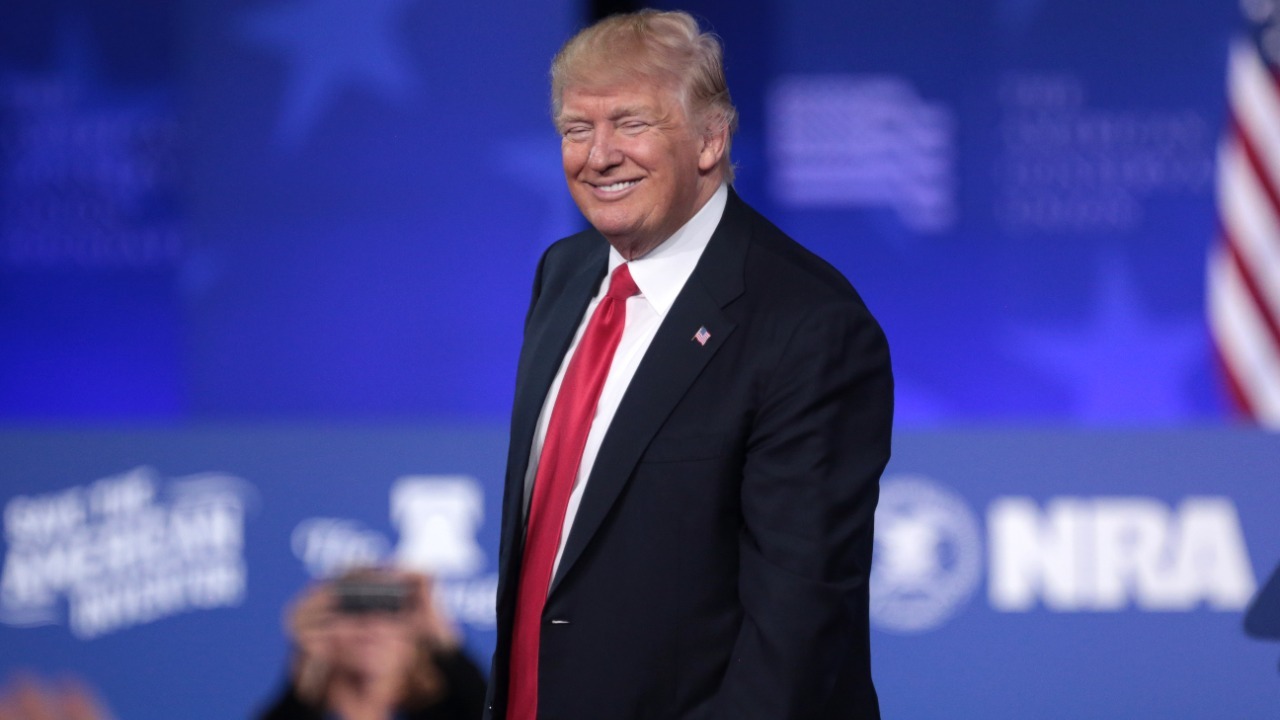
President Donald Trump is telling Americans they are living through a “golden age” as he points to easing inflation and high-profile price cuts at fast-food chains as proof that the affordability crisis is fading. His message leans heavily on the idea that prices are finally coming down after a painful surge, even as many households still feel squeezed by rent, groceries, and debt. The political stakes are clear: if voters accept his framing, the economic debate shifts from anger over costs to credit for a recovery.
Trump’s ‘golden age’ message meets a skeptical public
When President Trump describes the current moment as a “golden age,” he is not just celebrating economic data, he is trying to reset how Americans talk about prices. At a McDonald’s-focused event, he cast the country as stronger than ever and insisted that the worst of the affordability crunch is behind it, telling supporters that the economy is better than ever and that “this is also the golden age,” a line that has quickly become central to his pitch. That upbeat framing is designed to counter months of voter frustration over the cost of everyday items, from a Big Mac meal to a gallon of milk, and to turn a political vulnerability into a story of triumph.
Yet even as he leans into that optimism, reporting has highlighted how his rhetoric often sidesteps the lived experience of people who still struggle to cover basic bills. On Nov 17, 2025, coverage of his affordability push noted that, As President Trump has tried to reframe the conversation around prices, he has increasingly denied that there is a serious problem at all, even as polls show that many voters still rank inflation and rent among their top concerns. That gap between presidential messaging and household reality is what makes the “golden age” claim so politically risky: if people do not feel the improvement in their own wallets, the phrase can sound less like reassurance and more like dismissal.
Falling inflation, but not falling memories of the spike
Trump’s confidence rests in part on a real shift in the inflation data. After a period when prices were rising at the fastest pace in more than 40 years, the rate of increase has slowed sharply, and in the first few months of his second term inflation moved tantalisingly close to the Federal Reserve’s target. Economic trackers have noted that, in those early months, price growth cooled enough that it looked almost textbook, with inflation hovering near the level the Federal Reserve aims for when the economy is healthy and stable. For a White House eager to claim victory over inflation, that is a powerful talking point.
But inflation is not just a number, it is a memory, and the shock of the earlier surge still shapes how people feel about the economy. Even if the pace of increases has slowed, prices for rent, cars, and food remain well above where they were before the spike, and many families locked in higher costs through long-term leases or loans that do not reset just because the monthly inflation rate has cooled. Analysts tracking the economy under Mr Trump have pointed out that this lingering sticker shock helps explain why consumer sentiment has lagged behind the improving data. The president’s “golden age” language tries to leapfrog that emotional lag, but it cannot erase the cumulative hit to household budgets.
McDonald’s, Walmart and the fast-food stagecraft
Trump has chosen his stages carefully, turning brand-name chains into backdrops for his affordability message. At a McDonald’s Impact Summit, he praised the company for lowering prices and used the setting to argue that corporate decisions are proof that his policies are working. He also singled out Walmart as another example of big retailers responding to easing inflation by trimming prices, telling the audience that these moves show the strength of the country and the resilience of its consumers. In his telling, the combination of corporate price cuts and moderating inflation is what justifies calling this period a golden age.
Coverage of that event on Nov 18, 2025, underscored how central these brands have become to his narrative. Reports noted that Trump talked about falling inflation at McDonald’s and Walmart, thanking McDonald’s for lowering prices and pointing to the earlier period when inflation had been the highest in more than 40 years. At the same time, he told Americans the economy is better than ever at that McDonald’s summit, framing the chain’s menu board as a kind of scoreboard for his presidency. The choice of a fast-food stage is not accidental: it is where price changes are visible in neon, and where a president can claim credit for a cheaper burger in a way that feels immediate, even if the broader cost of living tells a more complicated story.
Affordability politics and the risk of denial
Trump’s strategy is not just to highlight good news, it is to argue that the affordability crisis itself has been overstated. On Nov 18, 2025, reporting on his evolving message noted that, As President Trump has sought to reframe his message on affordability, he has increasingly denied there is a problem at all, even as advisers worry that such denial could reveal a key policy vulnerability. That shift from acknowledging pain to insisting it no longer exists may energize supporters who already believe the economy is strong, but it risks alienating swing voters who still feel every price increase at the checkout line.
Earlier coverage on Nov 17, 2025, captured the same tension from a different angle, describing how his comments at McDonald’s have become a kind of shorthand for his broader economic argument. In that reporting, the focus was on how his insistence that prices are coming down, and that the country is thriving, can sound out of touch to people whose wages have not kept up with past increases. The more he repeats that there is no affordability problem, the more he invites comparisons between his words and the reality of rent hikes, medical bills, and student loan payments. In political terms, the risk is that the “golden age” line becomes a symbol not of prosperity, but of a president who seems to be talking past the anxieties of the middle class.
‘Prices are coming down’ and what voters actually see
Trump’s most concrete claim is that prices are not just rising more slowly, they are actively falling in ways that matter to ordinary people. He has said that “prices are coming down” in America, pointing to examples like cheaper menu items and promotional discounts as evidence that the tide has turned. In one appearance, he linked those price moves directly to his own leadership, arguing that the country is finally getting relief after a period of intense inflation and that this turnaround validates his economic agenda. For a president who thrives on simple, repeatable lines, “prices are coming down” is the kind of phrase that can be chanted at rallies and repeated in campaign ads.
On Nov 17, 2025, coverage of his affordability push quoted him saying that “prices are coming down” and noted that President Donald Trump made that claim on Monday as he spoke about America’s economic trajectory. That same reporting tied his comments to a broader narrative about tariffs, corporate pricing decisions, and the political need to show tangible progress on inflation. Yet when voters look around, they see a mixed picture: some items, like certain fast-food meals or big-box discounts, may indeed be cheaper than a year ago, while others, such as apartment rents or used cars, remain stubbornly high. The president’s blanket assertion that prices are coming down captures part of the story, but not the full complexity of what people encounter in their daily budgets.
Golden age or patchy recovery?
Whether this moment truly qualifies as a golden age depends on where one stands in the economy. For a homeowner who locked in a low mortgage rate years ago and now sees slower price growth at the grocery store, the combination of stable housing costs and easing inflation can feel like a genuine improvement. For a renter facing a lease renewal, or a recent graduate juggling student loans and rising insurance premiums, the same macroeconomic data may feel abstract compared with the reality of monthly bills. The president’s sweeping language glosses over these divides, presenting a single national story where the lived experience is far more fragmented.
That disconnect is visible not only in polling but also in the physical spaces where Trump has chosen to make his case. At a McDonald’s Impact Summit, he told Trump supporters that the economy is better than ever, tying the strength of the country to the price of a burger and fries. Yet just outside such events, the broader landscape of American life is more varied: in some neighborhoods, new construction and busy parking lots signal confidence, while in others, shuttered storefronts and rising eviction filings tell a different story. Even the geography of his messaging matters, as he often highlights success stories in places that have benefited most from the recovery, leaving out communities where the promise of a golden age still feels distant.
The politics of perception and place
Trump’s economic narrative is also shaped by where he chooses to stand when he delivers it. By appearing at brand-heavy venues and corporate summits, he aligns himself with the most visible symbols of consumer life, from the golden arches to big-box aisles. That choice sends a signal about whose experience defines success: the shopper who can grab a discounted combo meal, or the worker behind the counter whose wages may not stretch as far as the president suggests. The optics are powerful, but they are not neutral, and they frame the affordability debate in terms that favor his argument.
Even the way these events are mapped and shared reinforces that framing. Locations like the McDonald’s Impact Summit and other high-profile venues show up as highlighted points on digital maps and place viewers, such as the entry for a key summit site at this location, turning them into landmarks in the story of Trump’s economic messaging. For supporters, those pins on the map mark the spots where a president declared victory over inflation and celebrated a new era of prosperity. For skeptics, they are reminders of how political narratives can be staged in carefully chosen spaces that do not necessarily reflect the full range of American economic life.
More From TheDailyOverview
- Dave Ramsey says these two simple questions show whether you’re rich or poor
- Retired But Want To Work? Try These 18 Jobs for Seniors That Pay Weekly
- IRS raises capital gains thresholds for 2026 and what’s new
- 12 ways to make $5,000 fast that actually work

Grant Mercer covers market dynamics, business trends, and the economic forces driving growth across industries. His analysis connects macro movements with real-world implications for investors, entrepreneurs, and professionals. Through his work at The Daily Overview, Grant helps readers understand how markets function and where opportunities may emerge.

