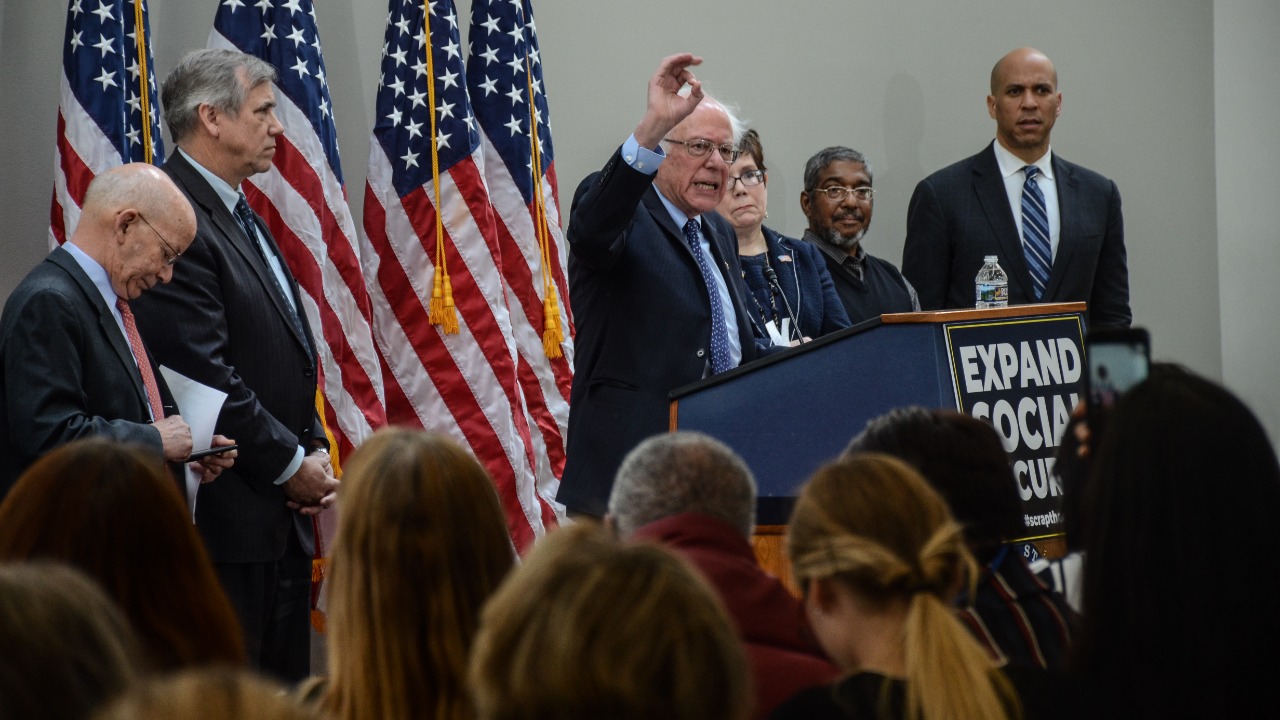
Retirees have long complained that the federal government taxes the very Social Security benefits they spent decades earning, and a new proposal in Congress aims to shut that practice off for good. The “You Earned It, You Keep It Act” would permanently end federal income taxes on Social Security benefits, reshaping how retirement income is treated for millions of Americans.
As lawmakers revisit the basic bargain behind Social Security, the bill has quickly become a test of how far Congress is willing to go to protect retirement checks without undermining the program’s long term finances. I see it as a rare moment when tax policy, entitlement politics, and generational fairness collide in a single, high stakes debate.
What the “You Earned It, You Keep It Act” actually does
The core promise of the “You Earned It, You Keep It Act” is simple: once you start receiving Social Security, the federal government would no longer tax those benefits as ordinary income. In practical terms, that would mean retirees who currently see a portion of their monthly checks clawed back at tax time could keep the full amount, regardless of whether they have other income from a pension, a 401(k), or part time work. The proposal is framed as a fairness issue, arguing that workers already paid into Social Security through payroll taxes and should not face a second layer of federal taxation on the back end.
On the House side, that promise is written into Text for H.R. 2909, a bill in the 119th Congress that spells out how current rules on taxing Social Security benefits would be repealed after 2025. The legislative language, recorded on Apr 13, 2025, details how existing provisions that subject benefits to federal income tax would be struck from the tax code and how the benefit base would be adjusted after that date. By embedding the change directly into the Internal Revenue Code, the House bill aims to make the end of federal taxation on Social Security benefits a permanent feature rather than a temporary tax break that sunsets after a few years.
How the House and Senate versions line up
For any major change to Social Security to become law, both chambers of Congress need to move in tandem, and the “You Earned It, You Keep It Act” is no exception. In the House, H.R. 2909 provides the blueprint for eliminating federal taxes on benefits and adjusting related thresholds in the tax code. The measure is written to repeal the present inclusion of Social Security benefits in taxable income, which is why the statutory text focuses on striking key paragraphs that currently authorize that taxation. That structure signals that House sponsors are not looking for a partial rollback or a new phase out formula, but a clean break from the existing regime.
The Senate has its own companion in S. 2716, which mirrors the same basic goal of letting retirees keep their full benefits without federal income tax. The Text for S. 2716, recorded on Sep 3, 2025, places the “You Earned It, You Keep It Act” squarely within the 119th Congress and aligns its operative provisions with the House version so both chambers are working from the same policy architecture. By keeping the House and Senate language closely synchronized, supporters are trying to avoid the kind of late stage discrepancies that can stall a bill in conference and instead present a unified front around a single, clearly defined change to how Social Security benefits are treated for tax purposes.
Rep. Angie Craig’s push to end federal taxes on benefits
While the statutory text lays out the mechanics, the political energy behind this effort is coming from lawmakers who have made Social Security tax relief a signature cause. One of the most visible is Representative Angie Craig, who has framed the issue as a straightforward promise to retirees that the federal government should stop taxing the benefits they rely on to cover housing, groceries, and medical bills. Her argument is that seniors who budget around a fixed Social Security check should not face surprise tax bills that effectively shrink that income, especially when inflation and rising health care costs are already eroding their purchasing power.
Earlier this year, Representative Craig highlighted that commitment when she announced that she had reintroduced legislation to Eliminate Federal Taxes on Social Security Benefits. In that Apr 14, 2025 announcement, the office of Congresswoman Angie Craig emphasized that the bill was designed to remove federal income taxes on Social Security checks and noted that she had secured a slate of co sponsors to back the effort. By tying her reintroduced legislation to the broader “You Earned It, You Keep It Act” framework, Craig is positioning herself as a leading voice for retirees who want to see federal taxation of benefits ended entirely rather than tweaked around the edges.
What ending Social Security taxes would mean for retirees
For individual retirees, the most immediate impact of the “You Earned It, You Keep It Act” would be felt at tax time. Today, many middle income seniors find that up to a portion of their Social Security benefits becomes taxable once their combined income crosses specific thresholds, which can push them into higher effective tax rates just as they transition to a fixed income. Ending federal taxation of those benefits would simplify their returns and, more importantly, increase the net cash they have available each month to cover essentials like rent, utilities, prescription drugs, and long term care insurance premiums.
The change would also alter how retirees plan their withdrawals from other accounts. Someone with a traditional IRA or a 401(k) currently has to think about how required minimum distributions interact with the taxability of Social Security benefits, since higher withdrawals can trigger more of those benefits being taxed. If the “You Earned It, You Keep It Act” becomes law, that interaction would disappear at the federal level, giving retirees more flexibility to time withdrawals from accounts like a 2018 Ford worker’s 401(k) or a long held brokerage portfolio without worrying that they are inadvertently increasing the tax bite on their Social Security checks. That could make retirement planning software, from mainstream tools like Fidelity’s online calculators to apps such as Personal Capital, easier to use because one major variable would be removed from the equation.
The unresolved questions about cost and Social Security’s future
Even as the political appeal of ending federal taxes on Social Security benefits is obvious, the fiscal questions are harder to ignore. Federal income taxes on those benefits currently provide a stream of revenue that helps support Social Security and the broader federal budget, and eliminating that revenue would require lawmakers to decide whether to replace it, cut spending elsewhere, or accept a larger deficit. The House and Senate texts for the “You Earned It, You Keep It Act” focus on repealing the tax provisions themselves, but they do not, based on the available summaries, spell out a detailed replacement funding mechanism. That leaves open a central question: how to protect retirees’ take home income without accelerating long term funding challenges for the Social Security system.
There is also the broader policy debate over whether tax relief should be targeted or universal. Under current law, only beneficiaries whose income exceeds certain thresholds pay federal income tax on their Social Security benefits, which means the existing system is already somewhat progressive. Ending taxation across the board would provide the largest dollar benefits to higher income retirees who pay the most tax today, while lower income seniors who already owe little or nothing would see a smaller change. Supporters of the “You Earned It, You Keep It Act” argue that the simplicity and symbolism of a clean repeal outweigh those distributional concerns, while critics worry that universal tax cuts tied to Social Security could make it harder to secure the program’s finances for future generations. Unverified based on available sources.
More From TheDailyOverview
- Dave Ramsey says these two simple questions show whether you’re rich or poor
- Retired But Want To Work? Try These 18 Jobs for Seniors That Pay Weekly
- IRS raises capital gains thresholds for 2026 and what’s new
- 12 ways to make $5,000 fast that actually work

Nathaniel Cross focuses on retirement planning, employer benefits, and long-term income security. His writing covers pensions, social programs, investment vehicles, and strategies designed to protect financial independence later in life. At The Daily Overview, Nathaniel provides practical insight to help readers plan with confidence and foresight.

