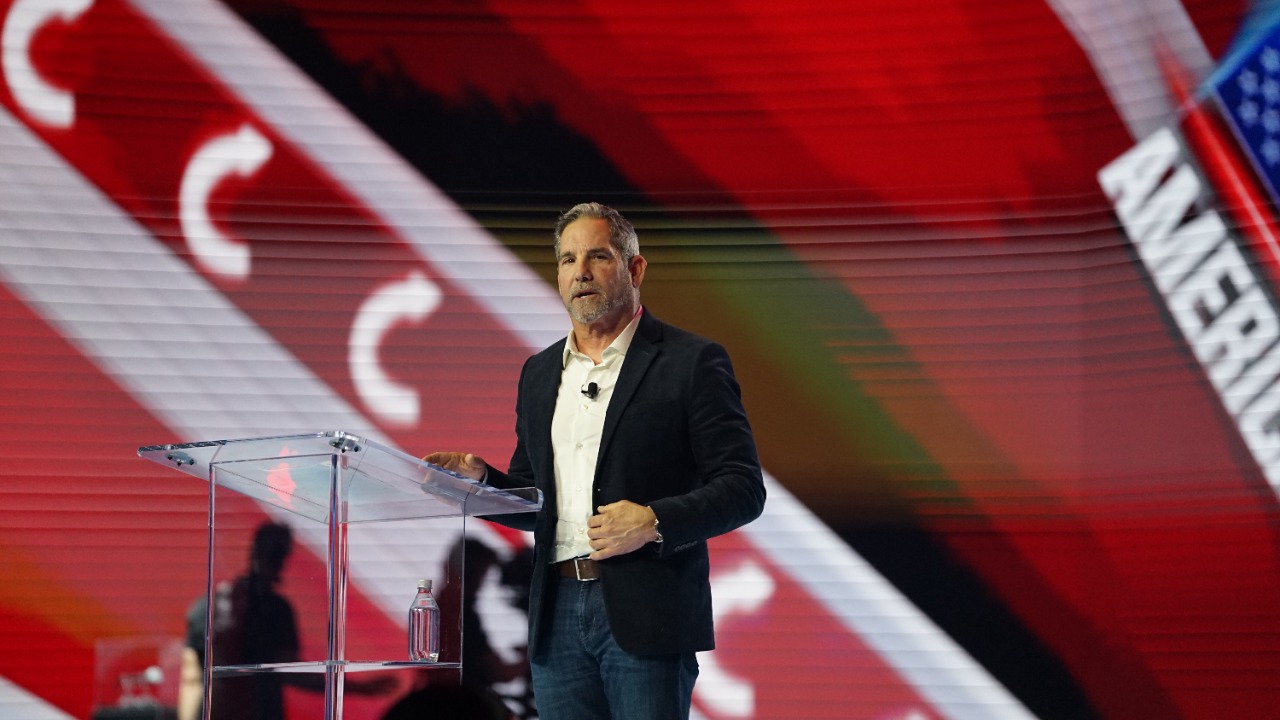
The American dream has long been built around a 30-year mortgage, a starter home and the promise of building wealth through ownership. Billionaire investor Grant Cardone is arguing that era is ending, warning that the United States is drifting toward a future where renting is the norm and owning is a luxury. His prediction is not just about housing, but about how power, wealth and risk are being redistributed across the country.
Cardone’s renter-nation thesis rests on a simple idea: the financial system is making it harder to buy and easier to rent, and big investors are positioning themselves to profit from that shift. As home prices, borrowing costs and living expenses climb faster than wages, he sees a structural tilt away from individual ownership and toward institutional landlords, long-term debt and subscription-style living.
Grant Cardone’s stark warning about a renter future
Grant Cardone has been repeating a blunt line for more than a year: “America will become a renter nation.” He argues that the combination of high home prices, expensive mortgages and stagnant affordability is pushing households out of ownership and into long-term renting, not as a temporary phase but as a new normal. In his view, the traditional path of buying a house, paying it off and passing it down is being replaced by a model where families lease their homes indefinitely while investors collect the equity that used to belong to owners in America.
Cardone has framed this shift as both a warning and an opportunity. In one widely cited interview he said “America will become a renter nation” as he described how rising costs of ownership are colliding with limited supply and tight credit standards, making it harder for average buyers to compete with cash-rich investors. He has tied that prediction to the idea that people who adapt by investing in income-producing property, rather than stretching for a single home, will be better positioned if his forecast proves right in America will.
How high rates and prices are squeezing would-be buyers
The backdrop for Cardone’s alarm is a housing market where the cost of owning has surged faster than incomes. After a series of aggressive rate hikes, borrowing costs for a standard 30-year loan climbed to levels not seen in years, while home prices barely budged downward. Reporting on the housing market has highlighted how, even after three consecutive interest rate cuts, mortgage rates remained elevated and affordability failed to meaningfully improve, leaving many households stuck on the sidelines despite modest relief in Gabe Ginsberg.
Cardone’s argument is that these conditions are not a short-term blip but part of a structural reset. Analysts have noted that, taken together, the run-up in prices, the persistence of relatively high mortgage rates and the limited inventory of homes for sale all point toward a future where renting becomes the default for a larger share of the population. That is the environment in which Cardone believes long-term leases, build-to-rent communities and institutional landlords could become the new norm in Taken together.
“By design, not by accident”: Cardone’s critique of policy and the Fed
Cardone has not been shy about assigning blame for what he sees as the rise of a renter society. In a social media clip shared widely, he said that America is becoming a nation of renters “not by accident but by design,” arguing that policy choices have favored asset owners and financial institutions over wage earners. According to his critique, the system is set up so that large investors can borrow cheaply, buy housing at scale and then rent it back to the very people who have been priced out of ownership in Grant Cardone says.
He has been particularly harsh on the Federal Reserve. Cardone has described the central bank’s inflation fight as a “Botched Attempt At Controlling Inflation” and accused it of “destroying the middle class and turning it into” what he calls a renter class. In his telling, rapid rate hikes inflated borrowing costs for everyday buyers while leaving deep-pocketed investors better able to absorb the shock, accelerating the transfer of housing wealth from individuals to institutions in what he sees as a policy-driven shift in Botched Attempt At.
From 100-year mortgages to renting your clothes
Cardone’s renter-nation thesis extends beyond housing into how Americans finance almost everything. He has warned that the United States could eventually see 100-year mortgages, a product that would dramatically lower monthly payments but keep borrowers in debt for generations. In his view, such ultra-long loans would cement a culture where people never truly own their homes outright, instead passing obligations down the family line while lenders and investors collect interest for decades.
He has also suggested that the rental mindset is spreading into other parts of daily life, predicting that Americans might eventually rent their clothes, cars and even household essentials rather than buying them. Cardone frames this as part of a broader subscription economy in which access replaces ownership, from streaming services to car leases and furniture rentals. For him, the risk is that households end up juggling a stack of monthly payments without building the kind of equity that a paid-off home once represented in America will become.
Why Cardone says a home is a “terrible investment”
Cardone’s critique of traditional homeownership is unusually blunt for a real estate magnate. He has said that a primary residence is a “terrible investment” because it “ain’t your house,” arguing that between the bank, the tax authorities and ongoing maintenance, owners are effectively partners in a low-yield, high-cost asset. He points out that “People get emotional about their house, ‘It’s my house!’” but insists that the better move is to put capital into property that generates cash flow every month rather than tying it up in a single home in People get.
From his perspective, the emotional attachment to owning the roof over your head can blind families to the financial trade-offs. Cardone argues that when buyers sink their savings into a down payment, commit to decades of mortgage payments and shoulder all the risk of repairs and taxes, they are effectively betting on price appreciation that may not keep up with other investments. He prefers a model where individuals rent their homes for flexibility and deploy their capital into multifamily buildings or other income-producing assets that, in his words, “pay you every month” rather than require constant outlays in Invest using.
Rents that “explode” and soar: Cardone’s price forecasts
Cardone’s renter-nation warning is tied to a specific prediction about what happens to rents next. He has said that rents will “explode” in 2026 after a period of relative flatness, arguing that a temporary cooling in the rental market will give way to a sharp rebound as demand outstrips supply. In his view, a brief pause in rent growth is lulling tenants into a false sense of security before a new wave of increases hits, driven by limited construction, population growth and investors seeking higher returns in Grant Cardone Predicts.
He has repeated similar themes in other forecasts, saying that rent will soar in the United States over the next several years as more people are pushed out of ownership and into the rental pool. Cardone, a multifamily investor, has long been bullish on the benefits of buying large apartment complexes, and he has linked his rent outlook to that strategy, suggesting that investors who secure properties now could benefit from rising cash flows later. His thesis is that as homeownership becomes less attainable, competition for quality rentals will intensify, putting upward pressure on monthly payments in Grant Cardone.
Why some people prefer renting in a mobile, high-cost era
Cardone’s narrative is not only about people being forced to rent, but also about a cultural shift in preferences. He has said that “Grant Cardone Explains Why We Are Becoming A Renter Nation” in part because “Many People Don’t Want To Commit To 30 Years. They’re On The Move.” In his telling, younger workers value flexibility, the ability to change cities for jobs and the freedom from long-term obligations more than the stability of a fixed address, which makes renting a better fit for their lifestyles in Grant Cardone Explains.
At the same time, he argues that this preference is being shaped by economic constraints. When a starter home in a major metro requires a six-figure down payment and a mortgage payment that rivals high-end rent, the choice to lease rather than buy can feel less like a lifestyle decision and more like the only realistic option. Cardone believes that as long as wages lag behind housing costs, the combination of mobility, financial pressure and changing expectations will keep swelling the ranks of long-term renters in a way that reinforces his broader warning about a renter-centric future in Rent Might Soar.
More From The Daily Overview
*This article was researched with the help of AI, with human editors creating the final content.

Elias Broderick specializes in residential and commercial real estate, with a focus on market cycles, property fundamentals, and investment strategy. His writing translates complex housing and development trends into clear insights for both new and experienced investors. At The Daily Overview, Elias explores how real estate fits into long-term wealth planning.

