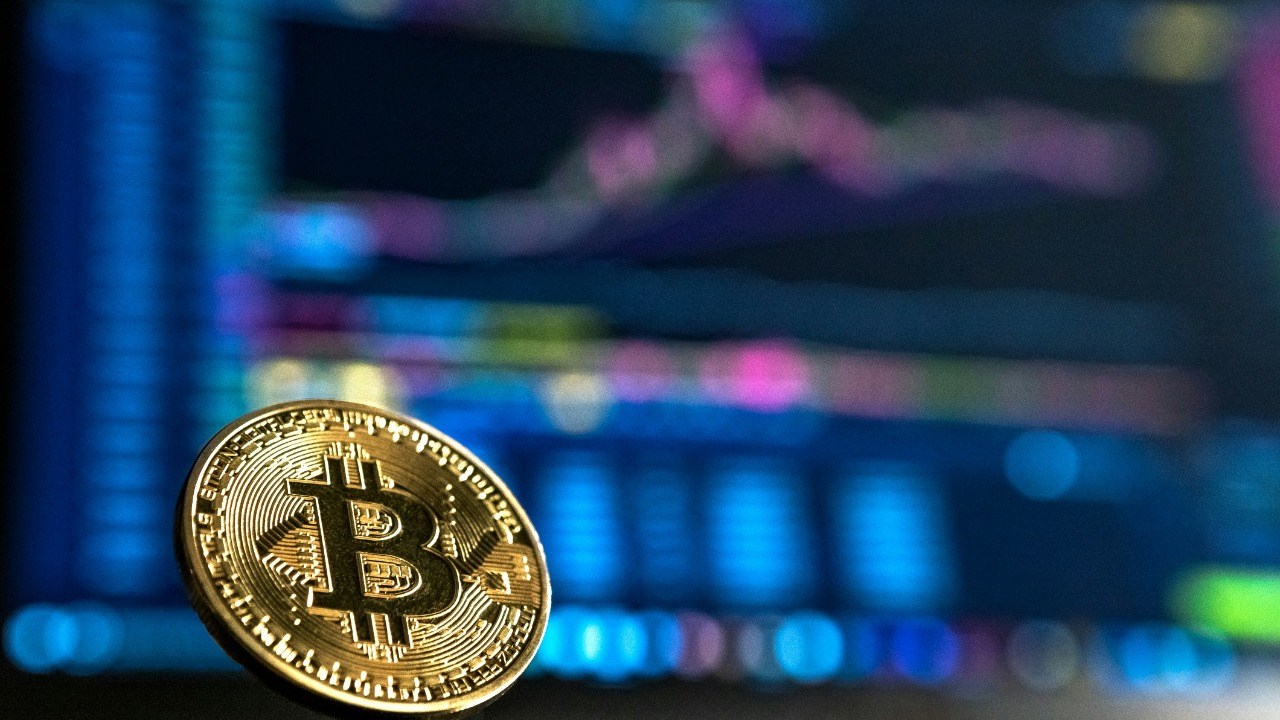
Bitcoin’s latest lurches in price are not just rattling nerves, they are quietly opening the door for investors who know how to work with turbulence instead of fighting it. Sharp traders and disciplined long‑term buyers are using these abrupt moves to accumulate positions, rebalance portfolios and, in some cases, lock in gains while others panic. The key is understanding that volatility is not a bug in this market, it is the core feature that creates those entry points in the first place.
Volatility is the cost of admission, not a glitch
Every cycle, Bitcoin’s violent ups and downs are framed as a sign that something is broken, when in reality they are the mechanism that transfers coins from impatient hands to patient ones. I see the current environment as a textbook example: sharp drops flush out overleveraged traders, while equally sharp rebounds reward investors who had the discipline to buy when sentiment soured. That pattern is exactly why the phrase “Bitcoin swings are minting chances for sharp investors” resonates so strongly right now.
Recent coverage of Bitcoin’s price action in Nov has underscored how “Bitcoin’s Recent Volatility, How Price Swings Create Opportunity for Smart Investors” is not just a catchy line but a description of what is actually happening in the market, with detailed analysis of how Bitcoin’s price over the last stretch has punished late buyers and rewarded those who averaged in during pullbacks on Nov 24, 2025, in a piece titled “Bitcoin’s Recent Volatility: How Price Swings Create Opportunity for Smart Investors.” That same reporting explains why strategies such as dollar‑cost averaging, which involve buying more units when prices are low and fewer when they are high, can turn those swings into a structural advantage for long‑term participants, rather than a source of constant anxiety.
Why the latest Bitcoin slide is not automatically bad news
When Bitcoin drops tens of thousands of dollars in a matter of weeks, the instinctive reaction is to see only risk. I read the latest slide differently. A steep pullback can be brutal for anyone who piled in near the top, but for investors with dry powder and a multi‑year horizon, it effectively marks assets down on sale. The same volatility that inflicts short‑term pain is what allows disciplined buyers to accumulate more exposure at lower prices than they could have imagined during the previous peak.
Analysis from Nov 17, 2025, notes that Bitcoin’s price fell more than $30,000 since the prior month, yet stresses that “Bitcoin’s wild price swings are not automatically bad for you,” and that those swings can be harnessed if you keep them from ruining your retirement plans by sizing positions carefully and avoiding forced selling, a point laid out in detail in Bitcoin’s wild price swings. That perspective reframes a $30,000‑plus drawdown not as a verdict on the asset’s future, but as a stress test of investor behavior, separating those who overextended themselves from those who treated Bitcoin as a volatile component of a broader portfolio instead of an all‑in bet.
Holiday jitters and the opportunity in sideways markets
Not every opportunity arrives in the form of a vertical spike or a sudden crash. Periods when Bitcoin stalls, trading in a tight band while traders brace for the next move, can be just as fertile for investors who are willing to be patient. Sideways markets often compress volatility temporarily, but under the surface they are where positions are built, leverage is reset and narratives are quietly rewritten ahead of the next leg higher or lower.
Reporting from Nov 25, 2025, describes how Bitcoin and Ethereum have recently stalled as traders brace for holiday volatility, with “What’s next for Bitcoin and Ethereum? While the market outlook remains skewed to the bullish side due to rate‑cut expectations, traders are also preparing for sharper moves amid higher uncertainty or risk,” a dynamic captured in coverage of Bitcoin and Ethereum. I view that kind of stall as a coiled spring: if the macro backdrop, including those rate‑cut expectations, breaks in Bitcoin’s favor, the investors who accumulated during the lull will be the ones positioned to benefit when volatility returns in force.
Turning chaos into a plan: dollar‑cost averaging and risk controls
The difference between being crushed by volatility and using it to your advantage usually comes down to process. I have found that investors who pre‑commit to a rules‑based approach, rather than reacting emotionally to every candle on the chart, are far more likely to survive the inevitable drawdowns. Dollar‑cost averaging, in particular, is designed for an asset that can swing thousands of dollars in a single session, because it removes the impossible task of timing the exact bottom or top.
On Nov 24, 2025, detailed analysis of “Bitcoin’s Recent Volatility, How Price Swings Create Opportunity for Smart Investors” walked through how a simple schedule of recurring purchases can outperform lump‑sum buying, especially when prices are whipsawing, and explained why dollar‑cost averaging wins by letting you buy more units when they are cheap and fewer when they are expensive, a point illustrated in a breakdown of why dollar‑cost averaging wins. The same coverage shows that if you bought Bitcoin a year ago at a higher level and simply held, your $10,000 might now be worth $7,900, whereas a steady program of smaller buys over that period would have left you with a lower average cost and a smaller paper loss, a contrast laid out in the discussion of how “If you bought Bitcoin a year ago at a higher price, your $10,000 would be $7,900” in Bitcoin’s Recent Volatility.
Pros, cons and the role of Bitcoin in a real portfolio
Even for investors who accept volatility as the price of admission, Bitcoin is not a free lunch. It can be a powerful diversifier and a source of outsized returns, but it can also magnify losses if it is allowed to dominate a portfolio. I see the most resilient strategies treating Bitcoin as one risk asset among many, sized appropriately relative to stocks, bonds and cash, rather than as a replacement for a retirement plan or an emergency fund.
Guidance from Jan 15, 2025, lays out “3 Pros and 2 Cons of Investing In the” cryptocurrency, noting that, according to Hackmann, one clear advantage is that it can help with diversification and potentially offset gains and losses in a portfolio, while the downsides include extreme volatility and regulatory uncertainty, a balance that is spelled out in the discussion of how it “Can Help With” diversification and “losses in a portfolio” in Hackmann. That framework is a useful reminder that the same price action that creates opportunity for sharp investors can be destructive for anyone who treats Bitcoin as a one‑way bet, or who borrows heavily to chase short‑term gains.
From bold predictions to practical execution
Headlines about eye‑popping price targets tend to grab attention, and they can shape sentiment even if they never materialize exactly as forecast. I see them less as roadmaps and more as expressions of how far the market could stretch under the right conditions. They can be useful in reminding investors that Bitcoin’s range of outcomes is unusually wide, which is precisely why risk management matters so much.
Earlier in the current cycle, on Mar 5, 2024, coverage of “Bitcoin To Reach $355K? Veteran Trader Tone Vays Predicts ‘Surprise’ Upward Swing” highlighted how a veteran trader in the Stock Markets was calling for a potential “Surprise” “Upward Swing” in Bitcoin To Reach a target of $355,000, a scenario that underscores just how explosive bullish narratives can become in this asset class, as detailed in Bitcoin To Reach. Ambitious projections like that can tempt investors to overcommit, but they also illustrate why a structured plan, grounded in position sizing and diversification, is more reliable than trading purely on optimism or fear.
Using data, not emotion, to navigate the swings
In a market that trades around the clock and reacts instantly to every macro headline, it is easy to get swept up in emotion. The antidote is to anchor decisions in data that you can verify independently. I find that investors who regularly check objective price histories, volatility measures and correlations are better equipped to distinguish between a routine pullback and a structural shift in the market.
Tools such as Google Finance provide a simple way to search for financial security data, including stocks, mutual funds, indexes, currencies and cryptocurrencies, along with the necessary disclaimers about the limitations of that information, as outlined in the service description for Google Finance. Combining that kind of neutral data feed with the contextual reporting on Nov, Bitcoin, While and other key developments gives investors a clearer picture of where Bitcoin sits within the broader financial system, and helps them decide whether the latest swing is a threat to be avoided or an opening to be seized.
More From TheDailyOverview
- Dave Ramsey warns to stop 401(k) contributions
- 11 night jobs you can do from home (not exciting but steady)
- Small U.S. cities ready to boom next
- 19 things boomers should never sell no matter what

Grant Mercer covers market dynamics, business trends, and the economic forces driving growth across industries. His analysis connects macro movements with real-world implications for investors, entrepreneurs, and professionals. Through his work at The Daily Overview, Grant helps readers understand how markets function and where opportunities may emerge.

