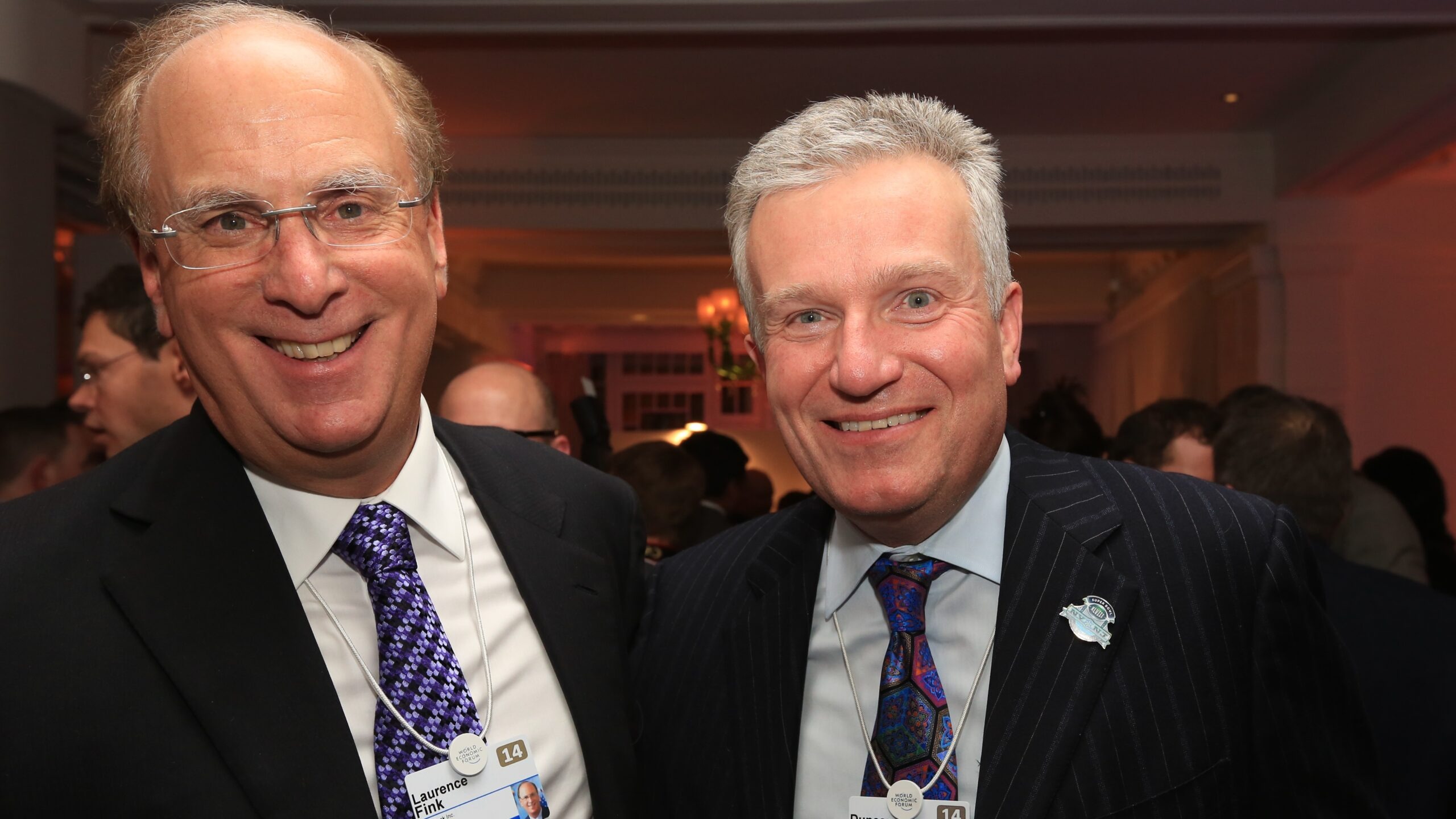
BlackRock chief executive Larry Fink has turned a simmering online grievance into a boardroom talking point: younger Americans feel broke, and they increasingly blame baby boomers for designing an economy that works for retirees but not for new entrants. In his recent letters to investors, he argues that this distrust is not just a vibe problem but a structural warning sign about how the United States funds longer lives, retirement and opportunity. The friction between generations is starting to look less like a culture war and more like a balance-sheet dispute over who pays for an extra 20 years of life.
At the center of Fink’s argument is a blunt admission that the system older Americans built for themselves is now colliding with the expectations of Gen Z and millennials. He describes a cohort that grew up optimistic, only to see that optimism collapse after the pandemic as they confront high housing costs, student debt and a retirement architecture that feels closed to them. The question is whether his call for boomers to “fix” retirement is a genuine blueprint for shared sacrifice or a way to stabilize a shaky status quo.
‘Economically anxious’ and pointing at boomers
Fink has started using the phrase “economically anxious” to describe how younger workers see their financial futures, and he links that anxiety directly to resentment toward older generations. In one recent interview, he acknowledged that Gen Z and millennials increasingly believe boomers “put themselves first” and focused on their own retirements, and he added that, in his view, “they’re right” to feel that way, a rare concession from a Wall Street leader that the deck looks stacked to those coming up behind. That framing turns what might sound like youthful complaining into a diagnosis of a deeper legitimacy problem for the economic model that powered the postwar boom.
In his 2024 chairman’s letter, Fink describes how today’s young adults were raised to expect steady progress, only to see that confidence “fall precipitously” after Covid as they watched markets whipsaw and basic milestones like homeownership slip further away, a shift he traces across multiple cohorts of students and new workers in the data he cites from They. He argues that this is not just about wages or inflation but about a sense that the national promise has been broken, particularly when younger people see older Americans sitting on large portfolios of stocks and housing equity that were accumulated under very different conditions.
Why retirement feels rigged to younger workers
Fink’s core claim is that retirement itself now looks “broken” to younger Americans because the math of longer lives has not been matched by reforms in how those lives are financed. He notes that people are living much longer, often by an extra 20 years, yet the basic structure of work, savings and public benefits still assumes a mid-60s exit from the labor force, a mismatch he lays out in detail when he explains Why Retirement Feels. For a 28‑year‑old watching their grandparents enjoy decades of retirement while being told they themselves may never stop working, the system can look less like a safety net and more like a ladder that has been pulled up.
That perception is reinforced by the way Fink describes the intergenerational bargain: boomers, he says, built a retirement architecture that has largely protected their own standard of living while leaving the costs of delay and underfunding to those who follow. In another passage, he argues that younger workers see a “national promise to all Americans” that has not been updated for demographic reality, a phrase he uses when he notes that millennials and Gen Z “are economically anxious” and that “they blame boomers for putting themselves first” in the way retirement rules and tax incentives were designed, a critique he spells out in Larry Fink Says. This suggests that for many younger households, the issue is not only whether they can save enough but whether the rules of the game were written with them in mind at all.
The psychological break: from optimism to distrust
Fink’s letters dwell on something that does not show up on a 401(k) statement: the collapse in optimism among younger Americans. He points to survey data showing that four in ten teenagers now say it is “hard to have hope for the world,” the worst reading since 1976 in a long‑running study that tracks 12th graders’ public sentiment, a trend he highlights when discussing how Gen Z and millennials have come to distrust older leaders on the economy in Four. When nearly half of high‑school seniors struggle to imagine a better future, the usual advice to “just work hard and invest early” starts to ring hollow.
That erosion of faith is not limited to teenagers. Fink writes that compared with 20 years ago, the current cohort of young adults is far less confident that capitalism will deliver rising living standards, even as they still participate in markets through apps and retirement accounts, a tension he explores in a section of his letter that begins with “Despite the anti‑capitalist strain” and goes on to describe how younger investors are still driving more demand for energy infrastructure and other assets, a point he grounds in Compared. This mix of participation and distrust is volatile: it suggests a generation that is not opting out of the system but is increasingly willing to rewrite its rules.
Longevity, late retirement and the boomer responsibility
Underneath the generational blame is a simple actuarial problem: people are living longer, and someone has to pay for those extra years. Fink has been unusually blunt about this, saying that society spends “tremendous energy” extending life but far less effort figuring out how to fund those additional decades, a contrast he draws when he talks about the extra 20 years many people can now expect to live in Billionaire Blackrock CEO. He argues that without changes, the burden of those extra years will fall disproportionately on younger workers through higher taxes, lower benefits or both.
His proposed answer is politically fraught: work longer. Fink has urged Americans to retire later to avoid what he calls a looming “retirement crisis,” warning that the problem will only get “harder and nastier” as lifespans extend and as younger generations realize that the assets backing their promised benefits may be closer to $70 trillion in reality, not the $90 trillion they might expect, a gap he references when discussing the scale of retirement savings in Four. In a separate discussion of his 2025 letter, he doubles down on this view, writing that the challenge will intensify as “they’re living longer,” a line he uses to argue that Americans must adjust expectations around retirement age in Fink. For younger workers already skeptical of boomer priorities, being told to work into their seventies so that existing promises can be honored may feel less like shared sacrifice and more like a generational bailout.
From blame to reform: what Fink wants boomers to do
Fink is not just diagnosing resentment, he is assigning homework to the generation he says benefited most from the old model. In his annual letter to company investors, he urges politicians and corporate leaders, many of whom are baby boomers, to come together to address retirement reform “not at the detriment of who comes next,” a phrase he uses to argue that those currently in power must redesign the system so it works for their children and grandchildren, a call he lays out in Larry Fink. He frames this as a moral obligation for boomers who enjoyed decades of rising asset prices and relatively generous public benefits.
More From The Daily Overview
*This article was researched with the help of AI, with human editors creating the final content.

Grant Mercer covers market dynamics, business trends, and the economic forces driving growth across industries. His analysis connects macro movements with real-world implications for investors, entrepreneurs, and professionals. Through his work at The Daily Overview, Grant helps readers understand how markets function and where opportunities may emerge.