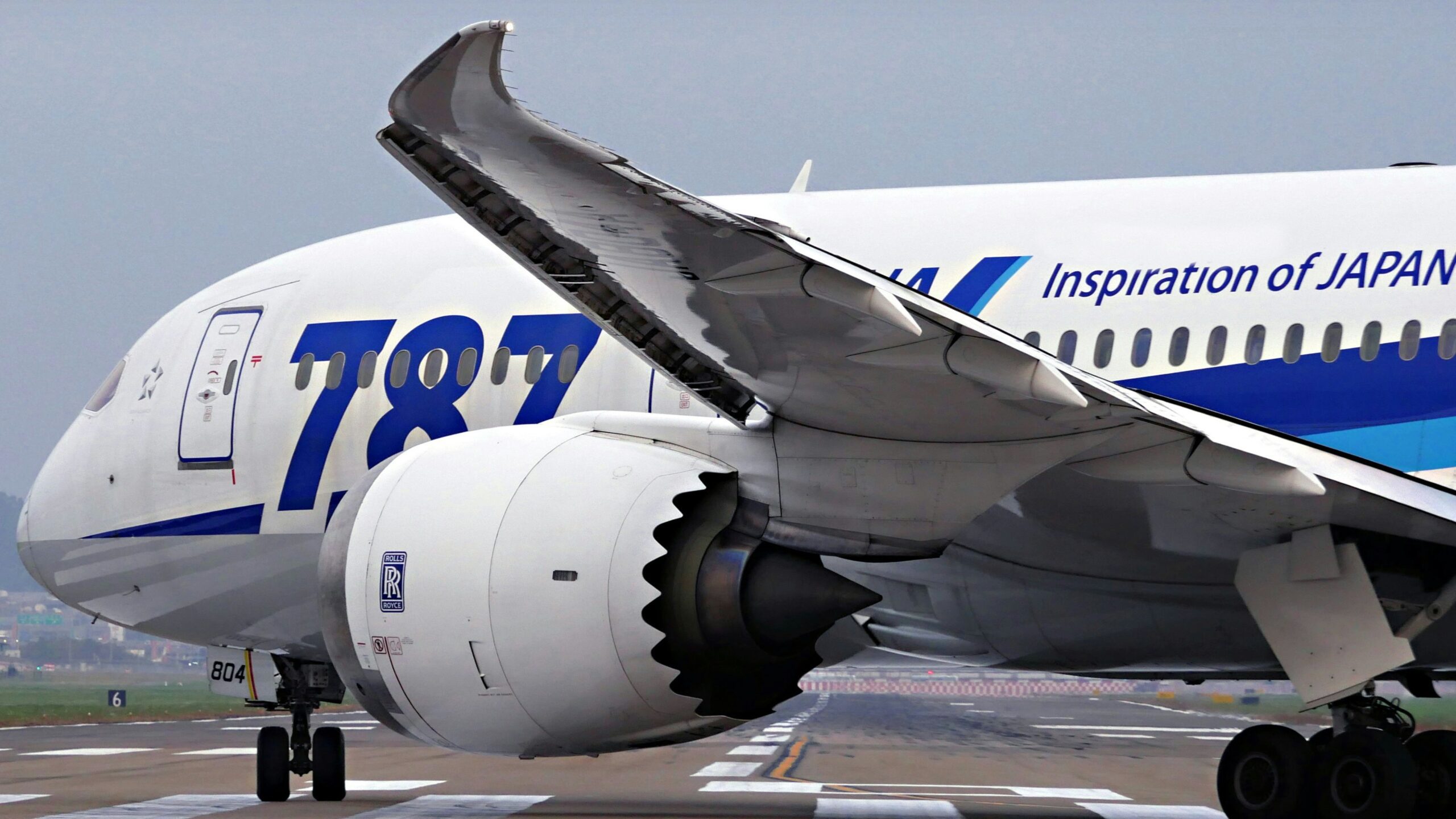
Boeing has finally put black ink on its income statement again, notching a rare profit after years of crises that began with the 737 Max groundings and deepened through the pandemic. The company has recorded its first annual profit since 2018 and a strong fourth quarter, helped by higher jet deliveries and a major asset sale. The financial turn is real, but the question now is whether this marks the end of Boeing’s long nightmare or simply the start of a slower, more grinding phase of recovery.
Profit at last, but built on one-off boosts
The headline number is striking. The planemaker swung to a quarterly net profit of $8.22 billion, a dramatic reversal from a loss of $3.86 billion a year earlier. That surge helped The Boeing Company report its first full-year profit since 2018, a milestone that On January 27 was highlighted when The Boeing Company released its Fourth Quarter and 2025 figures. Revenue in the final three months of the year reached $23.9 billion, up 57% year over year, powered by 160 commercial airplane deliveries and the sale of its Digital Aviation Solutions unit. Boeing’s own Fourth Quarter update underscored that the company has now accumulated a backlog of more than 6,100 commercial airplanes, a figure it tied to the Fourth Quarter performance.
Yet the quality of those earnings matters as much as the size. A detailed analysis of Boeing’s Q4 and full-year 2025 results notes that 2025 marks a return to profitability and strong revenue growth, supported by higher commercial deliveries and cash flows from Digi related divestments, rather than a fully restored core business. Another breakdown of the numbers points out that Boeing posts a fourth-quarter profit despite losses in its commercial aircraft and defense units, with the bottom line helped by a major asset sale and a stock transaction valued at $4.7 billion. In other words, the profit is a turning point, but it still leans heavily on financial engineering and a hot delivery quarter rather than a fully healed industrial machine.
Deliveries are rising, but key divisions still bleed red
Underneath the headline profit, Boeing’s operating picture is more mixed. The company’s airplane deliveries last year were the highest since 2018, a surge that helped drive revenue to $23.9 billion in the fourth quarter alone. A separate snapshot from ARLINGTON notes that higher jet output and efforts to Up Plane Deliveries lifted sales, even as the company continued to wrestle with costs. Boeing’s own investor communication stressed that it has Acquired Spirit AeroSystems, with the company saying it Acquired Spirit in December to reinforce safety, quality and production stability across its factories.
Even so, not every unit is pulling its weight. A close look at Boeing FY2025 shows that the Company posts only a small profit on its Services division, while Boeing Commercial Aircraft, or BCA, is still losing money. Another earnings breakdown notes that The Boeing Company BA incurred an adjusted loss of $1.91 per sha, or $1.91 a share, even as Revenues Increase year over year, underscoring that profitability is still fragile. From my vantage point, that split between rising sales and lingering operating losses is the clearest sign that Boeing’s nightmare is not yet over; the company is flying higher, but it is still burning fuel at an uncomfortable rate.
Cash flow, debt and the Spirit integration test
For investors, the real hinge is cash. A deep dive into Boeing’s financial performance notes that the company’s stock performance has been volatile, with the Stock Performance Overview highlighting a choppy 1-Year Performance as the market weighs whether Boeing can become a reliable cash generator again. That analysis points to management’s goal of restoring positive and sustainable free cash flow by, a timeline that leaves little room for fresh shocks. Another look at Boeing’s high-stakes path to recovery describes a similar Stock Performance Overview, emphasizing that Boeing’s Year Performance has been a roller coaster as traders react to each production hiccup and regulatory headline, and it frames the company’s future as dependent on whether output can keep pace with demand for Year Performance gains.
Management is trying to convince Wall Street that the worst is behind it. On the latest earnings call, executives walked through the Spirit AeroSystems integration, noting that the Acquisition was completed and that detailed integration plans are in place to improve factory safety, quality and throughput. The call transcript explains that the Spirit Acquisition is expected to reduce rework and travel work on key programs, which should help margins over time. At the same time, Chief Financial Officer Jay Malave has cautioned that 2026 will not be a straight line. In a recent briefing, he said Boeing expects to generate $1–3 billion in free cash flow this year overall, but with negative cash flow in the first half and improvement later, and he framed that outlook as part of a longer slog in which Chief Financial Officer still sees “another laborious year” ahead.
Regulators, 777X delays and the 737 M shadow
Even as the balance sheet improves, Boeing’s regulatory and certification overhang remains heavy. The Federal Aviation Administration is still deeply involved in the company’s operations, with one risk analysis describing how Regulatory Scrutiny and The FAA being “embedded” at Boeing form a central part of the Bear Case for the stock. That same assessment lists three primary Risks and Challenges for Boeing, with regulatory oversight at the top, and warns that any new safety lapse could derail the company’s ambition of being a cash-flow engine, a concern captured in its discussion of Risks and Challenges. The legacy of the 737 M crisis still looms large, not only in public perception but also in the way regulators scrutinize every change to Boeing’s production system, and images of a Boeing Co. 737 Max airplane at the company’s manufacturing facility in Renton, captured by David Ryder for Bloomberg and Getty Images via CNN Newsource, continue to symbolize that era for many observers, as reflected in coverage that notes David Ryder’s photo of the 737 M.
The certification “hangover” is especially visible on the 777X. Reporting on Boeing’s widebody program describes how a new engine durability issue has emerged on the Everett-built jet, a problem that adds to the long list of tests and documentation the company must clear before regulators sign off. The company has said that the new concern should not affect its expected first delivery for the Everett-built 777X, but it concedes that the issue is another drag on momentum from an otherwise successful 2025, a dynamic captured in the discussion of the Everett program. In a separate look at Boeing’s certification hangover, Jan Malave, Boeing’s CFO, is quoted as expecting 2026 to follow the same trajectory as 2025, with the first two quarters recording negative cash flow before a stronger second half, and that assessment of the year ahead is tied directly to the ongoing 777X certification grind and the broader Boeing certification hangover.
Has Boeing really turned the corner?
From a distance, it is tempting to say that Boeing’s problems are finally easing. One analysis framed the company as having turned a financial corner, with 2025 marking a return to profitability and strong revenue growth, and it argued that the groundwork is in place for more stable and sustainable growth in 2026 if execution holds. Another piece on Boeing’s recovery describes how the company’s transformation is “hard-won,” emphasizing that On January the company’s leadership presented the first annual profit since 2018 as evidence that years of restructuring, cost cutting and cultural change are starting to pay off, a narrative embedded in the description of On January 27. Coverage of Boeing’s latest quarter even suggests that its problems “may be coming to an end,” noting that the company just turned a rare profit and that its fate remains tightly linked to the broader health of the US economy, a point underscored in reporting that ties Boeing’s turnaround to its role as a key part of the.
More From TheDailyOverview
*This article was researched with the help of AI, with human editors creating the final content.

Grant Mercer covers market dynamics, business trends, and the economic forces driving growth across industries. His analysis connects macro movements with real-world implications for investors, entrepreneurs, and professionals. Through his work at The Daily Overview, Grant helps readers understand how markets function and where opportunities may emerge.

