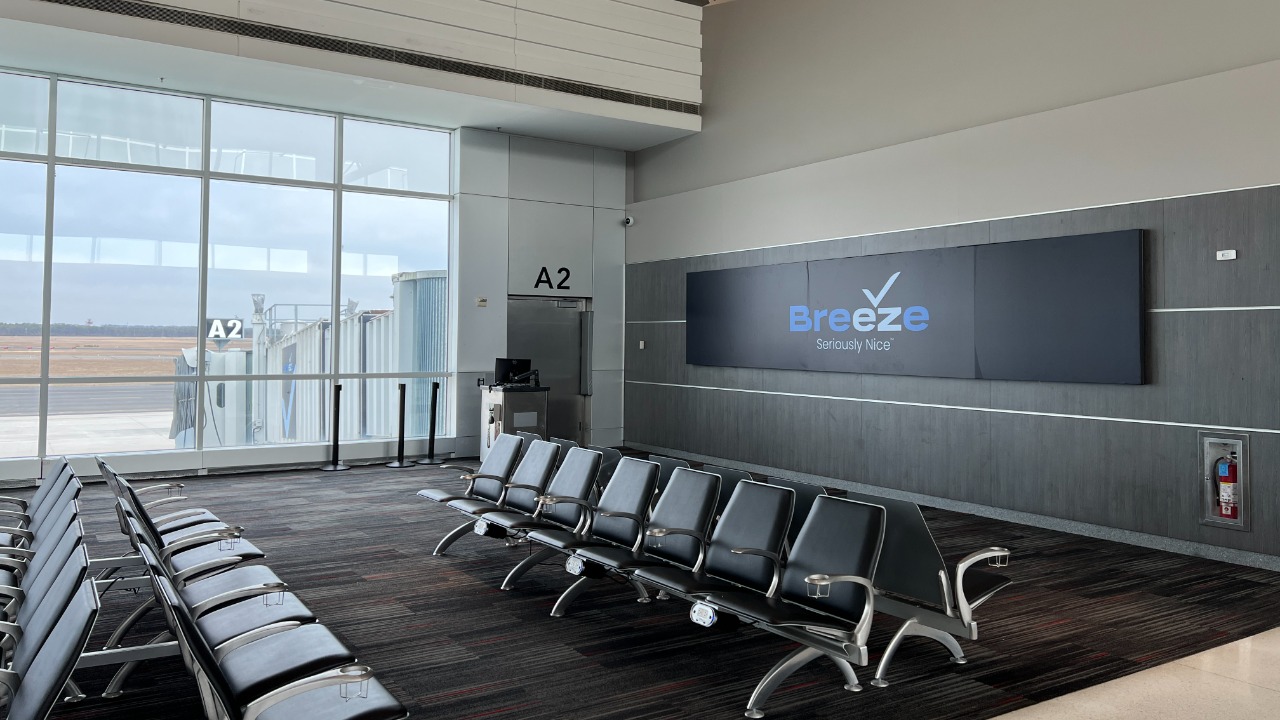
Budget carriers are racing to grab market share in the United States with a fresh barrage of routes and teaser fares that start as low as $39, even as some rivals slash schedules and retreat from smaller cities. The latest expansion drive is turning secondary airports and mid-sized metros into battlegrounds, with new links to leisure hubs in Florida, the West and Mexico. I see a classic fare war taking shape, one that promises cheaper tickets for now but also sharper trade-offs on reliability and fees.
At the center of this push is a new wave of ultra-low-cost and hybrid airlines that are betting they can fill planes by stitching together overlooked city pairs. Their strategy leans on bare-bones base fares, dense seating and aggressive use of regional airports, a model that has already reshaped carriers such as Spirit. The question now is whether this new capacity can be sustained in a market where some budget operators are already cutting thousands of flights and even facing bankruptcy.
Breeze Airways floods the map while rivals retreat
Utah-based budget carrier Breeze Airways is the clearest sign that the fare war is entering a new phase, with the airline touting an aggressive rollout of routes across the country. The company, which calls itself a “nice low-cost carrier,” is targeting mid-sized cities that have long been under-served by the big three legacy airlines, linking them to leisure destinations and growing business centers. Its expansion includes new flights into places like Des Moines, Omaha and Indianapolis, while also feeding traffic into sunbelt magnets such as Phoenix, Orlando and Las Vegas. By stitching together these city pairs, Breeze is betting that travelers will trade frills for nonstop convenience.
The carrier is also leaning into international leisure demand, adding links to Cancun as it chases beach-bound Americans who might otherwise connect through legacy hubs. At the same time, Breeze is relaunching service in San Antonio, starting with nonstop flights to Raleigh and Charlotte in North Carolina, and positioning itself as a summer travel alternative to the entrenched carriers. I see this as a classic low-cost playbook: focus on point-to-point routes that big airlines ignore, then undercut them on price while offering perks like in-seat power to soften the no-frills image.
Avelo’s quiet land grab in Florida and the Midwest
While Breeze grabs headlines, Avelo Airlines is executing a more methodical expansion that could prove just as disruptive. Company updates show that Avelo Airlines is significantly growing its network in February and March, launching and relaunching routes that tie together smaller markets and seasonal demand. The carrier has focused heavily on Florida, where “New Avelo” routes now include flights between Lakeland Linder International Airport, identified by the code LAL, and Detroit. By tapping Lakeland, Florida, a city that sits between Tampa and Orlando, Avelo is effectively creating a new low-cost gateway to the state’s theme parks and beaches.
The airline is also building a mini-hub at Wilmington Airport in Delaware, the only commercial carrier operating there, and adding two more routes to major cities as it scales up trips to five Florida locations. Corporate statements under the banner “Avelo Airlines Announces 2 New Chicago Routes, Spring Training Flights to Central Florida and the Return of Popular Routes to Atla” show how the carrier is linking Chicago with Central Florida and reviving service to Atlanta. In my view, this is a textbook “land grab” strategy: secure presence in airports like Wilmington, Delaware and Lakeland before larger competitors decide those markets are worth their time.
Frontier’s 23-route volley and the $39 teaser fare
Even as some ultra-low-cost carriers pull back, Frontier is firing a major shot in the fare war with a package of 23 new routes that will launch in 2026 across the United States and Mexico. Company materials describe how “Its 23 new routes are part of this effort and focus on providing expanded service across the United States and,” including service to and from Cancun International Airport. Promotional material highlights that the “Budget airline announces 23 new routes to launch in 2026 – and fares start at $39,” a figure that sets a clear benchmark for competitors. Another reference to the same campaign underscores that this is a Budget move aimed squarely at price-sensitive travelers planning spring and summer trips.
Yet Frontier’s expansion comes with a paradox. Separate analysis of schedule data shows that “Frontier Has 7,500 Fewer Flights While far less dramatic than Spirit’s decrease, fellow ultra-low-cost operator Frontier has 7,522” fewer flights overall, a sign that the airline is pruning underperforming routes even as it opens new ones. Another version of the same report on the “death of budget airlines” reiterates that Frontier Has 7,500 Fewer Flights While Spirit cuts even more capacity. I read this as a tactical reshuffle: Frontier is abandoning weaker markets while doubling down on high-demand leisure routes where a $39 fare can quickly fill an Airbus cabin.
Cheap fares, crowded skies and the consumer catch
All of this new capacity is landing in a market where domestic tickets are already historically cheap. A recent analysis titled “Why Domestic Flights” points to Several factors, including Increased competition among low-cost carriers and a shift in demand patterns that has made it easier to book around crowds. A separate ranking of the 30 cheapest places for Americans to fly notes that “Rounding out the top 10 are Pittsburgh, Pennsylvania (No. 4/$108); Dallas, Texas (No. 5/$129); Charlotte, North Carolina (No. 6/$9…),” underscoring how cities like Charlotte and Chicago, IL have become hotbeds of low fares. Another consumer guide, “The 2026 Flight Cheat Code,” notes that “All prices reflect average round-trip fares” and that “Domestically, the report says the cheapest place to fly in 2026 will be Fort Lauderda with the lowest average fare, $198,” highlighting how markets like Fort Lauderdale, FL and Orlando, FL are ground zero for discounting.
There is a catch, and it shows up in the fine print and in the operational record. One widely shared warning notes that a BUDGET airline has expanded its list of axed routes impacting 15 cities after a second bankruptcy filing, leaving passengers and employees scrambling. Another report on a carrier that flies to the US notes that “Airline that flies to US suddenly cancels slew of routes,” even as it promotes new weekly flights from Charleston, South Carolina, to Cancun. Consumer advocates like Colleen Kelly have reminded travelers that Airlines must issue refunds if trips are canceled due to weather or other disruptions, but in practice, getting that money back can be a slog. In my view, the fare war is delivering real savings, yet it is also shifting more risk onto passengers who book on carriers with thinner margins and less room for error.
Secondary airports and the new map of cheap travel
One of the most striking features of this low-cost surge is how it is reshaping the geography of air travel. Instead of funneling everyone through mega-hubs, budget carriers are turning secondary airports into launchpads for cheap flights. In Florida, for instance, Avelo’s decision to serve Lakeland via Lakeland Linder International Airport, or Lakeland Linder International itself, gives central Florida residents an alternative to the congestion of Orlando and Tampa. Breeze’s expansion into cities like Des Moines and Omaha follows the same pattern, bypassing crowded hubs in favor of direct links to places like Phoenix and Las Vegas. In Delaware, Avelo Airlines is turning Wilmington into a low-cost gateway with trips to five Florida locations.
More From The Daily Overview
*This article was researched with the help of AI, with human editors creating the final content.

Grant Mercer covers market dynamics, business trends, and the economic forces driving growth across industries. His analysis connects macro movements with real-world implications for investors, entrepreneurs, and professionals. Through his work at The Daily Overview, Grant helps readers understand how markets function and where opportunities may emerge.

