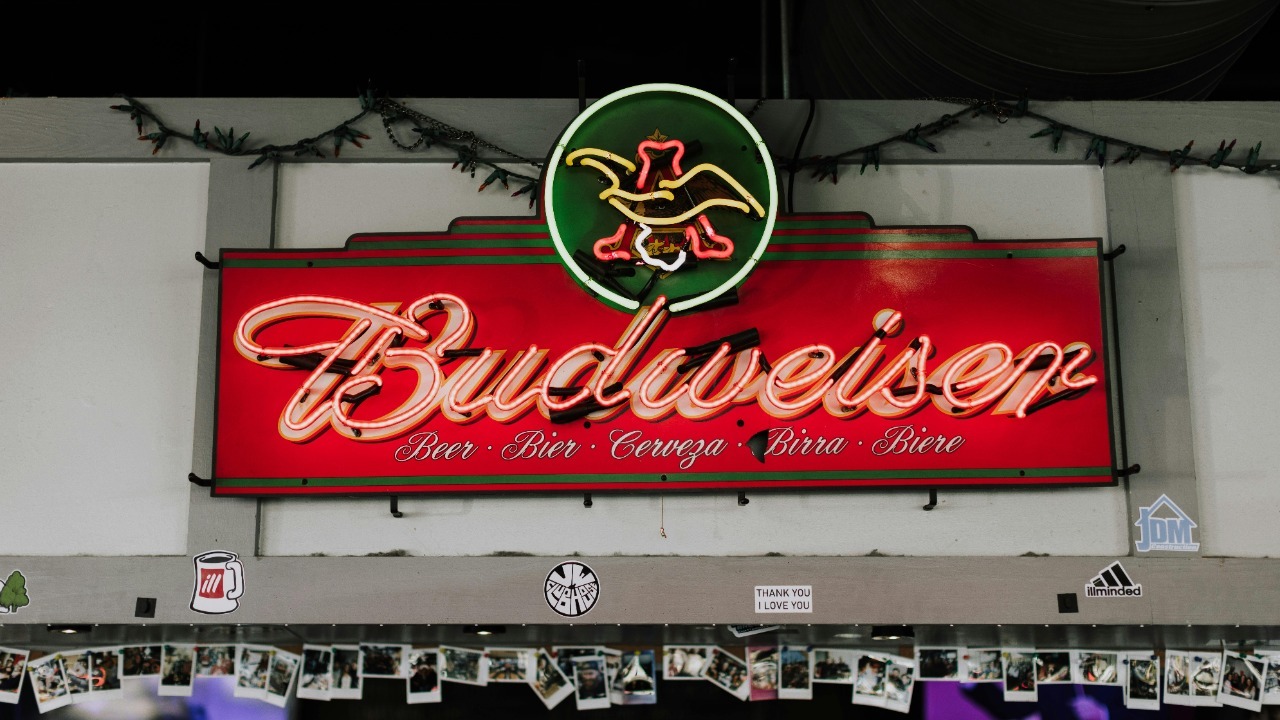
The last big Budweiser outpost in the Bay Area is going dark after a reported $54 million hit, ending a half century of industrial-scale beer making in Fairfield and leaving a hole in the region’s manufacturing map. The shutdown of the Fairfield Budweiser brewery is more than a corporate cost-cutting move, it is a turning point for workers, city finances and a local identity that grew up around the plant’s towering tanks and familiar red script. I see a story here about how global brewing strategy collides with the economics of one California city that spent decades living alongside the World’s largest brewing company.
The $54 million tipping point
At the center of the decision is a steep financial loss that executives were no longer willing to carry. Reporting on the closure cites a $54 million loss tied to the Fairfield operation, a figure large enough to turn what had been a flagship West Coast facility into a liability on the balance sheet. When a plant that once symbolized Budweiser’s reach across California becomes a drag of that magnitude, the calculus inside Anheuser-Busch shifts from how to grow it to how to exit. I read the shutdown not as a sudden shock but as the culmination of years of pressure on large-scale lager production in high cost regions.
The financial hit did not play out in isolation, it arrived alongside a formal legal process that signaled the end was no longer hypothetical. On December 12, a Worker Adjustment notice landed at the Fairfield Anheuser-Busch plant, the kind of WARN letter that tells employees and local officials that a closure is not just being studied, it is being scheduled. That combination of a quantified $54 million loss and a formal warning to workers is what turns a bad year into a permanent shutdown, and it is why the Fairfield brewery is now being described as the last Bay Area facility of its kind to go offline.
From 50-year anchor to shuttered landmark
The Fairfield site was never just another warehouse on the edge of town, it was a fixture that helped define the city’s industrial corridor for decades. The plant has been described as operating for 50 years, long enough that multiple generations in Fairfield grew up with the smell of mash in the air and the sight of Budweiser trucks rolling out to the freeway. For a long stretch, it was the only Bay Area brewery in the Budweiser network, a status that gave Fairfield an outsized role in the company’s California footprint. When a plant like that closes, the loss is cultural as much as economic, because it erases a piece of the region’s industrial memory.
Local leaders have been blunt about how jarring the decision feels after nearly half a century of partnership. In public comments, Fairfield’s mayor has emphasized that the company has been in town for 49 years, a reminder that the relationship between Anheuser-Busch and the city predates many of the residents now watching the gates prepare to close. The mayor’s frustration reflects a broader sense that a long-standing corporate citizen is walking away from a community that helped sustain it, even as the company insists it will manage the wind-down responsibly and determine what comes next for the sprawling site.
Jobs on the line and a city budget squeezed
Behind the headlines about corporate losses are the workers whose livelihoods are being rearranged. Company statements indicate that roughly 200 local employees will be affected as the Fairfield facility winds down in early 2026, a number that has since been echoed in state filings. A separate notice to California’s employment department makes clear that Anheuser–Busch Commercial Strategy intends to “wind down and conclude operations” at the Fairfield Brewery, language that leaves little doubt about the permanence of the cuts. For the workers on the floor, the WARN letter is not an abstract legal document, it is a countdown clock.
The impact ripples beyond the payroll. City officials have warned that the closure will cut into Fairfield’s water and sewer revenue, because a brewery of this scale is a major utility customer as well as a large employer. When Fairfield Budweiser is described as closing by February 2026, the shorthand hides a complex municipal math problem that will play out in budget hearings and rate discussions. I see a city bracing not only for layoffs but for the loss of a stable industrial customer that helped underwrite local infrastructure, a reminder that big factories are woven into civic finances in ways residents rarely see until the taps are turned off.
How Anheuser-Busch is unwinding its Bay Area footprint
The Fairfield shutdown is part of a broader strategic retrenchment by the parent company, which has been reassessing where and how it brews its flagship brands. Corporate representatives have confirmed that Anheuser–Busch is closing its Budweiser plant in FAIRFIELD, Calif, with production to be shifted to other facilities in the network. That means the beer itself will keep flowing, but the jobs and tax base tied to brewing it in Solano County will not. The company has also indicated that parts of the property will be sold, with some parcels retained and others potentially redeveloped, a sign that the land may soon be worth more to Anheuser-Busch as real estate than as a place to make beer.
Public messaging has framed the move as a difficult but necessary response to changing market conditions. In one video statement, Anheuser executives discuss plans to close the Budweiser plant in Fairfield while emphasizing that the company remains committed to California through other operations. Another segment focused on how the Fairfield facility will close in early 2026, with Busch representatives acknowledging the hit to local water and sewer revenue even as they stress support programs for affected staff. I read that dual message as classic corporate crisis management, pairing a narrative of strategic necessity with assurances that the company will not simply walk away from the people and infrastructure it has relied on for decades.
What the last Bay Area brewery’s closure signals for beer and the region
The end of Budweiser brewing in Fairfield is also a signal about where the beer industry is heading in high cost coastal markets. When the World’s largest brewing company decides to shut a Bay Area plant after 50 years, it is acknowledging that the economics of mass-produced lager have shifted toward regions with cheaper land, lower utility costs and easier logistics. The Fairfield closure leaves the Bay Area without a major Budweiser brewery, even as smaller craft operations continue to dot neighborhoods from Oakland to San Jose. I see a bifurcated landscape emerging, where global giants centralize production in a handful of mega plants while local and regional brewers fight for tap handles closer to home.
For Fairfield and the broader Bay Area, the question now is what fills the void. The WARN letter that arrived On December 12 makes clear that Budweiser’s era as a local industrial anchor is ending, but it does not dictate what comes next for the site or the workforce. Some parcels may attract logistics operators or light manufacturing, others could be eyed for housing or mixed-use redevelopment in a region starved for space. As Budweiser closes its only Bay Area brewery in Fairfield, the region is left to decide whether it wants another big industrial neighbor or a different kind of development altogether, and whether it can replace not just the jobs but the sense of place that came with watching those red Budweiser letters light up the night.
More From The Daily Overview

Grant Mercer covers market dynamics, business trends, and the economic forces driving growth across industries. His analysis connects macro movements with real-world implications for investors, entrepreneurs, and professionals. Through his work at The Daily Overview, Grant helps readers understand how markets function and where opportunities may emerge.

