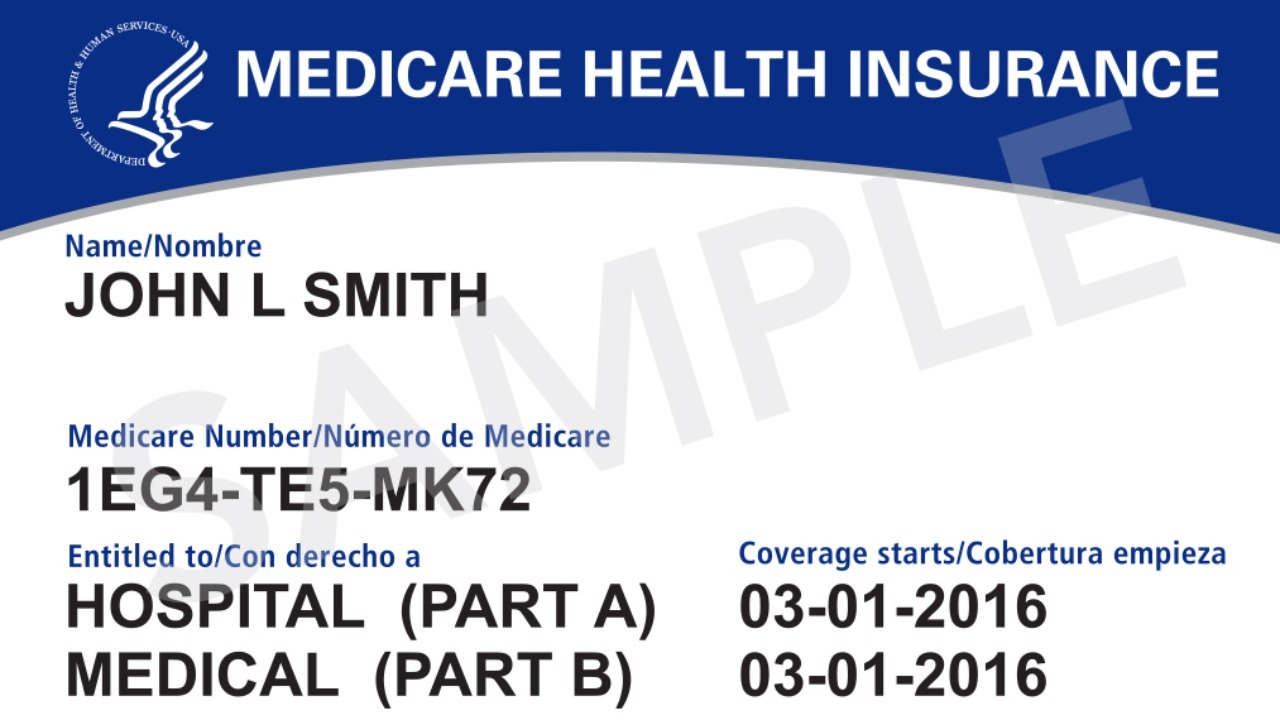
The monthly Medicare Part A premium for people who have to buy that coverage will be $597 in 2027, up from $565 in 2026. A reduced premium of $328 applies to a smaller group, up from $311. Both amounts take effect January 1, 2027, and most people on Medicare never see either one because they receive Part A without a premium.
The change matters to a narrower group: people who reach 65 without enough work history and buy hospital coverage themselves, along with certain people with disabilities. The sections below cover the official figures, who pays, the late enrollment penalty, state programs that can pay the premium, and the mistake most likely to cost money.
The 2027 Part A premium and the reduced rate
The Centers for Medicare & Medicaid Services set the amounts in a notice published in the Federal Register on November 19, 2026. It says the premium for the 12 months beginning January 1, 2027 will be $597 for the uninsured aged and certain disabled individuals who have exhausted other entitlement. The reduced premium is $328, which the notice describes as the full premium reduced by 45 percent.
CMS says the full premium is about 5.7 percent above the 2026 figure of $565, and the reduced premium is about 5.5 percent above $311. The agency’s 2027 fact sheet states the same dollar changes, a $32 increase for the full premium and a $17 increase for the reduced one, and adds that the 2027 Part A inpatient deductible will be $1,776, up $40 from $1,736.
The notice estimates that about 904,000 enrollees will voluntarily enroll in Part A at the full premium, and that an additional 129,000 will pay the reduced amount.
Inside the kit: Two contents of The Medicare Cost & Coverage Protection Kit fit a Medicare premium bill: the 51 state Medicare cost-help packs, which gather the state-run help programs in one place, and a medication and cost tracker for logging what each month of Medicare costs. The Medicare Cost & Coverage Protection Kit
Who pays a Part A premium and who does not
According to Medicare.gov’s costs page, most people pay nothing for Part A because they or a spouse paid Medicare taxes while working, generally at least 10 years. The Federal Register notice frames the same test in quarters: people without 40 quarters of coverage, and not married to someone who has them, are the ones who pay. A spouse’s record can therefore make Part A premium-free.
The reduced premium reaches people with at least 30 quarters of coverage, or those married to, widowed by or divorced from a person with 30 or more, under the conditions the notice lists. Since 40 quarters is premium-free, that places the reduced rate at 30 to 39 quarters. Medicare.gov also says people who get Medicare before 65 do not pay a Part A premium, and that buying Part A also requires having Part B.
What the gap between $597 and $328 adds up to
Labeled arithmetic using only the notice’s figures: $597 a month is $7,164 over 12 months, and $328 a month is $3,936. The difference is $269 a month, or $3,228 a year.
These figures cover Part A only. The Part A deductible of $1,776 per benefit period is a cost on top of any monthly premium.
The late enrollment penalty for waiting on Part A
The Medicare.gov page on avoiding penalties says that for people who have to buy Part A and do not sign up when first eligible, the monthly premium may rise 10 percent. The higher premium lasts for twice the number of years of delay. The page gives an example: 2 years without Part A means 4 years of the higher premium. A Special Enrollment Period can avoid the penalty.
For illustration only, 10 percent of $597 is $59.70, so the 2027 full premium with the penalty would be $656.70 a month.
When a state pays the premium instead
The Federal Register notice says over 90 percent of these individuals will have their Part A premium paid by states, because they are enrolled in the Qualified Medicare Beneficiary, or QMB, program. It adds that state Medicaid agencies must pay the Part A premium for eligible people who are not entitled to premium-free Part A. A separate program, Qualified Disabled Working Individuals, covers Part A premiums for certain people with disabilities who meet financial criteria.
Medicare.gov’s Medicare Savings Programs page says QMB covers Part A premiums for people without premium-free Part A, plus Part B premiums, deductibles, coinsurance and copayments for covered services. States run the program, so the application goes through the state, and the page lists 2026 monthly income limits of $1,350 for an individual and $1,824 for a married couple, with resource limits of $9,950 and $14,910. It says limits are slightly higher in Alaska and Hawaii and that some people may still qualify with higher amounts, so applying is advised. Qualification is not promised by any figure here.
The mistake that costs the most and where to get help
The costliest errors are two opposites. One is delaying Part A enrollment when the coverage must be purchased, which can trigger the 10 percent penalty for twice the years of delay. The other is paying a monthly premium without ever asking the state whether QMB applies. Because the 2027 premium rises January 1, anyone already billed may want to compare the new amount with the income limits above.
For personal questions, State Health Insurance Assistance Programs, listed at SHIPhelp.org, connect people with local counselors on Medicare enrollment, coverage and costs, and the site gives a national center number of 877-839-2675. The state Medicaid office handles the Medicare Savings Program application, and 1-800-MEDICARE is the federal line for enrollment questions. Rules and limits vary by state and by household.
State cost-help packs for a Part A premium bill
The Part A buy-in notice sets a monthly premium for people short of 40 quarters of work, but it does not show which state office takes a Medicare Savings Program application or how that state’s rules differ. The gap leaves a bill that may be paid month after month without a check on state help.
The Medicare Cost & Coverage Protection Kit is a 10-page kit with 51 state Medicare cost-help packs, the new Part D out-of-pocket cap, the prior-authorization appeal steps and a medication and cost tracker, which can be used to look up state help and keep a record of Medicare costs.
Look up the state Medicare cost-help pack for a home state in The Medicare Cost & Coverage Protection Kit.
This article was created with AI assistance and reviewed for accuracy against the Federal Register, CMS, Medicare.gov and SHIP pages read in November 2026.

Elias Broderick specializes in residential and commercial real estate, with a focus on market cycles, property fundamentals, and investment strategy. His writing translates complex housing and development trends into clear insights for both new and experienced investors. At The Daily Overview, Elias explores how real estate fits into long-term wealth planning.