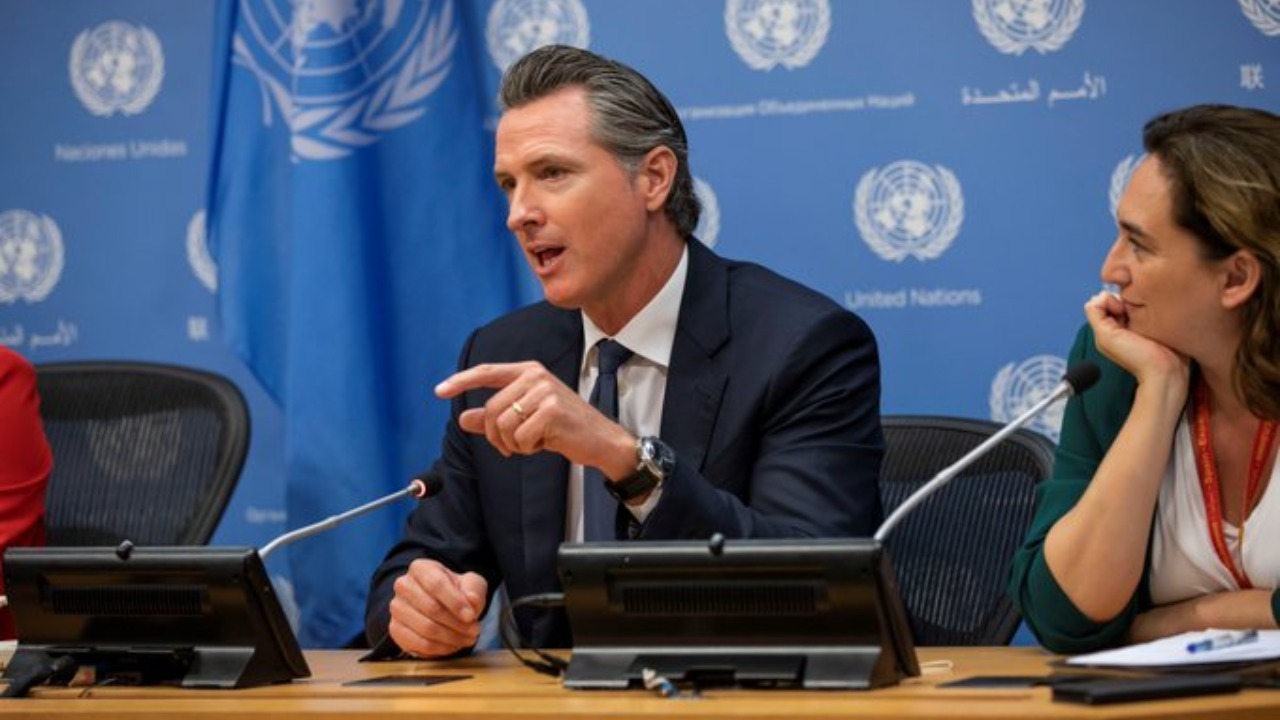
The United States has now fully severed its formal ties with the World Health Organization, ending nearly eight decades of membership just as global health threats continue to multiply. Within a day of that exit taking legal effect, California moved in the opposite direction, becoming the first U.S. state to plug directly into a WHO‑coordinated emergency network and setting up a sharp clash with President Donald Trump’s approach to global health. The timing turned what might have been a technocratic public health story into a pointed political statement about how and where Americans want their disease defenses built.
California Governor Gavin Newsom framed the move as both a practical step to protect residents and an explicit rebuke of the White House decision to walk away from the WHO. By joining a WHO‑coordinated outbreak response system just after the federal withdrawal took effect, he signaled that the country’s most populous state intends to keep working inside global health structures even if the United States government does not. The result is an unusual split screen: a president pulling the United States out of a long‑standing international body while one of its key states signs up for deeper cooperation with that same institution’s emergency arm.
The U.S. breaks with WHO as Trump follows through on withdrawal
The backdrop to California’s move is a yearlong process that culminated in the United States leaving the World Health Organization. President Trump set that course when he signed Executive Order 14155, which formally initiated the United States withdrawal from the World Health Organization and notified the agency that Washington intended to end its membership. According to the federal fact sheet, the process ran its full term, and the United States completed its departure from the WHO on January 22, ending its role in the organization’s governing structures and regular funding streams.
That final day of membership marked a turning point in how the United States relates to global health rules and coordination. Reporting on the exit notes that January 22 was the United States’ last day as a member of the World Health Organization, capping a year of contentious health reforms and arguments over sovereignty and international oversight. Another account underscores that The United States formally completed its withdrawal from the World Health Organization on that date, closing a chapter that had lasted nearly eight decades and reshaping how the country will interact with the WHO’s Global Outbreak Alert and Response Network, or GOARN, going forward.
California steps into GOARN one day later
Within twenty‑four hours of that federal break, California moved to fill part of the gap by joining the WHO‑coordinated Global Outbreak Alert and Response Network. State officials announced that California had become the first state to join the WHO‑coordinated international network that helps detect and respond to disease threats, effectively creating a direct line between Sacramento and Geneva even as Washington steps back. A state news release described how Governor Gavin Newsom met with the World Health Organization director‑general and confirmed that California would participate in the WHO‑coordinated international network, positioning the state as a partner in global outbreak response rather than a bystander.
Local coverage emphasized that California’s membership in GOARN is not symbolic but operational, tying its public health agencies into a system designed to share data, expertise, and rapid response teams when new pathogens emerge. One report noted that California had joined the WHO Global Outbreak Alert and Response Network and highlighted that the state is the first in the country to take that step, underscoring how unusual it is for a subnational government to plug directly into a multilateral health mechanism. Another account, published out of WASHINGTON and citing TNND, described how California Democratic Gov Gavin Newsom announced on a Friday that the state was the first to join the World Health Organization coordinated international network following the decision by President Donald Trump to remove the U.S. from the WHO, making clear that the state’s move was framed in direct contrast to the federal withdrawal.
Newsom’s public rebuke of Trump’s WHO strategy
Governor Newsom has not tried to separate the technical decision to join GOARN from the politics of the federal withdrawal. In his public remarks, he cast California’s alignment with the WHO as a corrective to what he portrays as a dangerous retreat by President Trump from global health cooperation. The state’s official announcement described how Governor Gavin Newsom met with the World Health Organization director‑general and used that meeting to declare that California becomes the first state to join the WHO‑coordinated international network, a sequence that underscored his intent to be seen as a counterweight to the White House on health diplomacy. In this framing, California is not just managing its own disease risks, it is also signaling that parts of the United States still want a seat at the global table.
National coverage of the move sharpened that contrast, presenting Newsom’s decision as a direct response to President Trump’s choice to pull the U.S. from the WHO. One detailed account explained that California Democratic Gov Gavin Newsom announced that the state was the first to join the World Health Organization coordinated international network following the move by President Donald Trump to remove the U.S. from the WHO, explicitly linking the two decisions in a single narrative. Another report, citing California Gov Gavin Newsom, noted that he announced just one day after the U.S. exit that California would become the first state to join the WHO disease network, underscoring how the timing was used to dramatize the policy split between Sacramento and the Trump administration.
What GOARN membership means for California’s health playbook
Beyond the political theater, California’s entry into GOARN has concrete implications for how it prepares for and responds to outbreaks. By joining the WHO‑coordinated Global Outbreak Alert and Response Network, the state’s health agencies gain structured access to international surveillance data, technical guidance, and the possibility of coordinated deployments when new threats appear. State officials have described California as the first state to join the WHO‑coordinated international network, a status that could give its epidemiologists and laboratories earlier visibility into emerging pathogens and best practices than they might receive through federal channels alone. For a jurisdiction that already sees itself as a global hub for travel, trade, and biotechnology, that kind of early warning and coordination is a strategic asset.
California’s move also fits into a broader pattern of regional health cooperation on the Pacific coast. Reporting on the state’s public health strategy notes that California partnered with Oregon, Washington and Hawaii in September 2025 to form the West Coast Health Alliance, which issues joint guidance and coordinates responses across state lines. That alliance, combined with California’s new role in the WHO Global Outbreak Alert and Response Network, suggests a layered approach in which the state works with neighboring states, national authorities, and international partners at the same time. It is a model that reflects California’s scale and ambition: as the most populous U.S. state, with a vast economy and major ports of entry, it is positioning itself as a de facto regional health actor in its own right.
A state‑federal split with global implications
The juxtaposition of a federal withdrawal and a state‑level embrace of WHO structures raises practical questions about how U.S. health policy will function in the next crisis. On one side, the United States government has stepped away from formal membership in the World Health Organization, a move that, according to one account, ended nearly eight decades of participation and changed how the country engages with the WHO’s Global Outbreak Alert and Response Network. On the other, California has moved to integrate itself into that same network, with state officials stressing that California becomes the first state to join the WHO disease network after the U.S. exit. The result is a patchwork in which some American institutions are still wired into WHO systems while the federal government stands apart.
More From TheDailyOverview
*This article was researched with the help of AI, with human editors creating the final content.

Grant Mercer covers market dynamics, business trends, and the economic forces driving growth across industries. His analysis connects macro movements with real-world implications for investors, entrepreneurs, and professionals. Through his work at The Daily Overview, Grant helps readers understand how markets function and where opportunities may emerge.

