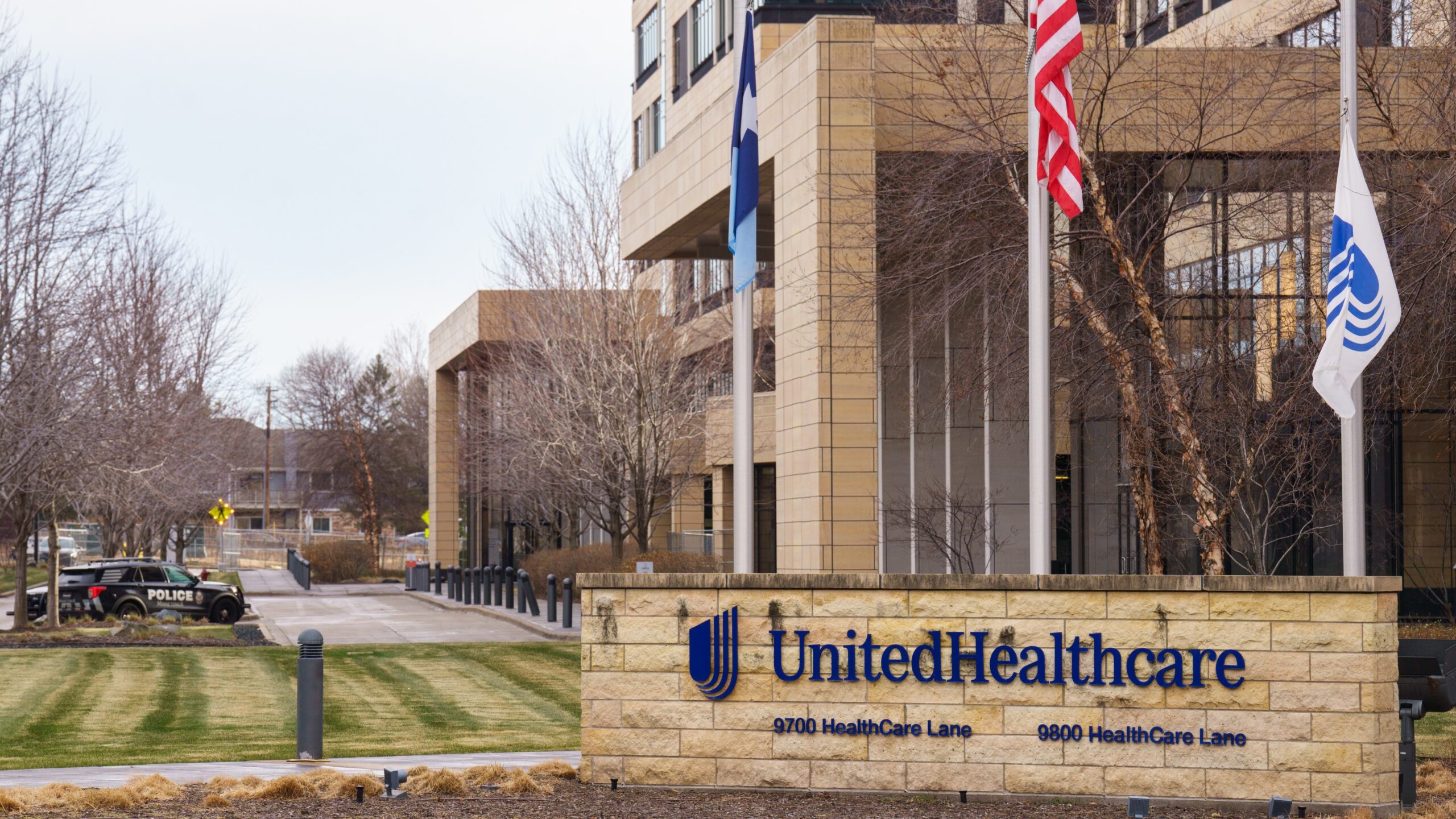
UnitedHealth Group shocked Wall Street by warning that its revenue will fall in 2026, triggering a nearly 20% collapse in the stock and wiping out tens of billions of dollars in market value. The health insurance giant, long treated as a defensive stalwart, is now confronting its first top-line decline in decades as it braces for a reset in its core Medicare Advantage business. The selloff has rattled investors who had come to see UnitedHealth as almost immune to policy and pricing shocks, and it has raised urgent questions about how sustainable the company’s growth model really is.
The company’s guidance points to a sharp break from its historic pattern of steady expansion, with management signaling that 2026 will be a year of retrenchment rather than growth. For a stock that had compounded returns for years, a 20% plunge in a single session is not just a bad day at the office, it is a referendum on how investors now view the risks around Medicare, regulation, and the broader managed care trade.
What triggered UnitedHealth’s 20% plunge
The immediate catalyst for the rout was UnitedHealth Group pairing its latest quarterly results with a warning that revenue will decline next year, something the company has not faced in decades. After the insurer released its fourth quarter and full year 2025 numbers, the market focused less on the modest earnings beat and more on the guidance that 2026 would bring the first revenue drop in the company’s history, a shift that accelerated a nearly 20% slide in the shares and erased tens of billions of dollars in value according to UnitedHealth’s collapse. For a business that had built its reputation on consistent growth, that guidance landed as a shock.
Behind the headline move, the trading action itself underscored how violently sentiment flipped. Analysts tracking the intraday pattern described a “Medicare Panic” that combined with a “Guidance Cut Trigger Capitulation” in UnitedHealth (UNH), as stop-loss orders and thin liquidity turned selling into a cascade. One breakdown of the session framed it as a classic liquidity grab and stop run in UNH trading, with investors who had treated the stock as a safe haven suddenly scrambling to exit at any price.
The 2026 revenue reset and what $439 billion really means
At the core of the selloff is the company’s forecast that revenue will fall about 2% in 2026 to $439 billion, a figure that would mark its first annual decline in more than a decade. Management tied that outlook to a deliberate pullback in certain lines of business, particularly Medicare Advantage, where it plans to shrink in unprofitable areas rather than chase volume at any cost. One detailed analysis noted that UnitedHealth Group’s stock plummeted 19.61% after the company projected a 2% revenue drop to $439 billion, describing it as the largest single-day decline since the company went public.
On its face, a 2% dip might not sound catastrophic for a company of this scale, but the symbolism matters. UnitedHealth Group had been viewed as a machine that could grow through almost any macro or policy environment, so even a modest contraction signals that the old playbook of steady expansion is under pressure. The guidance also came alongside commentary that 2026 would be a reset year, with the company emphasizing margin protection and portfolio pruning over headline revenue growth, a stance that unnerved investors who had grown accustomed to a smoother trajectory.
Medicare Advantage, CMS, and the Trump administration policy shock
The revenue warning cannot be separated from the upheaval in Medicare Advantage, where UnitedHealthcare and its peers are adjusting to a tougher regulatory and pricing backdrop. UnitedHealthcare and some rivals had already framed 2026 as a reset year, cutting benefits, exiting unprofitable markets, and narrowing networks in response to changes in how the Centers for Medicare & Medicaid Services is steering the program. Reporting on the sector noted that UnitedHealthcare and some saw this as a necessary step after years of aggressive expansion, especially as CMS authors a new chapter in the Medicare Advantage story.
Layered on top of that structural reset is the political dimension, particularly the Trump administration’s approach to Medicare Advantage payment rates. One policy analysis asked directly, “Did The Trump Administration’s Medicare Proposal Cause UnitedHealth Stock To Drop 20%?”, arguing that policy shifts in Medicare Advantage and proposed changes to Medicare payment rates in 2027 have become central to how investors price the stock. The piece, written by Richard Menger MD MPA, a Contributor, highlighted how policy shifts in under President Donald Trump’s administration have sharpened concerns that reimbursement could tighten further just as UnitedHealth is trying to stabilize its margins.
Inside the earnings, margins, and Wall Street’s reaction
Lost in the drama of the stock chart is the fact that UnitedHealth Group actually delivered a modest earnings beat in its latest quarter, even as it guided revenue lower. The company reported that its core operations remained profitable and that it was taking steps to resize parts of the business, including cost controls and portfolio adjustments, to support long term returns. In its commentary, UnitedHealth Group said it posted a modest fourth quarter earnings beat but paired that with soft revenue guidance as the insurer plots a turnaround and undertakes right-sizing across the, a combination that left investors focusing more on the future than the recent past.
Wall Street’s reaction has been complicated, with some analysts arguing that the selloff overshot the fundamentals while others see it as a necessary repricing of risk. One review of the bounce that followed the initial plunge noted that it was somewhat surprising given how analysts were digesting the earnings and a related report on the company’s outlook, suggesting that sentiment remains fragile. That analysis pointed out that, despite the volatility, there are still investors willing to step in on the thesis that the long term franchise remains intact, a view reflected in commentary on why UnitedHealth Group stock managed to bounce back after the initial shock.
Market shockwaves and what it means for investors
The scale of the move in UnitedHealth Group reverberated across the broader market, particularly among managed care and health services names that had been trading in its slipstream. On the day of the plunge, market coverage highlighted that UnitedHealth Group (NYSE:UNH), a major component of key indices, dragged benchmarks lower as it fell almost 20% after what was described as weak earnings and cautious guidance. The same coverage reminded readers that UnitedHealth Group (NYSE:UNH) had previously grown 195,498% since going public, underscoring how dramatic a reversal the latest session represented for long term holders.
For individual investors and portfolio managers alike, the episode is a reminder that even the most established compounders can be vulnerable when policy risk and earnings guidance collide. Many rely on platforms that aggregate real time pricing and fundamentals, such as Google Finance, to track moves like this, but the deeper challenge is interpreting what a one day 20% drop really signals about future cash flows. In my view, the combination of a deliberate revenue reset, Medicare Advantage uncertainty, and a visible shift in the Trump administration’s Medicare stance has forced the market to reprice UnitedHealth’s risk premium, and that repricing is unlikely to reverse quickly even if the stock stabilizes in the near term.
More From TheDailyOverview
*This article was researched with the help of AI, with human editors creating the final content.

Grant Mercer covers market dynamics, business trends, and the economic forces driving growth across industries. His analysis connects macro movements with real-world implications for investors, entrepreneurs, and professionals. Through his work at The Daily Overview, Grant helps readers understand how markets function and where opportunities may emerge.

