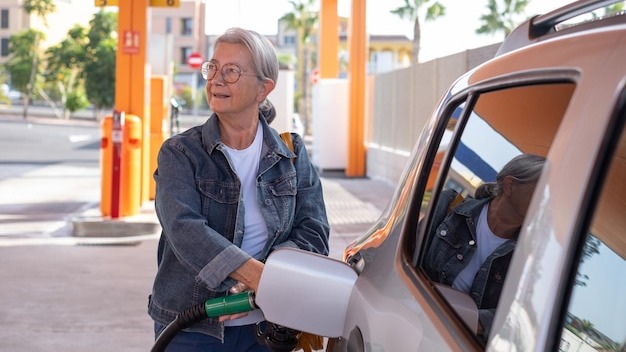
In early 2026, California transportation officials launched a formal plan to test a “vehicle miles traveled” fee, or VMT, as a new way to pay for roads. The idea came from the same state agencies that manage the gas tax, and it quickly drew attention from lawmakers, privacy advocates, and drivers worried about higher costs. Within days, social media posts claimed the state wanted to track every trip, turning a dry funding proposal into a political flashpoint.
The debate now centers on whether California can move away from its long‑standing gas tax without making drivers feel watched or unfairly targeted. Supporters say a mileage fee could share costs more evenly as electric vehicles grow. Critics fear it will punish long‑distance commuters and open the door to government surveillance. The fight over this new fee shows how hard it is to update a basic tax system in a state that depends on cars but also wants to cut emissions.
How California’s gas tax actually works
California still leans heavily on its gasoline excise tax to fund transportation. For the 2025–26 fiscal year, the rate is 61.2 cents per gallon, according to the state’s nonpartisan Legislative Analyst’s Office. That charge sits on top of federal taxes and other state fees, so most drivers only notice the total price at the pump, not the separate pieces. Every time someone fills a 20‑gallon tank, though, about $12 of that bill comes from this single state tax.
The Legislative Analyst’s Office explains in its transportation FAQs how the 61.2‑cent tax is divided among state highways, local streets, and transit. Those documents describe a system built almost entirely on per‑gallon charges rather than flat registration fees or broad sales taxes. In one breakdown, analysts note that roughly 85 percent of the state’s dedicated road money still comes from fuel‑based sources, even as vehicles become more efficient. That heavy dependence is why officials worry about long‑term revenue, even though the tax remains a powerful “workhorse” today.
Why the gas tax is losing its grip
The basic flaw is that the gas tax follows fuel, not distance. A driver in an older sedan who burns through a gallon every 20 miles pays far more tax per mile than someone in a new hybrid or electric car. Two people can drive the same 50‑mile commute, yet one might pay several dollars in gas tax while the other pays nothing at the pump. As more efficient and zero‑emission vehicles enter the fleet, the total gallons sold fall, and the state collects less money for every mile driven on its roads.
California’s climate policies speed up this shift. Rebates for electric vehicles, stricter emissions rules, and local efforts to cut fuel use all push drivers away from gasoline. The Legislative Analyst’s Office has warned in its budget work that this success will slowly chip away at fuel‑tax revenue even as traffic remains heavy. Analysts estimate that, under current trends, gas‑tax income per mile could fall by about 8 percent over the next decade, while the cost of maintaining aging bridges and freeways continues to rise. The more the state succeeds at cutting emissions, the more pressure it puts on a tax that was never designed for a low‑carbon fleet.
The leap to a vehicle miles traveled fee
To deal with this problem, California began testing a vehicle miles traveled fee as a possible replacement or supplement to the gas tax. Under a VMT system, drivers pay based on the number of miles they drive, no matter what fuel they use. A person who drives 10,000 miles in a year would pay the same basic amount whether they own a gasoline pickup, a hybrid sedan, or an electric SUV. Supporters argue that this approach is fairer and more stable because it follows road use directly instead of tying revenue to gasoline sales.
California’s current gas‑tax structure has been in place since 2014, so exploring VMT is not a minor tweak. It is a potential rewrite of how the state collects billions of dollars each year. Reporting from transportation advocates describes how California’s plan to study a mileage fee in early 2026 was framed as a serious step, not just a think‑tank idea. Officials talked about pilot programs that could include up to 27,827 volunteer drivers, with a goal of testing technology, billing systems, and privacy rules before any statewide rollout.
Conspiracy theories and privacy fears
Once the mileage‑fee plan became public, many critics focused less on money and more on privacy. Some posts claimed the state would put GPS trackers in every car and watch where people went, even though early concepts also mentioned simple odometer checks. In this version of the story, any device that counted miles was treated as a surveillance tool, no matter how it worked. The debate quickly shifted from how to fund road repairs to whether government should have any new way to monitor driving.
This narrative spread fast, especially among people already suspicious of state power. For them, the VMT test looked like one more step toward constant tracking and control. The idea that a tax bill could reveal where someone lives, works, or worships struck a nerve. Even proposals that relied on annual mileage reports, without location data, were dismissed as a “first step” toward something more intrusive. That fear made it hard for officials to explain technical safeguards or to point out that private apps and car‑based services already collect far more detailed location data than the state was proposing.
Why politicians are rattled by Plan B
State lawmakers saw the backlash and understood the political risk right away. The gas tax is mostly invisible; people pay it in tiny amounts every time they buy fuel, and they rarely blame a specific politician for the price at the pump. A VMT fee would look very different. It could show up as a clear monthly or yearly bill, tied directly to how far someone drives. That visibility might improve accountability, but it also means any rate hike could trigger immediate anger from drivers who see a big number on a statement.
There is also anxiety about who would pay more under a new system. Rural residents and workers with long commutes worry that a mileage fee would hit them hardest, especially if per‑mile rates do not account for limited transit options. Drivers who bought electric cars after years of state incentives feel they are being asked to pay twice: once through higher sticker prices and again through new road charges. Analysts at the Legislative Analyst’s Office have tried to map out these trade‑offs in neutral terms, noting that about 83 percent of current gas‑tax revenue still comes from gasoline vehicles, not electric ones. The political fight, however, is not neutral. Lawmakers must weigh long‑term budget needs against short‑term voter anger.
More From The Daily Overview
*This article was researched with the help of AI, with human editors creating the final content.

Grant Mercer covers market dynamics, business trends, and the economic forces driving growth across industries. His analysis connects macro movements with real-world implications for investors, entrepreneurs, and professionals. Through his work at The Daily Overview, Grant helps readers understand how markets function and where opportunities may emerge.

