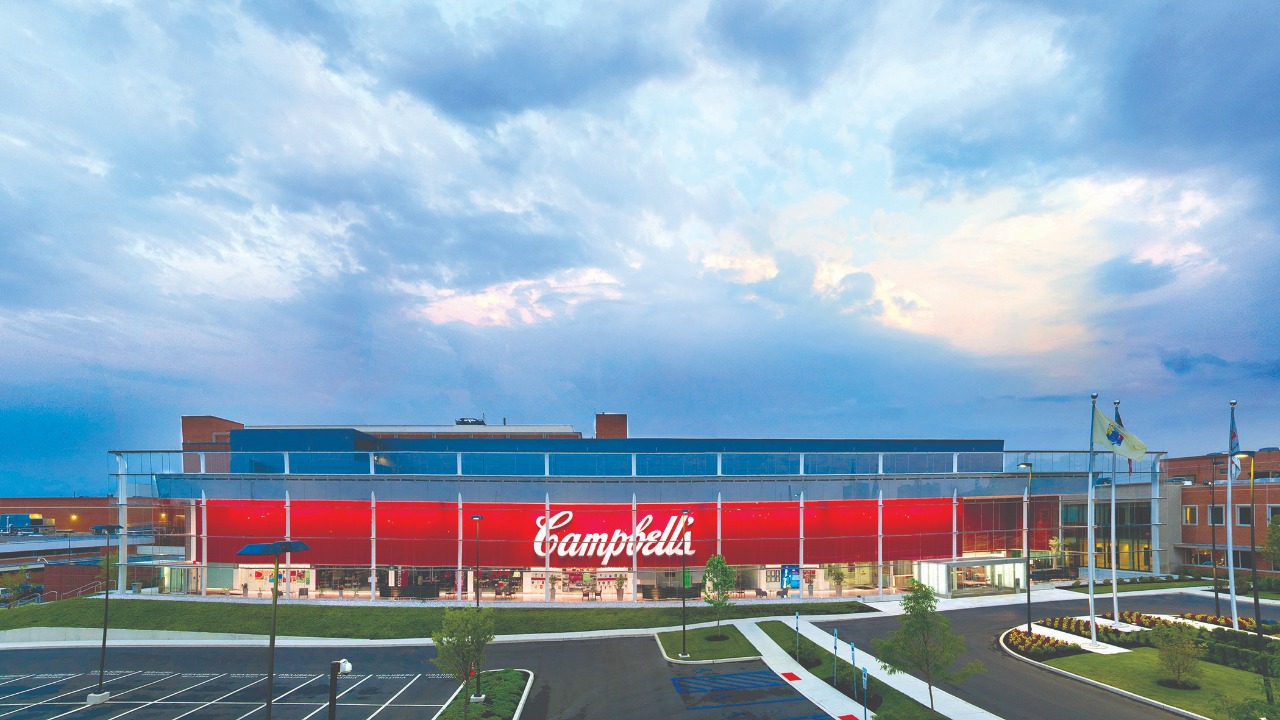
Campbell Soup Co is facing a crisis of confidence that has little to do with flavor and everything to do with trust. Investors are staring at billions in market value at risk, while shoppers are rethinking what a can of soup represents in an era of ingredient anxiety and corporate scandal. The headline talk of a $2 billion hit tied to “3D meat” is itself unverified based on available sources, but the financial and reputational damage swirling around Campbell is very real.
Campbell’s reputational mess, not a proven ‘3D meat’ case
I see the core of Campbell’s current turmoil not in a courtroom verdict about “3D meat,” but in a cluster of controversies that have converged into a consumer trust problem. The company has been rocked by allegations that a high-ranking executive privately disparaged its own products, reportedly calling them “highly processed” and referring to the ingredients as “bioengineered meat,” language that cuts directly against the wholesome image the red-and-white label has sold for generations. Those alleged remarks, captured on a recording and later tied to a lawsuit from a former employee, forced Campbell to confront questions about whether its own leadership believes in the food it sells.
Campbell responded by firing the executive at the center of the recording and publicly defending its recipes, insisting that its soups remain safe and properly labeled even as it acknowledged the uproar over the “bioengineered meat” description in the tape. The company has also had to answer for a separate claim that the same executive described its offerings as food for “poor people,” a phrase that, if accepted by shoppers as authentic, risks alienating both budget-conscious families and the more affluent buyers Campbell has tried to court with premium lines. The fallout has already shown up in the market, with Campbell Soup Co seeing its stock price dip to $30.61, a 3.32 percent decrease that investors directly linked to the executive scandal and the lawsuit that followed.
Legal and regulatory pressure piles on Campbell
On top of the executive drama, Campbell is also dealing with serious environmental scrutiny that undercuts its claims of corporate responsibility. The company has admitted to more than 5,000 days of violations under the Clean Water Act, a staggering figure that suggests long-running problems rather than a one-off compliance slip. According to a lawsuit filed in March 2024, Campbell repeatedly exceeded effluent limits on phosphorus, ammonia, E. coli bacteria and oil at a facility whose discharges ultimately flow into Lake Erie, raising alarms about water quality and the company’s stewardship of public resources.
Those alleged violations, which Campbell has acknowledged in legal filings, feed a broader narrative that the brand has been slow to modernize its operations and safety culture even as it markets itself as a trusted pantry staple. Environmental advocates point to the thousands of noncompliant days as evidence that regulators and communities cannot simply take the company’s assurances at face value, and that more aggressive oversight is warranted. The Clean Water Act case, detailed in filings from the lawsuit filed in March 2024, does not mention “3D meat” or any similar technology, but it does reinforce the sense that Campbell is fighting on multiple legal fronts at once.
How a $2 billion figure entered the conversation
The $2 billion number that has been attached to Campbell in some commentary does not, based on available reporting, come from any verified judgment or settlement over meat technology in its soups. Instead, that figure echoes other high-profile corporate disputes where plaintiffs or counterparties sought multibillion-dollar damages, and where the headline number became a shorthand for reputational risk. One example is a case in which Walmart was hit with a $2 billion lawsuit over produce technology, a claim that drew attention precisely because the damages request matched Walmart’s own internal estimate of the technology’s value in a quarterly earnings report.
In that Walmart dispute, the plaintiffs argued that the retailer had misused a proprietary system for tracking and managing fresh produce, and they pegged their damages at $2 billion because that was what Walmart itself had told investors the technology could be worth. The case, described in detail in a report on $2 billion in damages, shows how a single figure can dominate coverage even before any court has ruled. Something similar happened in the financial sector when JPMorgan Chase faced shareholder suits over a $2 billion trading loss tied to complex derivatives, a fiasco that investors saw as a failure of risk management rather than a one-off market blip. In that case, the bank’s own disclosure that “these derivative bets went horribly wrong” and resulted in billions of dollars in lost capital became the anchor for litigation and public outrage, as outlined in analysis of the $2 billion trading loss.
Shopper sentiment and the ‘bioengineered meat’ backlash
Where Campbell is clearly vulnerable is in the court of public opinion, especially around how its products are perceived in a marketplace that is increasingly skeptical of anything that sounds engineered. The leaked recording in which a Campbell executive allegedly described the company’s soup ingredients as “bioengineered meat” landed at a moment when consumers are already wary of lab-grown proteins, plant-based analogues and any hint that their food is more industrial than natural. Even if the phrase was used informally or out of context, it gave critics a vivid label to attach to long-standing concerns about processing and additives in canned soup.
Campbell has tried to contain the damage by emphasizing that its products comply with labeling rules and by distancing the company from the executive’s alleged comments. The executive was fired, and the company stressed that it stands by its recipes and ingredient sourcing. At the same time, a separate lawsuit from a former employee alleges that the same executive referred to Campbell’s offerings as food for “poor people,” a remark that, if believed, suggests a deep disconnect between corporate leadership and the customers who rely on low-cost pantry staples. Reporting on how Campbell stands by its product while confronting those allegations underscores the tightrope the company is walking: it must reassure loyal shoppers without appearing dismissive of serious claims about internal culture.
Wall Street’s verdict and what comes next
Investors have already started to price in the risk that Campbell’s brand damage could translate into weaker sales, higher legal costs or both. The drop in Campbell Soup Co’s share price to $30.61, marking a 3.32 percent decline, is modest in absolute terms but significant as a signal that markets are watching the company’s every move. Analysts have noted that the stock had been predicted to see significant growth before the recent wave of negative headlines, and the reversal suggests that the combination of lawsuits, environmental admissions and executive scandal has shaken confidence in management’s ability to execute its strategy.
At the same time, the broader consumer sector is reminding investors that reputational hits can be costly even when they do not come with a single blockbuster verdict. Financial news coverage has highlighted how quickly market sentiment can turn on household names when shoppers start to question what is in their carts, and how those shifts can ripple through earnings, guidance and capital allocation. The money pages that track consumer and retail stocks are now treating Campbell as a case study in how legacy brands must manage not only their balance sheets but also their internal culture and environmental footprint if they want to keep both investors and customers on side.
Why the ‘3D meat’ narrative still matters, even if unverified
Even though there is no verified lawsuit on record that matches the headline claim of a $2 billion loss over “3D meat” in Campbell’s products, the phrase has stuck in part because it captures a deeper unease about where food technology is headed. When an executive is heard referring to ingredients as “bioengineered meat,” it is not a stretch for anxious consumers to imagine something even more futuristic and unsettling, like 3D-printed proteins quietly slipping into familiar brands. That leap, while unverified based on available sources, reflects a real gap between how food companies talk about innovation internally and how shoppers want those changes explained to them.
For Campbell, the lesson is that transparency and respect for its core customer base are no longer optional. The company is already under pressure from environmental advocates over thousands of days of Clean Water Act violations, from former employees over alleged discriminatory and classist remarks, and from investors who have watched the stock slide as these stories accumulate. In that context, any hint that the company is experimenting with or misrepresenting advanced meat technologies, even without a confirmed lawsuit, becomes combustible. To rebuild trust, Campbell will have to do more than fire one executive or settle one case; it will need to show, in its factories, its boardroom and its ingredient lists, that it understands why shoppers are ready to bail the moment they feel they are not being told the full story.
Corporate crisis playbook: what Campbell can learn from others
Looking across corporate history, I see a familiar pattern in Campbell’s predicament. Companies that survive multibillion-dollar controversies, whether over technology, trading or safety, tend to do three things quickly: they own the problem, they overhaul the systems that allowed it and they communicate relentlessly with stakeholders. In the JPMorgan trading debacle, leadership eventually acknowledged that “these derivative bets went horribly wrong,” accepted the scale of the $2 billion loss and moved to tighten risk management. In the Walmart produce technology dispute, the retailer had to confront the fact that its own valuation of a system had become the basis for a massive damages claim, forcing a rethink of how it framed strategic assets to investors and partners.
Campbell has started down a similar path by removing the executive whose recorded comments about “highly processed” soup and “bioengineered meat” ignited public outrage, as detailed in coverage of how Campbell fired an executive over those remarks. The harder work will be proving that the comments were an outlier rather than a window into a broader culture of cynicism about the product and its customers. That means tightening environmental compliance so there is no repeat of more than 5,000 days of Clean Water Act violations, investing in clearer labeling and communication about any use of bioengineered ingredients, and engaging directly with shoppers who feel talked down to or misled. If Campbell can do that, the unverified specter of a $2 billion “3D meat” lawsuit may fade, replaced by a more grounded story of a legacy brand that nearly lost the plot and then fought to win back the pantry.
More From TheDailyOverview
- Tennessee loses $2.6B megafactory and faces major layoffs
- Retired But Want To Work? Try These 18 Jobs for Seniors That Pay Weekly
- What to do with your pennies after the U.S. stops minting them
- Home Depot CEO warns of a troubling customer trend in stores

Grant Mercer covers market dynamics, business trends, and the economic forces driving growth across industries. His analysis connects macro movements with real-world implications for investors, entrepreneurs, and professionals. Through his work at The Daily Overview, Grant helps readers understand how markets function and where opportunities may emerge.

