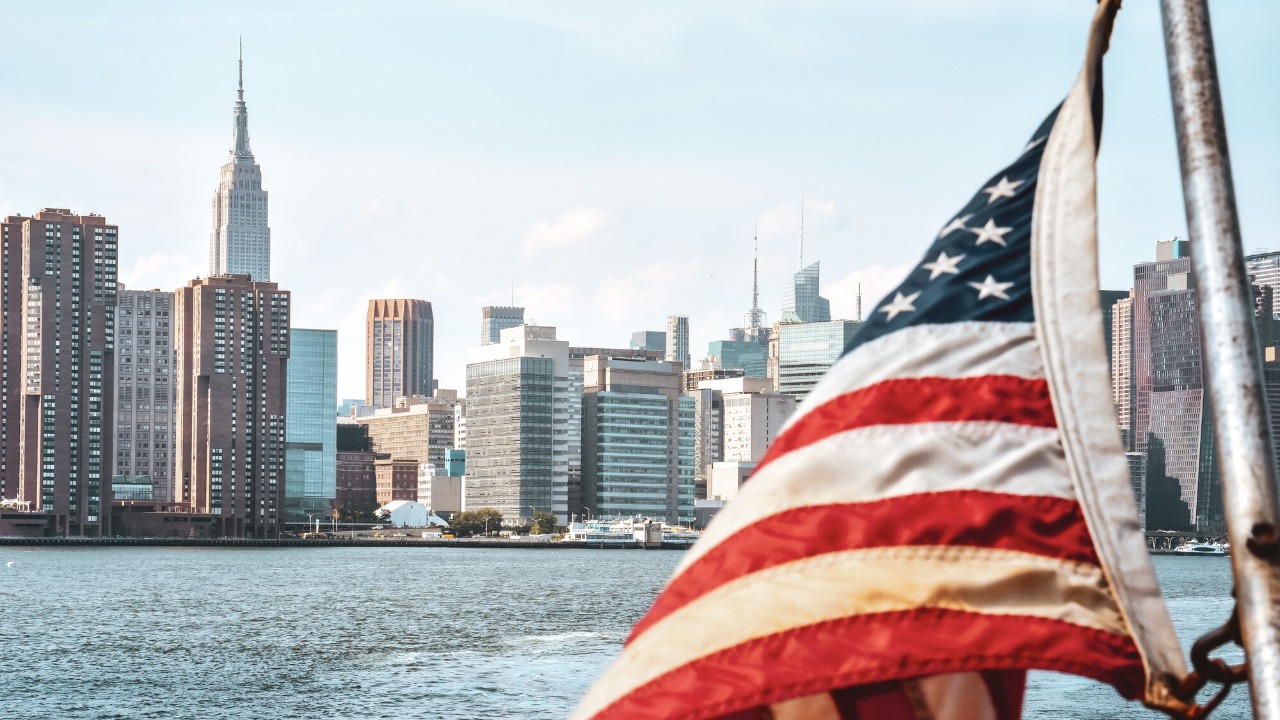
Across the United States, the fight over beauty in the built environment has moved from late-night arguments on social media to construction sites, zoning boards and even the Oval Office. The question is no longer whether design matters, but whether a country wrestling with inequality and climate pressure can still produce places that feel inspiring, shared and genuinely public. The answer, I would argue, depends less on taste than on how seriously America treats beauty as a civic obligation rather than a luxury add‑on.
From federal courthouses to neighborhood parks, the next few years will test whether that obligation is still alive. Major projects, new design rules and shifting homeowner preferences all point to a country that has not given up on building beautiful places, but is still arguing fiercely about what “beautiful” means and who gets to enjoy it.
Beauty as a public value, not a private upgrade
For generations, the American Dream has been sold as a visual ideal as much as an economic one: a detached house, a yard, a quiet street. Researchers at UC Davis note that the American Dream still conjures images of a suburban ideal that promises comfort and optimism, especially for immigrants and first‑generation families. Yet that dream has drifted out of reach for many, replaced by a reality in which a modest house in a desirable neighborhood can cost around $1.8 million. When beauty is locked behind that kind of price tag, it stops functioning as a shared civic good and becomes a private amenity for those who can pay.
Public space is where that imbalance can be corrected. A waterfront promenade, a neighborhood plaza or a well‑designed park can deliver the sense of dignity and delight that used to be bundled into a single‑family mortgage. In CHICAGO, a recent report on parks and recreation construction describes how cities are using Smart technology for lighting, irrigation and security to stretch budgets and keep spaces welcoming for more people, in more ways, throughout the day. A separate industry brief on 2026 TRENDS in PARKS and RECREATION CONSTRUCTION argues that HOW public facilities are procured and phased can speed up project cycles and complete upgrades faster, which is another way of saying that beauty does not help anyone if it is stuck on the drawing board.
From glass boxes to character: the skyline shifts
At the level of the skyline, the country is already pivoting away from anonymous glass toward buildings that try to carry more visual weight. One survey of global projects notes that the era of sleek glass facades is giving way to grander, brawnier towers that nod to America’s architectural past, with new high‑rises in New York and elsewhere embracing stone, ornament and a more muscular profile that recalls early twentieth‑century icons of America. Another feature on 11 global projects points to the same trend, highlighting how contemporary towers sit in conversation with historic landmarks like Sagrada Familia in Barce, suggesting that expressive silhouettes and crafted facades are back in fashion after decades of corporate minimalism.
Closer to home, a cluster of high‑profile American projects scheduled to finish this year will test whether that appetite for character can survive value engineering. A roundup of Eight American buildings completing in 2026 includes the Buffalo Bills stadium in New York by Populous, which is being watched closely as a test of whether a massive sports venue can feel rooted in place rather than dropped from the sky. Another list of new global buildings highlights 520 Fifth Avenue in New York, a tower whose design is said to be heavily influenced by Batman’s Gotham City, a reminder that pop culture and fantasy still shape what many people consider visually compelling in a dense urban core, as seen in the projects profiled Here.
Federal power and the classical revival
Beauty is not just a market trend, it is now federal policy. President Donald Trump signed an order titled “Making Federal Architecture Beautiful Again” that makes classical architecture the default style for new federal buildings. The text defines Brutalist architecture as a style that grew out of the early twentieth‑century modernist movement, characterized by raw concrete and blocky forms, and positions it as something the government should avoid in favor of more traditional, ornamented designs associated with firms like Delano and Aldrich. Supporters see this as a long‑overdue correction that aligns courthouses and agency headquarters with public expectations of dignity and permanence.
Critics, however, argue that the order risks freezing federal design in a narrow historical band and turning architecture into a culture‑war proxy. Reporting on the directive notes that it explicitly makes classical architecture the default style for federal buildings, a move that some architects see as sidelining innovation and regional expression, as summarized in coverage of the Trump order by Brett Samuels and Brett Sam. The deeper question is whether beauty can be legislated from the top down at all, or whether the most resonant public buildings will always be those that grow out of local context, regardless of style labels.
Neighborhoods, homes and the quiet revolution in taste
While federal policy grabs headlines, the more consequential shift in American aesthetics may be happening at the scale of the home and the block. Residential designers tracking 2026 Architecture Design Trends describe a move toward “Pattern Drenching the Right Way,” where bold surfaces are layered thoughtfully rather than splashed everywhere, and toward “Curved and Sculptural Accents That Reshape Interiors and Architectural Spaces,” which soften the hard edges of open‑plan layouts. Another standout theme is the desire for spaces that feel personal and crafted rather than generic, a reaction to years of gray‑on‑gray developer finishes. A separate forecast on Architectural Design Trends 2026 frames this as a Forward, Looking Design Forecast for Modern Homes, where Architectural choices are driven as much by homeowner comfort and energy efficiency as by curb appeal.
Customization is becoming a quiet form of resistance to sameness. As part of the 2026 design wave, remodelers are encouraging clients to choose finishes and built‑ins that bring individuality to spaces, rather than defaulting to whatever is cheapest in the catalog, a shift captured in guidance on features that bring individuality to rooms. At the same time, technology companies are trying to prove that sustainability and aesthetics can coexist. One manufacturer of building envelopes describes a dual approach in which products like eFacade LITE, eFacade PRO, eFacade PRO+ and eFacade TILT, along with systems such as CladiShield Rainscreen and CladiFab, allow developers to pursue energy performance and visual ambition without forcing them to choose between the two, as outlined in its Overview of 2026 trends.
Parks, infrastructure and the new civic imagination
If there is a single arena where the dream of shared beauty feels most alive, it is in the reinvention of parks and public infrastructure. A detailed report on 2026 TRENDS in PARKS and RECREATION CONSTRUCTION explains HOW public spaces are evolving to serve more people in more ways, from hybrid facilities that combine sports, culture and social services to procurement methods that bundle design and construction for faster delivery. In CHICAGO, the same research highlights how smart lighting and irrigation systems are being used to cut operating costs so that more money can go into visible quality, a strategy that treats technology as a means to an aesthetic end rather than an end in itself, as described in the CHICAGO briefing.
On the ground, that philosophy is visible in neighborhoods that have long been starved of investment. In Boyle Heights and East LA, a slate of projects scheduled for completion in 2026 ranges from long‑awaited infrastructure upgrades to improve pedestrian safety to fresh renovations that will beautify existing landmarks and even a brand‑new park, according to a community update that promises residents a first look at the changes they can expect to see in 2026. These are not glossy megaprojects, but they may matter more to daily life than any museum or stadium, because they treat sidewalks, crosswalks and pocket parks as worthy of design attention rather than afterthoughts.
More From The Daily Overview
*This article was researched with the help of AI, with human editors creating the final content.

Grant Mercer covers market dynamics, business trends, and the economic forces driving growth across industries. His analysis connects macro movements with real-world implications for investors, entrepreneurs, and professionals. Through his work at The Daily Overview, Grant helps readers understand how markets function and where opportunities may emerge.

