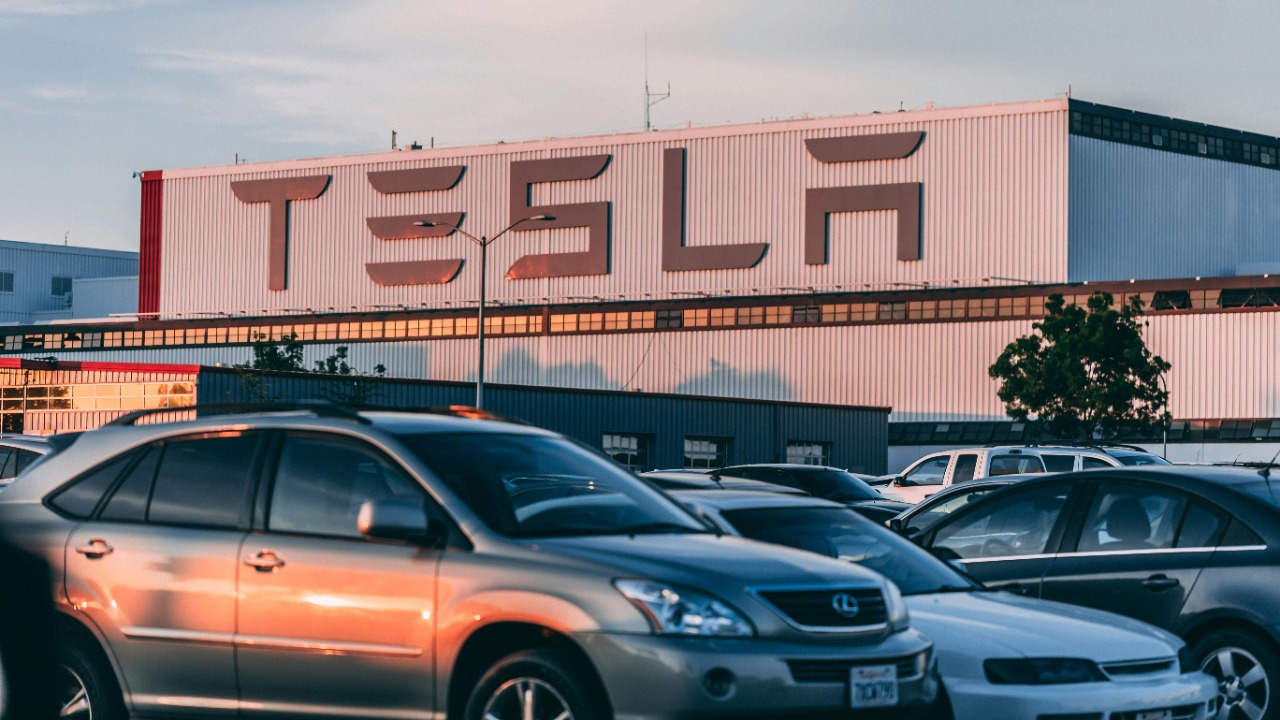
Tesla’s new pay plan has turned a once-theoretical number into a hard target: a market value of $8.5 trillion within roughly a decade. That figure would not just reshape the auto industry, it would redefine what a single company can be worth in public markets. I want to unpack how that goal compares with Tesla’s current size, what it implies for the stock, and whether the company’s sprawling bets on software, robots and energy give it even a remote shot at getting there.
The $8.5 trillion line in the sand
The starting point is simple but staggering: Tesla has explicitly tied its long term ambition to a market capitalization of $8.5 trillion. Under the new compensation framework, Tesla and Musk are effectively telling investors that anything less than multiplying the company’s value several times over will count as underperformance. The plan frames that number as a stretch but not a fantasy, arguing that the company could grow to roughly eight times its current size if its technology bets pay off across vehicles, software and robotics.
Outside analysts have picked up that gauntlet and tried to translate it into stock price terms. One widely cited Quick Read analysis notes that for Musk to unlock the full value of his new package, Tesla (TSLA) would need to reach an $8.5 trillion valuation by around 2035, effectively turning him into a trillionaire if the plan pays out. That framing matters because it anchors the debate: this is no longer about whether Tesla can be “big,” it is about whether it can become one of the most valuable enterprises in history within a single investing generation.
Where Tesla stands today
To judge that ambition, I first look at where Tesla actually sits right now. According to the latest Tesla Market Cap data, Tesla has a market cap or net worth of $1.48 trillion as of early December, and Its market cap has increased by 48 percent over the past year with an annual growth rate of 52.38 percent. Those are extraordinary numbers for a company that already ranks among the world’s largest, and they underscore how much optimism is already embedded in the stock.
On a per share basis, TSLA trades around 436 dollars after a sharp recovery from earlier losses, according to the Current Stock Overview section of a recent forecast. That rebound has come as investors refocused on Tesla’s core initiatives and looked past some of the volatility around Musk’s other ventures. The combination of a $1.48 trillion valuation and a stock near 436 dollars means the market is already pricing in years of growth, which raises the bar for any further multi-trillion dollar appreciation.
What $8.5 trillion implies for TSLA’s stock price
Once I map the $8.5 trillion target onto today’s valuation, the scale of the challenge becomes clearer. Moving from roughly $1.48 trillion to $8.5 trillion would require Tesla’s market value to increase by more than fivefold from current levels. If the share count stayed broadly similar, that would translate into a stock price several times higher than 436 dollars, effectively asking investors to believe that Tesla can compound at a rate more commonly associated with early stage growth companies, not a global manufacturer already selling millions of vehicles.
Some bullish forecasts try to sketch what that might look like in practice. A detailed Quick Snapshot Table of Predictions lays out Year by Year scenarios, including a Bullish Prediction and an Average Predicti path for TSLA through 2030. Even in optimistic cases, the projections tend to land in the high hundreds of dollars per share rather than the multiple-thousand-dollar territory implied by an $8.5 trillion market cap, which shows how far consensus expectations still sit from Musk’s stretch goal.
The trillion-dollar pay package and shareholder buy-in
Ambition alone does not move markets, so I look closely at how much real shareholder backing stands behind this plan. Investors have already delivered a striking verdict: they approved Musk’s new $1T pay package with about 75% voting in favor, according to the Key Takeaways from one analysis. The structure ties Musk’s potential payout to a series of operational and financial milestones, including revenue, profitability and ambitious production targets such as 1 million humanoid robots delivered, which are meant to align his incentives with long term value creation.
Another breakdown of the package notes that, as reported by Fortune, the full value of the compensation hinges on Musk (Elon Musk) achieving a series of benchmarks that would push Tesla’s valuation toward the multi-trillion range, potentially over five times its current valuation. That structure effectively turns the $8.5 trillion goal into a contract between Musk and his investors: if he can deliver the growth, he will personally reap unprecedented rewards, and if he falls short, much of that theoretical compensation evaporates.
How bullish is “bullish”? Ron Baron’s $10,000 call
Even in a market used to big promises, some of the loudest Tesla bulls stand out. Longtime investor Ron Baron has argued that Tesla could be a $10,000 stock in a decade, a figure that would imply a market value far beyond today’s $1.48 trillion. If TSLA were to reach $10,000 per share without massive dilution, the company’s capitalization would move into territory that makes the $8.5 trillion target look less like a moonshot and more like a midpoint in a very aggressive growth curve.
It is important, though, to separate a single investor’s conviction from broader market expectations. Baron’s $10,000 call assumes that Tesla not only dominates electric vehicles but also unlocks enormous profits from software, energy storage and robotics. That scenario overlaps with the assumptions embedded in the $8.5 trillion pay plan, but it is far from consensus. Most institutional forecasts, including the bullish cases in the Quick Snapshot Table of Predictions, still cluster around sub-$1,000 share prices through 2030, which would leave Tesla well short of the valuation needed to justify a $10,000 stock or an $8.5 trillion market cap.
Robots, factories and the Optimus wildcard
If Tesla is going to justify anything close to $8.5 trillion, it will need revenue streams that look very different from selling Model Y crossovers. That is where the company’s humanoid robot program, Optimus, comes in. A recent report on Capital and Ambition notes that Tesla has the financial resources and organizational willingness to pursue moonshot projects that other companies avoid, including a 10 million per year Optimus humanoid robot factory at Giga Texas. That kind of capacity, if ever fully utilized, would represent an entirely new industrial category with potential revenue in the hundreds of billions.
The same analysis underscores that Tesla’s push into humanoid robots is not a side project but a core part of its long term strategy. The company is betting that Optimus units can be deployed in factories, warehouses and eventually consumer settings, creating a platform business that resembles the early days of the smartphone ecosystem. For the $8.5 trillion target to be plausible, I believe Optimus or similar initiatives would need to evolve from speculative R&D into scaled, profitable product lines, delivering on the production milestones baked into Musk’s pay package such as 1 million humanoid robots delivered.
Investor psychology and the $8.5 trillion narrative
Beyond the spreadsheets, the $8.5 trillion figure is also a narrative device that shapes how investors think about Tesla. Coverage of trending stocks has highlighted that, to get his staggering paycheck, the Tesla CEO would have to meet ambitious targets including an $8.5 trillion valuation, yet investors seem unfazed for now. That reaction suggests that many shareholders view the goal less as a precise forecast and more as a directional statement about Tesla’s intent to keep compounding at a high rate.
Short term trading around the pay package also reveals how sentiment can swing on Musk’s perceived alignment with shareholders. An evening market digest noted that Investor attention has focused on a proposed performance incentive plan for Chief Executive Elon Musk, which could grant him a massive payout if the company reaches an $8.5 trillion market capitalization. The fact that Tesla stock gained as that plan advanced suggests that, at least for now, markets interpret the package as a sign of confidence rather than a sign of hubris.
How the new plan reframes Tesla’s growth path
One underappreciated effect of the $8.5 trillion target is how it reframes what “success” looks like for Tesla’s management team. A detailed breakdown of the new structure explains that Tesla (TSLA) would need to reach an $8.5 trillion valuation by 2035 for Musk to earn his $1 trillion compensation, and that he is likely not wrong to view this as a stretch but achievable outcome if everything breaks Tesla’s way. That framing effectively turns the next decade into a binary bet: either Tesla evolves into a multi-industry platform company, or the compensation package ends up as an aspirational footnote.
Inside the company, that kind of target can be both motivating and unforgiving. A LinkedIn post titled More Relevant Posts from TRADIIFY PORTAL LLC, which has 1,639 followers, framed the $1 trillion pay package as a tool that can drive enormous value creation if structured effectively. By tying Musk’s upside to extreme performance thresholds, the board is signaling that incremental gains are not enough, and that only transformative growth across vehicles, energy, software and robotics will count as a win.
Can the math work in 10 years or less?
So can Tesla really get there within a decade? From a pure numbers perspective, moving from $1.48 trillion to $8.5 trillion in 10 years would require a compound annual growth rate in market cap of roughly 19 to 20 percent, assuming no major dilution. That is aggressive but not unprecedented for high growth tech companies, especially if Tesla can sustain margins and expand into new categories. The challenge is that such growth would need to occur on top of an already enormous base, in a capital intensive industry facing fierce competition from legacy automakers and new entrants alike.
In my view, the path to anything close to $8.5 trillion runs through three pillars: continued dominance in electric vehicles, successful monetization of software and autonomy, and a genuine breakthrough in humanoid robotics or similar moonshots. The company’s willingness to build a 10 million per year Optimus factory, its alignment of Musk’s incentives with multi-trillion dollar outcomes, and the bullish calls from investors like Ron Baron all point in the same direction. Whether that is enough to overcome execution risk, regulatory scrutiny and macroeconomic cycles is, for now, Unverified based on available sources.
More From TheDailyOverview
- Tennessee loses $2.6B megafactory and faces major layoffs
- Retired But Want To Work? Try These 18 Jobs for Seniors That Pay Weekly
- What to do with your pennies after the U.S. stops minting them
- Home Depot CEO warns of a troubling customer trend in stores

Elias Broderick specializes in residential and commercial real estate, with a focus on market cycles, property fundamentals, and investment strategy. His writing translates complex housing and development trends into clear insights for both new and experienced investors. At The Daily Overview, Elias explores how real estate fits into long-term wealth planning.

