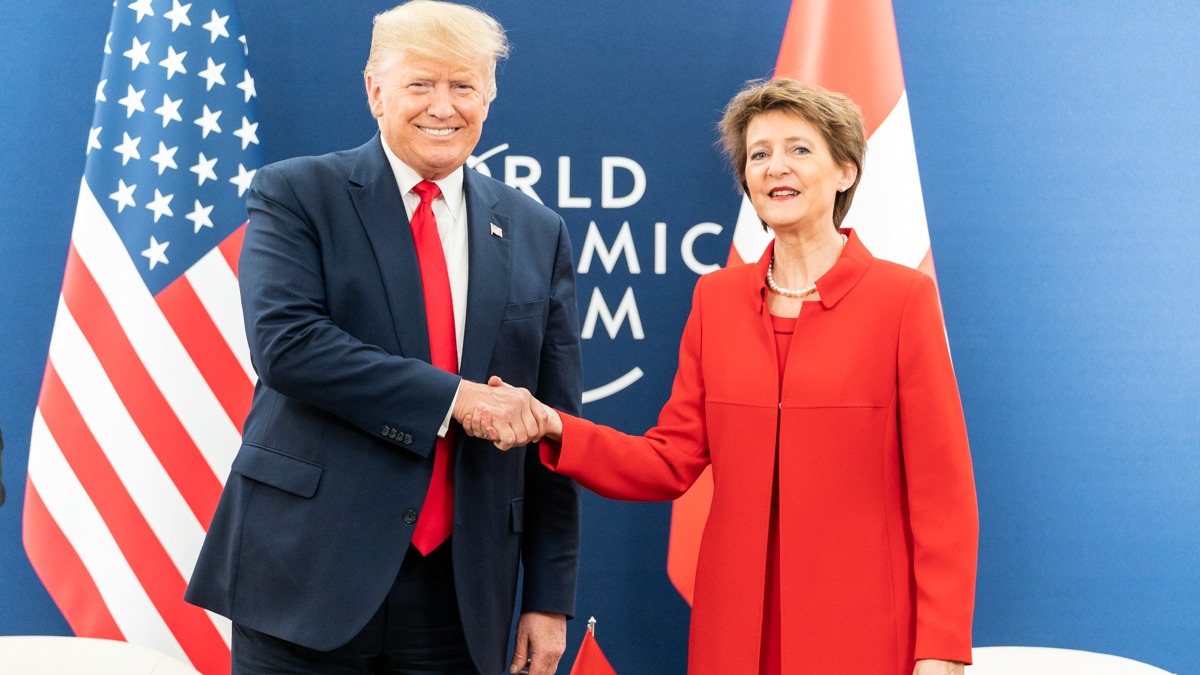
Business leaders left the World Economic Forum in Davos this week with an unusually blunt message for Europe: fix the structural problems that are dragging on growth or watch investment, innovation and jobs flow to the United States and China. Their warning was not about a distant future but about decisions companies are making now on where to build plants, base research and hire talent. At stake is whether Europe can remain a rule‑setter in the global economy or slides into a slow‑growth periphery.
The anxiety is sharpened by the sense that the global race is already tilting away from the continent. Executives point to the scale and speed of policy moves in Washington and Beijing, from industrial subsidies to looser regulation, and contrast that with Europe’s fragmented decision‑making and dense rulebook. The Davos conversations made clear that unless Europe can turn its single market and technological base into a more agile engine of growth, the next wave of investment will go elsewhere.
Why Davos became a wake‑up call for Europe
The World Economic Forum in Davos gathered more than 800 executives from across the globe, turning the Swiss resort into a concentrated barometer of corporate sentiment about Europe’s prospects. Many of those leaders argued that the continent is not leveraging its vast internal market or its deep pools of capital, and that it risks losing strategic industries to more aggressive competitors in the United States and China. At stake, they stressed, are not only headline GDP numbers but the long term resilience of supply chains, the quality of jobs and social cohesion in Europe’s democracies, themes that dominated private meetings as much as public panels.
Those concerns are unfolding against a broader geopolitical reset that Davos regulars described as a global “wake‑up call” on power and security. Political leaders and executives alike noted how quickly social media posts, bilateral meetings and a few words in a speech can now transform the diplomatic climate, reinforcing the sense that Europe must adapt to a harsher world that rewards speed and strategic clarity. That mood was captured in warnings that the continent needs to show more respect to economic “bullies” only in the sense of understanding how hard‑nosed rivals operate, a point underscored in one analysis of the new global order that framed Davos as a wake‑up moment for Europe’s political class.
Regulation, bureaucracy and the competitiveness gap
For many CEOs, the core of Europe’s problem is not a lack of talent or technology but a policy environment that has become too slow and complex to navigate. They cited over‑regulation and clunky bureaucracies that delay investment decisions and product launches, arguing that the continent’s seemingly never‑ending rules are eroding its ability to compete with more flexible jurisdictions. One executive summary of the Davos debates described how these layers of red tape have long hurt European business and are now coming to a head as companies weigh where to locate new plants and research and development, a trend highlighted in warnings that Although the issues are familiar, the consequences are becoming more acute.
Europe’s regulatory sprawl was a particular target for technology and digital executives, who argued that the continent is in danger of regulating itself out of relevance. Nicola Mendelsohn, the head of Facebook owner Meta Pla, was cited as one of the leaders who see Europe’s rules as both a constraint and a missed opportunity, since a more streamlined framework could turn the region into a global standard‑setter rather than a cautionary tale. Reporting from Davos noted that Europe’s regulatory burden is now seen by many global firms as a strategic disadvantage rather than a badge of consumer protection, even as they acknowledge the bloc’s ambition to defend privacy and competition.
US tariffs, China’s scale and the new pressure on Europe
The external pressure on Europe is intensifying as both Washington and Beijing move to lock in industrial advantages. Earlier this year, US President Donald Trump’s trade team threatened tariffs on European allies for resisting his ambitious agenda, a move that rattled Davos participants and underscored how quickly access to the American market can become a bargaining chip. One account of the meeting’s macroeconomics and markets discussions described how these MACROECONOMICS tensions spilled into debates on tariffs, reinforcing the sense that Europe must shore up its own competitiveness rather than rely on stable transatlantic ties.
China’s role loomed just as large in Davos conversations, with executives warning that Beijing’s ability to mobilize capital, infrastructure and industrial policy at scale is pulling investment eastward. Business leaders pointed to sectors from pharmaceuticals to artificial intelligence and defense where Europe risks being squeezed between the subsidy‑rich strategies of the United States and the state‑driven model of China. One detailed summary of CEO views stressed that the world is getting “progressively” more competitive and that Europe’s approval timelines for new drugs and technologies will have to become shorter if it wants to keep up, a point linked to concerns that shorter development cycles in the drugs industry are already favoring rivals, including companies in Whether Europe can match the speed of its competitors.
Inside the CEOs’ warning: investment, sovereignty and social cohesion
Behind the sharp rhetoric in Davos was a concrete fear that Europe is losing its appeal as a destination for new factories and labs. Executives argued that if Europe wants to attract investment like the US and China right now, it has to step up, citing the ease of doing business, faster permitting and more predictable policy frameworks in rival jurisdictions. One prominent voice, Narasimhan, framed the choice starkly, warning that “If Europe wants to attract investment like the US and China right now, it has to step up,” and linking that to the impact companies have on patients and citizens, a view captured in reports that quoted If Europe wants to remain a magnet for capital, it must move faster.
Those warnings were not limited to balance sheets. Several CEOs linked Europe’s economic drift to questions of sovereignty and social stability, arguing that a continent dependent on foreign suppliers for critical goods will struggle to defend its interests. One detailed account of the Davos sessions noted that at stake are economic growth, jobs and social cohesion in Europe, and that the region’s ability to be sovereign today depends on whether it can rebuild industrial capacity after years of outsourcing production that can now be used as a power play. That perspective was reinforced in coverage describing how the WEF in Davos gathered more than 800 executives from across sectors, all focused on whether Europe still has the stability and strategic clarity to compete.
What Europe would need to “shape up”
If the diagnosis in Davos was harsh, it also contained a roadmap. Business leaders argued that Europe must streamline regulation, accelerate approvals and coordinate industrial policy at the continental level rather than through a patchwork of national schemes. Analysts of the European Green Deal have made a similar point, warning that a fragmented approach, with individual member states pursuing their own industrial policies, would be counterproductive and that the strength of the single market must extend to industrial policies as well. That logic underpins calls for a more unified strategy on clean tech, digital infrastructure and advanced manufacturing, as set out in proposals on the future of the Green Deal that circulated among policymakers.
Executives also stressed that Europe still has formidable assets, from world‑class universities to advanced manufacturing clusters and a strong social model, but that these need to be matched with a more agile policy mindset. One synthesis of CEO views described how leaders at the World Economic Forum in Davos warned Europe to get its house in order or lose out to the US and China, capturing a consensus that the continent must use its resources to drive competitiveness rather than simply defend the status quo. That message was echoed in coverage urging readers to Follow the debate over how Europe can turn its regulatory power and climate ambitions into a platform for growth instead of a drag on it.
More From TheDailyOverview
*This article was researched with the help of AI, with human editors creating the final content.

Grant Mercer covers market dynamics, business trends, and the economic forces driving growth across industries. His analysis connects macro movements with real-world implications for investors, entrepreneurs, and professionals. Through his work at The Daily Overview, Grant helps readers understand how markets function and where opportunities may emerge.