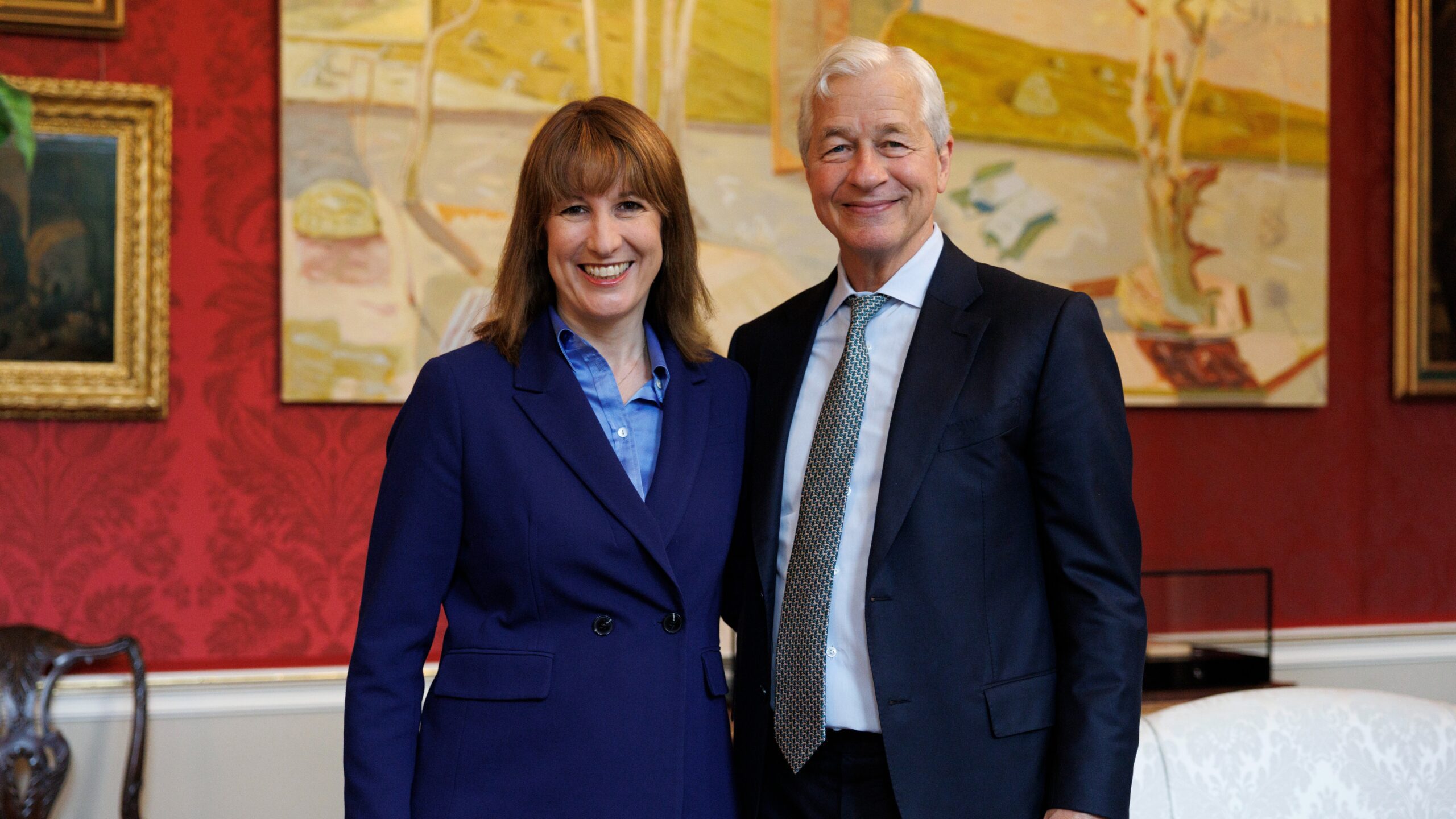
Jamie Dimon has spent years cultivating a reputation as the ultimate establishment banker, the person corporate America calls when it wants a steady hand in a crisis. Now he is discovering what it looks like when that steady hand points directly at the sitting president and says no. The clash between the JPMorgan chief and Donald Trump is turning into a test case for how far a powerful CEO can go in defying the White House before the retaliation hits the bottom line.
At stake is more than one man’s ego or one bank’s legal bill. The confrontation is exposing the fragile, transactional nature of the relationship between big business and political power, and it is forcing other executives to decide whether they will quietly accommodate the president’s demands or risk becoming the next target.
From uneasy alliance to open confrontation
The relationship between Trump and Dimon has long been uneasy, a mix of mutual utility and mutual suspicion that has finally curdled into open hostility. Earlier this year, that tension crystallized when Trump followed through on a threat to sue JP Morgan and Jamie Dimon for $5bn, a move that marked the moment their dealings hit what one account described as rock bottom and underscored how far the president was willing to go against a onetime ally in finance. The same reporting traced how Dimon, once seen as a potential bridge between Wall Street and Washington, gradually became a symbol of the corporate figures who declined to fully enter the president’s orbit, a choice that now carries a very real legal and political price.
The lawsuit did not emerge in a vacuum. It came after a period in which Trump had already shown a willingness to wield presidential power against perceived corporate slights, including threats of massive tariffs on Apple over a perceived insult from CEO Tim Cook and a vow to block Exxon from a major deal. In that context, the $5bn claim against JP Morgan and Jamie Dimon looks less like an isolated legal dispute and more like the latest escalation in a pattern where corporate leaders who cross the president find themselves facing consequences that directly affect their companies’ fortunes.
Dimon’s public break: immigration, Davos and the “globalist” label
If the lawsuit is the blunt instrument, Dimon’s own words are the sharp edge that cut through the usual corporate caution. In a rare move for a major bank chief, the CEO publicly criticized Trump’s immigration policy, saying on camera that “I don’t like what I’m seeing,” a phrase that landed with particular force because it came from someone who typically chooses his interventions carefully. That criticism, delivered as Jamie Dimon spoke more broadly about enforcement actions and ICE confrontations, signaled that he was willing to challenge the administration on a core ideological priority rather than confining his commentary to technical financial regulation.
The break became even clearer in Davos, where Jamie Dimon, appearing at the World Economic Forum, went out of his way to declare himself a “globalist” at the very moment Trump’s barbs about JPMorgan were still lingering. In a setting that has long been shorthand for elite internationalism, Dimon’s choice of label was a direct embrace of the open markets and cross-border cooperation that the president routinely derides. According to one account, Jamie Dimon used his Davos platform to underline that identity even as Trump’s attacks on the bank kept the political temperature at a steady boil, a contrast that highlighted just how far apart the two men now stand on the basic question of how the global economy should work.
A CEO under fire, and still richly rewarded
What makes this confrontation especially striking is that Dimon is not a marginal figure taking a long-shot stand, but one of corporate America’s best-paid and most entrenched bosses. Earlier this year, the Bank that employs him hailed Dimon’s “exemplary leadership” as it disclosed that his total pay package had risen 10%, with coverage noting that the increase cemented his status as one of corporate America’s highest earners and that Guardian staff were quick to point out how much praise the board was willing to lavish on its veteran boss. That same reporting underscored that the bank’s directors were not shying away from rewarding him even as political risk around the institution was clearly rising.
Separate disclosures showed that JPMorgan Chase’s board approved $43 million in compensation for CEO Jamie Dimon in 2025, a figure that represented a 10.3% pay bump and was described in one Dive Brief as a $43 m package that kept him at the top of the pay league among bosses of the six largest U.S.-based banks. The bank credited the longtime CEO with steering JPMorgan through a volatile period, effectively signaling that, from the board’s perspective, the political crossfire with the White House was a cost worth bearing for a leader they still saw as indispensable.
The rhetorical war: from “nervous mess” to Davos bluntness
As the legal and policy disputes have intensified, the rhetoric has turned personal on both sides. Trump responded online to one of Dimon’s earlier jabs by calling Dimon “a poor public speaker & a nervous mess,” a phrase that captured the president’s instinct to attack perceived critics on style as much as substance. That insult resurfaced in later coverage of the feud, which noted that Trump and Dimon have had an uneasy relationship for years and that the president’s decision to sue came after a long buildup of slights and counter slights in which Trump and Dimon repeatedly tested each other’s limits.
Dimon, for his part, has not exactly softened his tone. At the 2026 World Economic Forum in Davos, Jamie Dimon did not sugarcoat his message in a high-profile interview, where he spoke as the JPM boss about the global economy and the policy choices he believed were holding it back. One widely shared clip showed Jamie Dimon Speaking in a way that left little doubt he was willing to challenge political leaders directly, a stance that played well with the Davos audience but risked further inflaming tensions with a president who watches elite gatherings closely for signs of disloyalty.
What Dimon’s defiance signals to the rest of corporate America
To understand why this clash matters beyond the personalities involved, it helps to look at how analysts have framed the stakes. One detailed Analysis by Allison Morrow, flagged as Updated Jan and Published Jan with a 4 min read and the figure 56 embedded in its metadata, argued that Dimon is effectively learning in real time what happens when a CEO dares to cross Trump. That piece traced how the White House, when asked about the dispute, referred questions to the president’s personal lawyers, a move that blurred the line between Trump’s public office and his private grievances and raised fresh questions about how policy decisions might be influenced by personal vendettas.
Other reporting has filled in the backstory, noting that Trump vs. Dimon has been a slow burn, with Trump and Dimon clashing as far back as 2018 when the banker briefly suggested he could beat Trump in an election before walking the comment back. One account of how Kalyeena Makortoff Banking correspondent described relations hitting rock bottom emphasized that the president’s $5bn lawsuit followed a steady rise in tensions as Dimon declined to fully enter the president’s orbit. Another detailed account of how Trump vs. Dimon escalated noted that Trump announced he would sue after a series of perceived slights, while a separate piece highlighted how Trump responded online by calling Dimon “a poor public speaker & a nervous mess” and how other executives were quietly telling Trump “no” as they watched the fallout.
More From TheDailyOverview
*This article was researched with the help of AI, with human editors creating the final content.

Grant Mercer covers market dynamics, business trends, and the economic forces driving growth across industries. His analysis connects macro movements with real-world implications for investors, entrepreneurs, and professionals. Through his work at The Daily Overview, Grant helps readers understand how markets function and where opportunities may emerge.