Chinese electric vehicles are no longer a distant competitive threat, they are already reshaping the global auto market with prices and technology that U.S. manufacturers struggle to match. If Washington does not move beyond piecemeal tariffs and fragmented rules, the result will not just be cheaper cars for American drivers, but a hollowed out industrial base and millions of vulnerable paychecks. The choice facing policymakers is whether to manage that disruption or let it crash through the country’s factory towns unrestrained.
The stakes are not abstract. From battery plants in the Midwest to suppliers in the South, the emerging EV economy is supposed to anchor the next generation of American manufacturing jobs. Yet Chinese automakers are racing ahead on cost, scale, and regional footholds, and without a coherent response, the U.S. risks importing the cars of the future while exporting the jobs that build them.
China’s cost advantage is already visible on North American roads
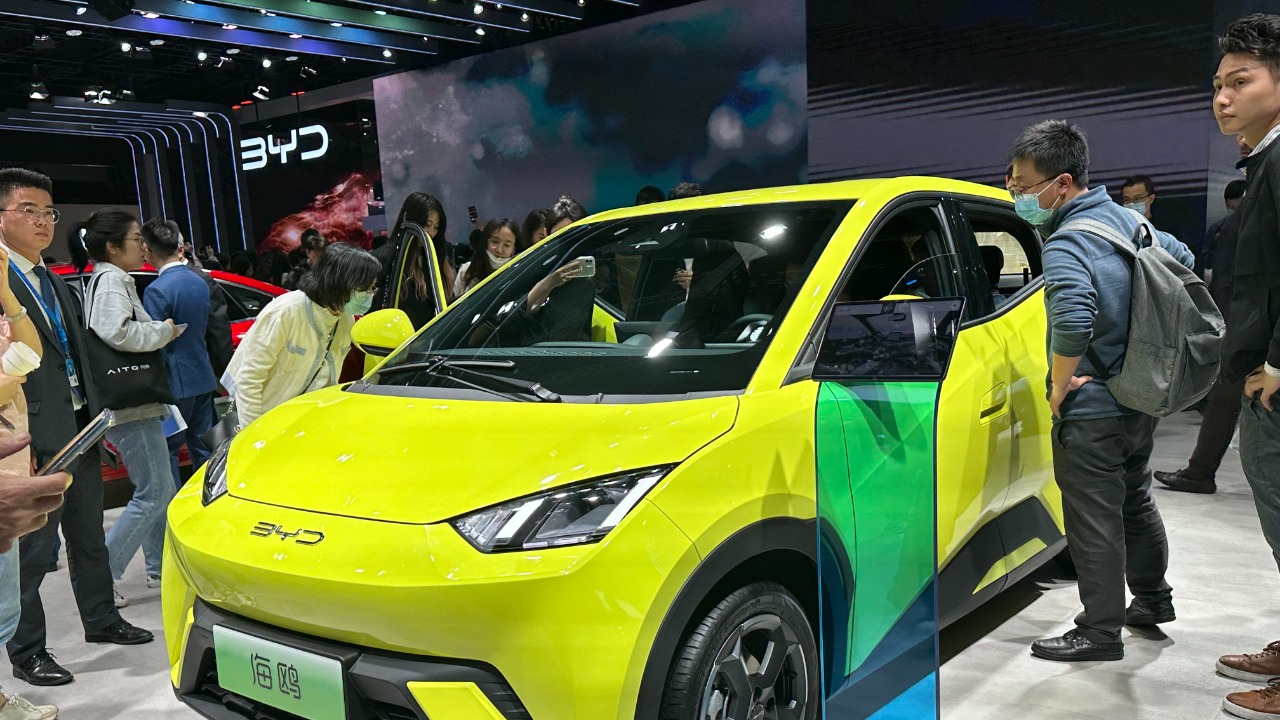
The most immediate danger to U.S. auto jobs is that Chinese brands can sell fully featured electric cars at prices that undercut what American and European companies can manage. Models like the BYD Seagull have become shorthand for this shift, offering modern range and tech at a fraction of the cost of typical Western EVs, a reality that is already shaking confidence across the global industry as these Chinese vehicles gain traction. When a compact EV can be built and sold profitably at a price point that barely covers the battery pack in a U.S. model, the pressure on domestic producers is obvious.
Researchers have noted that while many structural challenges to electrification exist worldwide, China has sustained growth by offering highly affordable EVs that appeal to mass market buyers, not just early adopters. That cost advantage is rooted in everything from battery supply chains to state-backed financing, and it means Chinese firms can treat tariffs as a speed bump rather than a wall. If those cars reach U.S. showrooms at scale, they will not just compete on technology, they will reset what American consumers expect to pay for an electric car, putting union and nonunion factories alike under intense strain.
Millions of American auto jobs sit in the blast radius
Behind every EV rolling off a U.S. assembly line is a dense web of suppliers, logistics workers, engineers, and maintenance crews whose livelihoods depend on steady production. A detailed assessment from Washington warned that Millions of American jobs are at risk because of China’s dominance in EV production, with the future of the entire Auto Industry on the line. That is not just a Detroit problem, it is a national employment issue that touches everything from steel mills to software firms.
Suppliers are already sounding the alarm that unchecked imports could wipe out domestic capacity. One major parts maker warned that Chinese EVs will destroy jobs unless Government acts, framing the issue as both an economic and national security concern. Once supplier networks collapse, they are difficult to rebuild, and the U.S. risks becoming dependent on foreign producers not only for finished vehicles but for critical components that underpin its broader industrial strength.
Tariffs are blunt tools that buy time, not victory
Washington has leaned heavily on tariffs to slow the advance of Chinese EVs, but those measures are more of a pause button than a long term solution. The Biden administration has already moved to impose a 100% tariff on electric vehicles imported from China, with The Biden team arguing that domestic manufacturers need breathing room to compete. Earlier trade talks between Trump and Chinese leaders produced a deal in which a Temporary Reduction Keeps, but Chinese EVs themselves remained excluded from the relief, underscoring how politically sensitive this segment has become.
Tariffs also have consequences for American buyers and businesses. Dealership guidance has already warned that Frequently Asked Questions often come back to higher costs, since They can push up expenses throughout the supply chain and, ultimately, the sticker price, Especially for imported vehicles and parts. A separate analysis of the EV market noted that the U.S. is tightening market access and using a hypothetical tariff to illustrate how such measures deepen the woes of electrification, even as While China’s affordable EVs continue to gain ground globally. Tariffs can slow a flood, but without parallel investment and industrial policy, they cannot build a durable dam.
Security rules are becoming a second line of defense
As EVs turn into rolling computers, U.S. officials are increasingly treating connected car technology as a security issue, not just a trade dispute. On Sept 23, the Department of Commerce signaled that the DOC would move to restrict certain automotive imports on data and cybersecurity grounds, with proposed rules that could affect vehicles and components from multiple countries, including those currently being produced in Russia, according to a detailed Department of Commerce analysis. Those regulations, once finalized, would give Washington another lever to limit foreign connected vehicles that might collect sensitive information on U.S. roads.
Security concerns are even more explicit in new restrictions on Chinese hardware and software. Earlier this year, the Commerce Department finalized a rule in NEW YORK that will prohibit imports of certain Chinese connected car technologies, with officials indicating that a broader move toward banning passenger vehicles from China is on the table. President Joe Biden’s administration has already justified tariffs on Chinese EVs as a way to protect domestic industry and safeguard American jobs, with President Joe Biden framing the measures as essential to competitiveness. Security rules and trade tools are starting to converge, creating a more comprehensive barrier, but they still need to be matched with a positive agenda for domestic production.
North American workarounds are already emerging
Even as Washington tightens import rules, Chinese automakers are exploring ways to serve North American customers without shipping cars directly from Chinese ports. Industry reporting has highlighted how Local factories are the way in, with Jan analysis noting that building plants in Canada or Mexico could give Chinese brands a foothold while sidestepping some U.S. tariffs, especially if those facilities are positioned to supply regional markets. Trump’s posture on trade has underscored why local factories, not imports, are seen as the most viable entry path for Chinese EV makers, particularly in southern states that are aggressively courting new Local manufacturing.
That strategy is already testing the seams of North American trade policy. In reporting by Detroit News journalists Sarah Atwood and Grant Schwab, the American EV Jobs Alliance warned that Canada’s decision to deepen ties with China’s rapidly expanding EV sector could put U.S. factories at a disadvantage, since vehicles or components produced in Canada might still reach American buyers under existing trade rules. The group argued that the American EV Jobs sees this as a direct risk to U.S. auto jobs, and it has urged closer coordination with Canada to prevent Chinese firms from using cross border supply chains as a back door into the U.S. market. Without harmonized rules, North America could end up with a patchwork that protects some plants while leaving others exposed.
Congress is groping toward a more aggressive line
Lawmakers from auto heavy states are pushing for tougher measures that go beyond tariffs and security reviews. Michigan Congresswoman Haley Stevens has announced plans to introduce the “No Chinese Cars” Act, arguing that As Chinese Car Companies Seek to expand globally, they are trying to Circumvent Tariffs and Take Over the U.S. Market. Her proposal would grant the president new authority to block Chinese owned automakers from selling in the United States unless they are subject to existing tariffs, with Haley Stevens casting it as Forcing China to play by the rules. That kind of legislation would mark a significant escalation, effectively treating Chinese EVs as a special category of risk.
At the same time, the broader trade environment is shifting under the current administration. Policy analysts have noted that the American government has already enforced measures to protect this young American industry, including a 100% import tariff on Chinese EV manufacturers that is designed to shield domestic producers. Industry advocates warn that Canada’s evolving relationship with Chinese EV makers, highlighted again by the Canada debate, could undermine those efforts if Congress and the White House do not coordinate trade, industrial, and labor policy. The emerging consensus on Capitol Hill is that tariffs alone are not enough, but there is still no unified blueprint for what comes next.
Industry strategy must match policy muscle
Even with tougher rules, U.S. automakers cannot simply hide behind Washington and hope the storm passes. According to the Kerrigan Advisors 2025 OEM Survey, a large share of legacy manufacturers now see Chinese brands as a “real threat,” with the Survey capturing how deeply this anxiety runs among executives and dealers in California and beyond. That According research underscores that the competitive gap is not just about labor costs, it is about speed to market, software integration, and the ability to build compelling EVs at scale.
Some analysts argue that the U.S. should respond with a mix of protection and partnership. One proposal is for U.S. firms to license advanced Chinese battery technology, as Ford has explored with CATL, while also welcoming Chinese investment in American plants under strict conditions that protect data and jobs. A recent assessment of how Ford and CATL might collaborate suggested that the U.S. auto sector thrives on competition, not protectionism, and that carefully structured deals could accelerate domestic innovation. At the same time, advocates for American workers stress that any such partnerships must be paired with strong labor standards, domestic content rules, and targeted support for suppliers so that the benefits of new technology do not bypass the communities that have long built the country’s cars.
More From The Daily Overview
*This article was researched with the help of AI, with human editors creating the final content.

Grant Mercer covers market dynamics, business trends, and the economic forces driving growth across industries. His analysis connects macro movements with real-world implications for investors, entrepreneurs, and professionals. Through his work at The Daily Overview, Grant helps readers understand how markets function and where opportunities may emerge.

