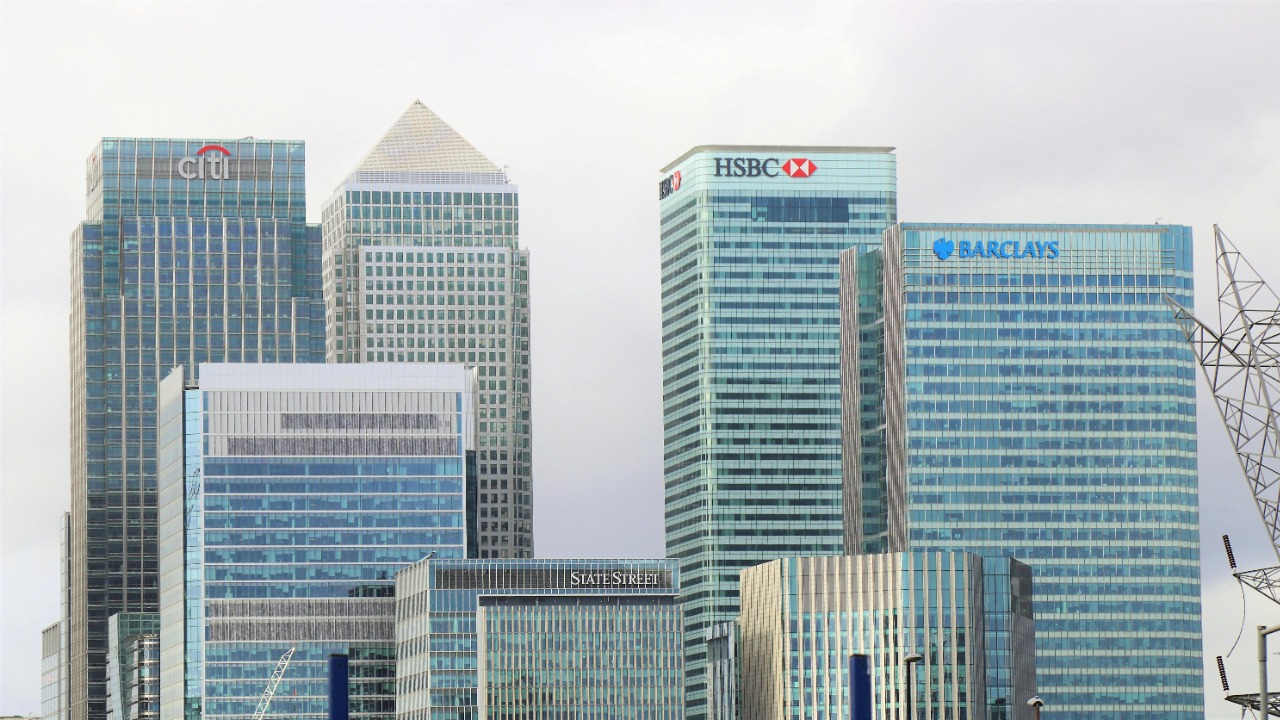
Citigroup shares dropped sharply after a report revealed the bank is preparing to sell an additional 24% stake in its Mexican subsidiary Banamex for roughly $2.5 billion, a move that would accelerate its exit from consumer banking in Mexico ahead of a planned initial public offering. The sale raises fresh concerns about billions of dollars in accumulated foreign-currency losses tied to Banamex that could hit Citi’s balance sheet once ownership falls below a critical threshold. For investors already tracking Citi’s long-running restructuring, the timing and scale of this divestiture add new pressure to a stock that has struggled to shake off questions about legacy exposure.
A $2.5 Billion Stake Sale Before the IPO
Citi is looking to offload a 24% stake in Banamex worth approximately $2.5 billion as part of its strategy to prepare the Mexican bank for a public listing. The deal reportedly includes caps on individual investor participation, a structure designed to prevent any single buyer from gaining outsized influence over Banamex before it reaches public markets. This pre-IPO sale follows earlier divestitures and represents a significant step in Citi’s broader plan to shed consumer-facing operations in several countries, even as it maintains institutional relationships in key emerging markets.
The transaction fits within a years-long restructuring campaign in which Citi has been winding down what it categorizes as Legacy Franchises, a reporting segment that houses businesses the bank no longer considers central to its future. Banamex, once a crown jewel of Citi’s Latin American operations, now sits squarely in that category. The decision to sell a large block ahead of the IPO rather than waiting for public-market pricing suggests Citi is prioritizing speed and certainty of execution over maximizing per-share value, a trade-off that has not gone unnoticed by the market or by analysts who track global banking groups through specialized institutional research tools.
$9 Billion in Hidden Currency Losses
The real risk for Citi shareholders is not the headline sale price but rather what happens to roughly $9 billion in accumulated foreign-currency losses once ownership drops far enough. According to Citi’s quarterly filing for the period ended September 30, 2025, the bank’s accumulated other comprehensive income includes cumulative translation losses of approximately $(9) billion attributable to Banamex. These losses have built up over years as the Mexican peso weakened against the U.S. dollar, and they currently sit off the income statement, embedded in a balance-sheet line item most retail investors rarely examine or fully understand.
That changes if Citi loses control of Banamex. The same SEC filing explains that deconsolidation occurs when the bank’s voting ownership falls below 50% without substantive participating rights. At that point, the CTA losses would flow through the income statement, creating a one-time earnings hit that could dwarf the $2.5 billion sale proceeds. In practical terms, Citi could book a multi-billion-dollar loss in the quarter it loses majority control, even if the Banamex business itself is performing well at an operating level. This asymmetry between cash received and accounting impact is the central tension driving the stock’s decline and shaping how portfolio managers model Citi’s near-term earnings trajectory.
Peso Depreciation and Banamex Revenue Erosion
The $9 billion CTA figure did not appear overnight. It reflects years of Mexican peso depreciation eating into the dollar-denominated value of Banamex’s operations. Citi’s earlier quarterly filing for the period ended June 30, 2025, detailed how currency moves affected Banamex’s results within the Legacy Franchises segment, reducing reported revenues even when the underlying Mexican-peso business held steady or grew. For a bank trying to sell an asset at an attractive valuation, persistent currency headwinds complicate the pitch to buyers and public-market investors alike, especially those who benchmark performance in U.S. dollars.
This currency dynamic also shapes the timing calculus. If the peso stabilizes or strengthens before deconsolidation, the CTA loss shrinks; if the peso weakens further, the hit grows. Citi’s decision to sell now, rather than wait for potentially more favorable exchange rates, implies the bank has concluded that the strategic benefits of a faster exit outweigh the risk of a larger currency-driven loss. That bet may prove correct, but it leaves shareholders exposed to foreign-exchange movements they cannot easily hedge on their own. The situation underscores how cross-border banking groups must constantly balance local growth prospects against the volatility that comes with translating earnings into the reporting currency.
How Deconsolidation Triggers the Loss
Accounting rules governing consolidation are the mechanism that converts Banamex from a manageable balance-sheet item into a potential earnings bomb. Under U.S. GAAP, Citi consolidates Banamex because it holds a majority voting interest and exercises control over key decisions. As long as that remains true, the CTA losses stay parked in accumulated other comprehensive income, a section of shareholders’ equity that does not affect quarterly earnings per share. The moment Citi’s ownership drops below the 50% threshold without offsetting rights, the accounting treatment changes entirely and forces a remeasurement of the remaining stake.
Deconsolidation would require Citi to reclassify those accumulated foreign-exchange losses out of equity and into the income statement, recognizing them as a realized loss in the period the event occurs. For context, a $9 billion pre-tax charge would represent one of the largest single-quarter hits in Citi’s recent history, potentially wiping out several quarters of net income depending on the bank’s overall profitability at the time. The 24% stake sale alone would not necessarily push Citi below the 50% line, but combined with earlier divestitures and the planned IPO, the path to deconsolidation is now clearly visible. Investors are therefore pricing in not just the immediate transaction but an eventual accounting shock that could distort headline earnings and regulatory capital ratios.
Restructuring Logic vs. Shareholder Pain
Citi’s leadership has framed the Banamex exit as part of a disciplined strategy to focus the bank on its institutional and wealth-management businesses while shedding consumer operations in markets where it lacks competitive scale. That logic is straightforward: retail banking in Mexico requires heavy branch networks, intensive regulatory engagement with Mexican authorities, and constant currency management, all of which can distract from Citi’s higher-margin global businesses. The wider repositioning has already included exits from consumer banking in parts of Asia and other regions, and Banamex is the largest remaining piece of that multi-year effort.
The tension is that the financial cost of exiting Banamex is front-loaded while the strategic benefits are diffuse and long-term. Shareholders absorb the CTA loss, transaction expenses, and temporary earnings dilution now, while the payoff of a leaner, more focused Citi accrues gradually over years. Wall Street tends to punish that kind of asymmetry, especially when the near-term hit is large and quantifiable while the long-term gain is harder to model or compare against peers tracked in global banking league tables. The stock’s decline reflects that gap between strategic intent and financial reality, as well as lingering skepticism about whether Citi can consistently generate returns that match more domestically focused rivals.
Investor Caps and Deal Structure
The reported inclusion of investor caps in the pre-IPO sale adds another layer of complexity. By limiting how much any single buyer can acquire, Citi is effectively preventing a strategic acquirer from taking a controlling position in Banamex before the IPO. This protects the integrity of the public offering, helping ensure that Banamex reaches the market without a dominant shareholder who could influence governance or suppress the IPO price. It also signals that Citi wants a broad investor base for Banamex, which could support liquidity and valuation once the shares begin trading.
But caps also narrow the pool of potential buyers. Large institutional investors who might otherwise write a single check for a significant block are instead limited to smaller allocations, which can reduce competitive bidding pressure and potentially lower the per-share price Citi receives. The trade-off is deliberate: Citi appears willing to accept a modest discount on the pre-IPO sale in exchange for a cleaner ownership structure that maximizes the IPO’s chances of success. If market conditions deteriorate before the listing, however, the bank could end up having sacrificed pricing power on the private sale without fully reaping the benefits of a strong public debut, a scenario that would further test investor patience.
What the Stock Drop Signals About Citi’s Path
The market reaction to the Banamex news is less about surprise and more about scale and timing. Investors have long known that Citi intended to exit Mexican consumer banking, but the combination of a sizeable pre-IPO block sale and the looming CTA crystallization has forced a reassessment of near-term earnings risk. In effect, the share-price decline is a referendum on whether management is sequencing the exit in a way that balances strategic clarity with capital preservation. For portfolio managers focused on tangible book value and regulatory capital, the prospect of a multi-billion-dollar accounting hit is hard to ignore, even if it does not reflect a deterioration in underlying credit quality.
At the same time, the Banamex transaction underscores the broader challenge facing globally active banks that straddle multiple currencies and regulatory regimes. Citi is attempting to simplify its footprint and concentrate on businesses where it believes it has durable competitive advantages, but unwinding legacy positions carries real costs that show up in both reported earnings and market confidence. How the bank manages the final stages of the Banamex exit, navigating investor caps, IPO timing, and the deconsolidation trigger, will shape perceptions of its execution capability for years. For now, the stock drop signals that investors are demanding a higher margin of safety as Citi trades short-term pain for the promise of a cleaner, more focused franchise.
More From The Daily Overview
*This article was researched with the help of AI, with human editors creating the final content.

Grant Mercer covers market dynamics, business trends, and the economic forces driving growth across industries. His analysis connects macro movements with real-world implications for investors, entrepreneurs, and professionals. Through his work at The Daily Overview, Grant helps readers understand how markets function and where opportunities may emerge.