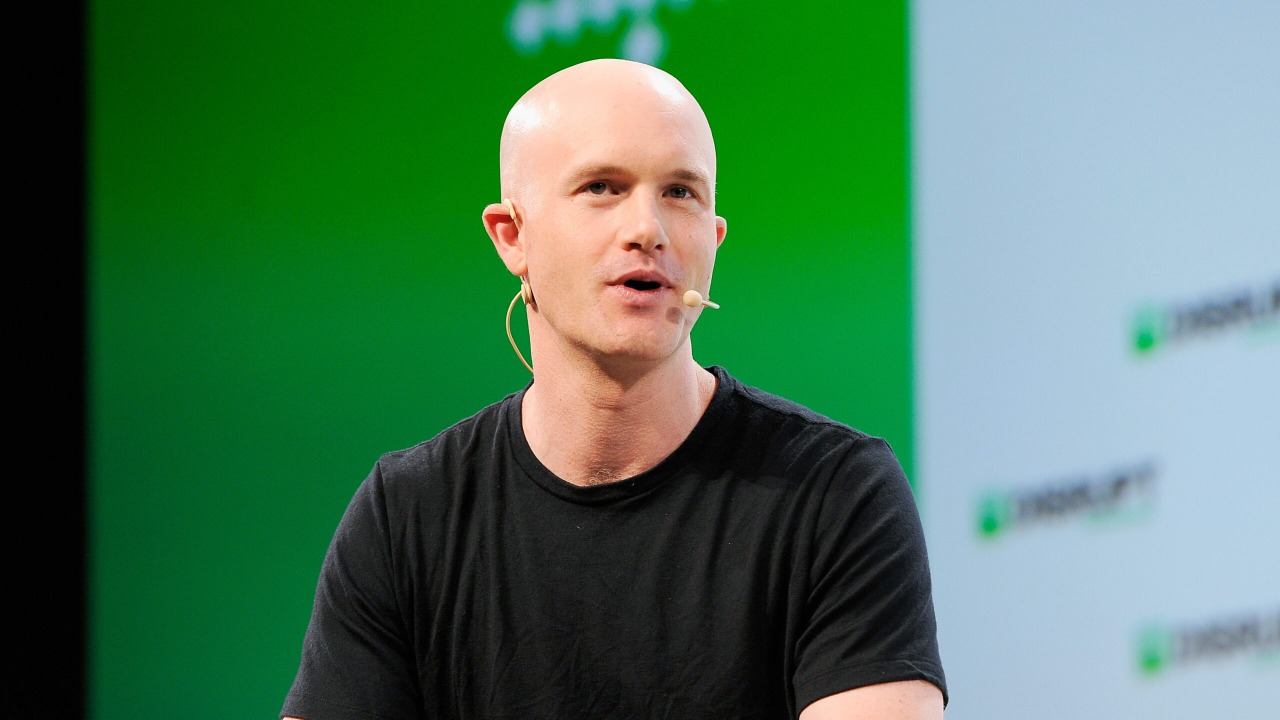
Coinbase chief Brian Armstrong has been cast as Wall Street’s latest villain, but he is leaning into the role rather than retreating from it. After a high profile profile branded him the financial sector’s “Enemy No. 1,” the Coinbase CEO fired back, arguing that the real fight is not banks versus crypto but whether the United States will lead the next era of digital money.
Armstrong’s pushback comes as his company battles traditional banks over stablecoin rules, interest-style rewards and the broader future of finance. The clash has turned a once niche crypto executive into a central character in a power struggle that now stretches from Davos stages to Capitol Hill hearing rooms.
The making of a new Wall Street antagonist
Brian Armstrong did not start out as a Wall Street foil, but his rise at Coinbase has put him on a collision course with the largest banks. As Coinbase grew from a retail trading app into a public company with ambitions to reshape payments and savings, its chief executive became a direct challenger to the incumbents’ grip on deposits and transaction fees. That tension crystallized when a detailed profile described Coinbase chief Brian as the crypto executive most willing to confront the banking establishment.
In that telling, Armstrong is not just another tech founder, he is the personification of a broader shift in financial power. The same reporting portrays him as a central figure in debates over how digital assets should be regulated and who should control the infrastructure that moves money around the world. By elevating him as the face of crypto’s challenge to Wall Street, the narrative has turned regulatory disagreements into a personal rivalry between one outspoken CEO and a club of bank stewards who have long dominated the system.
From Davos fireworks to “Enemy No. 1”
The antagonism moved from theory to spectacle when Coinbase CEO Brian Armstrong confronted JPMorgan leader Jamie Dimon at Davos. In a heated exchange, Armstrong accused Jamie Dimon and other large banks of lobbying against crypto in order to protect their own profits, a charge that cut to the heart of how incumbents see digital assets. The confrontation, which unfolded in front of global political and business leaders, underscored how far Armstrong had moved from the margins of fintech into the center of elite economic debate.
Accounts of that Davos moment describe Coinbase CEO Brian pressing his case in front of figures such as former UK prime minister Tony Blair, turning what might have been a closed-door policy disagreement into a public spectacle. That visibility helped cement his image as the “No 1 enemy of America’s biggest banks,” a label that has since followed him into coverage of his battles over regulation and market structure.
Stablecoins and the Clarity Act at the heart of the clash
Behind the rhetoric sits a concrete policy fight over stablecoins, the digital tokens pegged to traditional currencies that could one day rival bank deposits. Crypto advocates see these instruments as a faster, cheaper way to move dollars, while banks worry that widespread adoption could drain their funding base. It is in this context that Coinbase CEO Brian as a “Top Wall Street Foe Over Stablecoin Regulation,” pushing for rules that would let crypto platforms compete directly with banks on digital dollars.
Armstrong has tied that campaign to a broader push for legislative clarity, backing efforts often described as a Clarity Act that would spell out how stablecoins and other tokens are treated under U.S. law. Supporters argue that such a framework would allow both crypto firms and traditional finance to innovate without constant fear of enforcement whiplash. Reporting on the same fight notes that Coinbase CEO Brian as a leading voice arguing that crypto and traditional finance can both win if the rules are written to encourage competition rather than entrench incumbents.
How the “Enemy No. 1” label landed
The “Enemy No. 1” tag did not appear in a vacuum, it was the culmination of months of friction between Coinbase and the banking sector. A detailed feature on Coinbase chief Brian framed him as clashing directly with Jamie Dimon and other bank stewards over the future of finance, casting their disagreements as a proxy for whether crypto-native firms or legacy institutions will set the rules of the game. By the time that narrative reached a mass audience, the idea that he was Wall Street’s chief antagonist had already taken hold among market watchers.
Crypto-focused outlets amplified that framing, with News reports highlighting that The Wall Street Journal had singled out Coinbase CEO Brian Armstrong as the person most willing to challenge the banking lobby. A separate summary from BlockBeats News echoed that description, underscoring how quickly a single profile can harden into a defining label in the age of social media and crypto Twitter.
Armstrong’s public counteroffensive
Armstrong’s response has been to reject the idea that he is at war with finance as a whole, while doubling down on criticism of specific bank practices. In public comments highlighted by market watchers, he has argued that crypto platforms are offering consumers better yields and faster settlement, and that banks are using regulation as a shield against competition. One widely shared account described how Coinbase CEO Armstrong “Enemy No” 1, using the moment to argue that consumers, not banks or exchanges, should decide which products win.
In that same debate, Armstrong has leaned on social platforms and investor communities to make his case directly to retail traders. A separate link to the discussion on Stocktwits shows how he framed the controversy as a fight over whether Americans can earn stablecoin rewards comparable to bank interest without being pushed back into legacy products. By turning a reputational hit into a rallying cry, he has tried to convert the “Enemy No. 1” label into proof that he is on the side of consumers against entrenched interests.
Why banks see a threat in Coinbase’s model
From the banks’ perspective, the concern is not just ideological, it is existential. If customers move a meaningful share of their cash into stablecoins held on platforms like Coinbase, that is money that no longer sits in checking accounts or certificates of deposit that fund traditional lending. The profile that cast Coinbase as a direct challenger to Wall Street’s dominance made clear that bank executives like Jamie Dimon see stablecoins and crypto rewards as a competitive product, not a sideshow.
That helps explain why lobbying around stablecoin legislation has been so intense, with banks pushing for rules that would keep issuance and custody inside the existing regulatory perimeter. At the same time, coverage of crypto CEO tensions with America’s biggest banks notes that incumbents are also worried about reputational risk if they embrace products that regulators still view warily. For them, Armstrong’s aggressive posture is a reminder that the most disruptive competition often comes from outside the club.
What the fight means for the future of finance
For all the drama around labels and personalities, the stakes in this fight are ultimately structural. If Armstrong succeeds in pushing through a stablecoin framework that treats crypto platforms as legitimate venues for dollar-like assets, the balance of power between banks and exchanges could shift in ways that echo how online brokers disrupted stock trading in the 1990s. The narrative that Top Wall Street status has given him may actually help rally crypto users and some policymakers who see value in a more open financial architecture.
At the same time, the backlash from banks and cautious regulators could slow or reshape that transition, forcing compromises that keep core payment rails and deposit insurance tied to traditional institutions. The coverage that first framed Coinbase CEO Brian as Wall Street’s top enemy also noted that he has tried to foster cooperation among global leaders, suggesting that even his fiercest critics may eventually have to sit across the table from him. Whether he remains a villain or becomes a reluctant partner, the fight he has picked with the banking establishment is already reshaping how the next generation of money is built.
More From TheDailyOverview
*This article was researched with the help of AI, with human editors creating the final content.

Grant Mercer covers market dynamics, business trends, and the economic forces driving growth across industries. His analysis connects macro movements with real-world implications for investors, entrepreneurs, and professionals. Through his work at The Daily Overview, Grant helps readers understand how markets function and where opportunities may emerge.