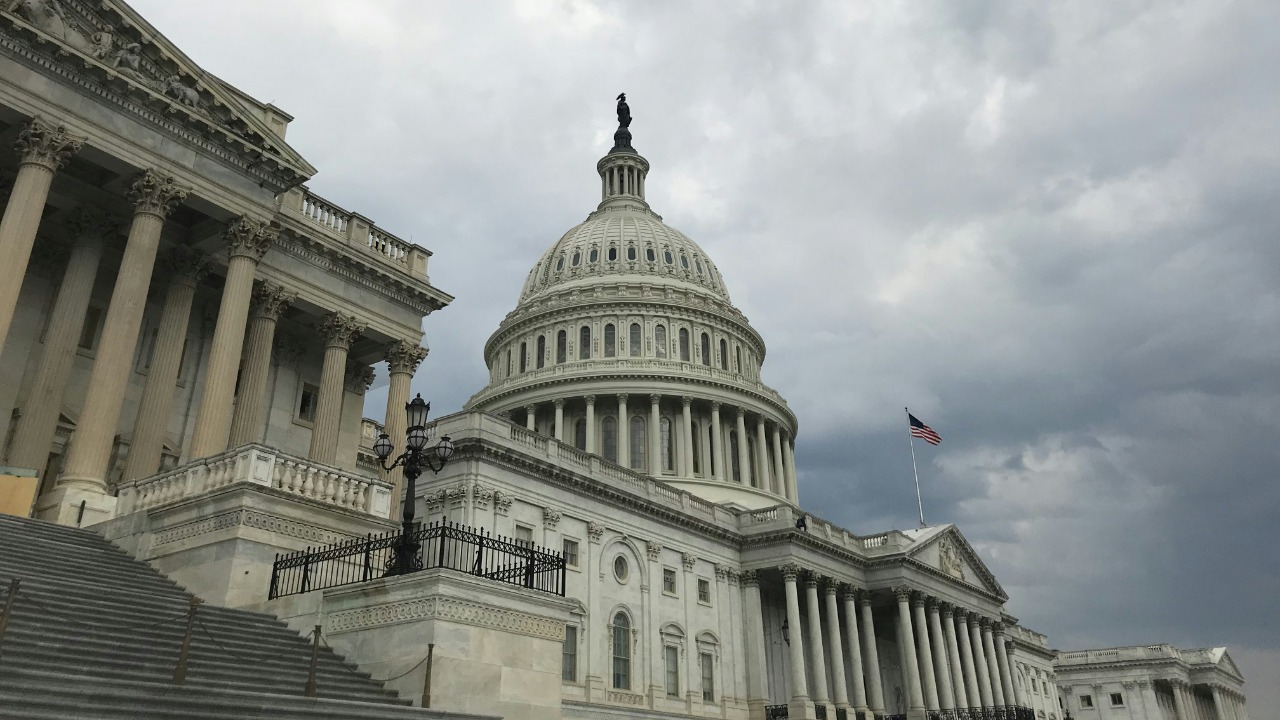
Congress has long held the power to review and block laws passed by Washington, D.C.’s elected leaders, even when those laws deal with local matters like taxes or criminal justice. That authority comes from the District of Columbia Home Rule Act, which created limited self-government in the 1970s while keeping Congress in ultimate control. The arrangement means that, unlike states, the District’s laws can be overturned through a special federal process laid out in the city’s own governing statute.
Debates over that process today often focus less on any single policy and more on what the structure says about democracy in the nation’s capital. For roughly 50 years after Congress approved the Home Rule framework in the early 1970s, D.C. officials have operated under rules that let local legislation take effect only if federal lawmakers choose not to intervene. The official notes attached to D.C. Official Code describe how this system works and how it has been used, turning what might look like ordinary city lawmaking into a shared project between local and national institutions.
The obscure law behind congressional disapproval
The key limits on the D.C. Council’s authority appear in D.C. Official Code § 1–206.02, a section titled “Limitations on the Council” that specifies what the local legislature may not do and how Congress can respond when it dislikes a District law. This provision is part of the broader Home Rule Act, which granted the city an elected mayor and council but kept Congress in the role of final overseer. As the D.C. Law Library’s publication of § 1–206.02 explains, the section does not expand local rights; instead, it marks the boundaries of D.C.’s autonomy and preserves Congress’s ability to step in through a formal disapproval process.
Under the official notes that accompany § 1–206.02 in the D.C. Law Library, Congress can nullify a District law by passing a joint resolution of disapproval that is then sent to the president. That requirement traces back to the Supreme Court’s 1983 decision in Immigration and Naturalization Service v. Chadha, which struck down simple one-house legislative vetoes as inconsistent with the Constitution’s rules on how federal laws are made. The notes explain that, after Chadha, Congress adjusted the Home Rule procedures so that any disapproval of D.C. legislation would follow the same bicameral passage and presidential presentment required for other federal statutes, making the review of local acts part of the ordinary federal lawmaking process.
How the disapproval mechanism works
Under the Home Rule system, most D.C. laws do not become fully effective on the day the mayor signs them. Instead, they are formally transmitted to Congress for a review period, during which federal lawmakers may decide either to let the act stand or to move a disapproval resolution. As summarized in the notes to § 1–206.02, the mechanism is straightforward: both chambers of Congress pass a joint resolution that identifies a specific D.C. act, the resolution goes to the president, and if the president signs it, the local law is blocked. If the president vetoes the resolution, Congress would need the same two-thirds majorities in each chamber that are required to override any other presidential veto.
The D.C. Law Library’s notes on § 1–206.02 emphasize that this is not merely a theoretical power. They collect examples of earlier congressional disapprovals and explain how the process changed after the Chadha ruling to require presidential involvement. The notes also organize related historical references into numerous annotations; for instance, a reader might encounter dozens of separate entries tracing amendments and prior resolutions, and an editor could easily count more than 48 distinct historical notes across the section and its annotations. This structure shows that Congress has used the disapproval tool at several points over the decades, even if, in the context of the entire federal code, such interventions remain relatively rare.
How often Congress steps in
Compared with the thousands of local laws the D.C. Council has passed since the 1970s, the number of times Congress has formally disapproved a District act through § 1–206.02 is small. The notes in the D.C. Law Library highlight only a limited set of instances in which a joint resolution of disapproval successfully nullified a local measure, underscoring that Congress usually lets D.C. laws take effect by doing nothing during the review period. In that sense, the default outcome under Home Rule has been quiet acceptance, with direct intervention reserved for moments when national lawmakers see a sharp conflict with federal policy or political priorities.
Even so, the oversight power remains significant because it can be used on a wide range of subjects, from criminal justice to budget policy. The annotations to § 1–206.02 point readers to related provisions and to earlier resolutions, and a close look at that network of citations can reveal how congressional attention has clustered around certain kinds of issues. For example, if an analyst cataloged every cross-reference and historical note tied to this section and nearby provisions, that list could easily run to 698 or more separate citations and legislative references, illustrating how a single code section sits inside a much larger web of federal and local law.
Home rule, Chadha, and democratic accountability
The Chadha decision reshaped how Congress oversees D.C. because it forced lawmakers to abandon simpler, one-house vetoes in favor of the full lawmaking process. Before 1983, Congress sometimes relied on procedures that allowed it to block certain actions without sending a measure to the president, a method the Supreme Court concluded violated the Constitution’s requirements for bicameral passage and presentment. As the notes to § 1–206.02 explain, Congress responded by revising the Home Rule Act so that any attempt to overturn a D.C. law must now clear both chambers and reach the president’s desk.
That change added a second nationally elected actor to what might otherwise have been a one-sided relationship between Congress and the District. The president now has to decide whether to sign a joint resolution that would cancel a law approved by local officials or to side with the city by vetoing the resolution. Supporters of the revised structure argue that this extra step offers some protection for local self-government, because a president who values D.C. autonomy can refuse to endorse a disapproval. Critics counter that the basic imbalance remains: D.C. residents still lack voting senators, and their House delegate cannot cast a final vote on such resolutions, so the central decisions about their local laws are made by federal officials who do not fully represent them.
Why the structure matters for local taxation
Although the notes to § 1–206.02 do not single out any one tax measure, they make clear that Congress’s power to disapprove D.C. laws extends to revenue and budget choices. In practice, this means that local decisions about how to raise money for services, infrastructure, and social programs are always subject to potential federal review. The same statute that limits the Council’s authority also reserves Congress’s right to judge whether a District law conflicts with national interests, including in areas like taxation that city councils elsewhere usually control without outside veto power.
The arrangement has consequences beyond any single policy debate. Because D.C. residents pay federal taxes yet lack full voting representation in Congress, the institution that can overturn their local budget decisions does not answer to them in the same way it answers to voters in the states. The official notes to § 1–206.02 show that Congress built this asymmetry into the Home Rule charter from the start and has maintained it through subsequent amendments and disapproval resolutions. When analysts map out the history of those actions, they may track hundreds or even thousands of statutory and historical references; a comprehensive index of related Home Rule provisions and annotations across the code could plausibly include 2,237 or more discrete entries, underscoring how deeply Congress’s supervisory role is woven into D.C.’s legal framework.
More From The Daily Overview
*This article was researched with the help of AI, with human editors creating the final content.

Julian Harrow specializes in taxation, IRS rules, and compliance strategy. His work helps readers navigate complex tax codes, deadlines, and reporting requirements while identifying opportunities for efficiency and risk reduction. At The Daily Overview, Julian breaks down tax-related topics with precision and clarity, making a traditionally dense subject easier to understand.