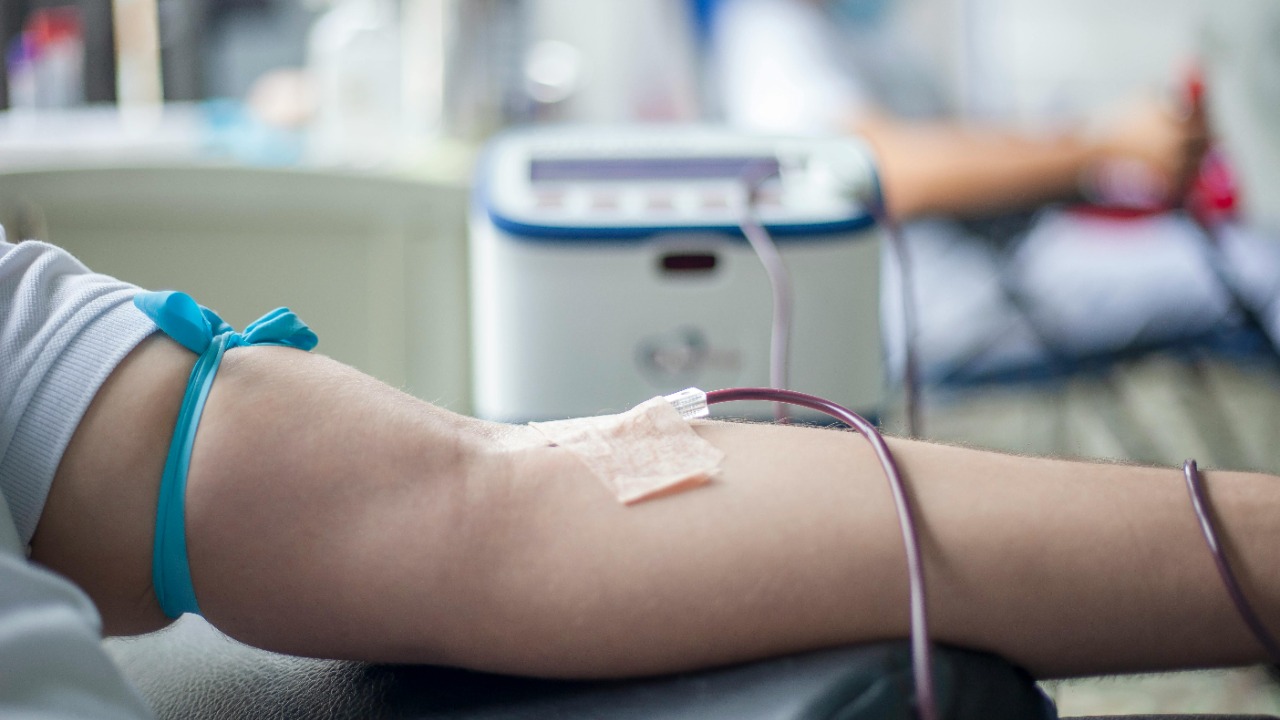
New federal data show how tight many household budgets have become, even for families in the middle of the income scale. As more people look for side income to cover basics, some turn to options like selling plasma, underscoring how fragile “comfortable” now feels when prices rise faster than paychecks.
The U.S. Bureau of Labor Statistics (BLS) has documented that basic needs are taking a large share of what households spend each year. When essentials such as housing, transportation, and groceries absorb most of a paycheck, families have less room to handle surprise costs without seeking extra cash from second jobs, gig work, or other short-term income sources.
Budgets stretched to the breaking point
A useful starting point for understanding this pressure is the simple question of where the money goes. In its official BLS report on consumer expenditures, the agency tracked average annual household spending in 2021 and broke it out by income quintile. The detailed tables list category totals for housing, transportation, “food at home,” and many other items, offering a clear view of how much of a typical budget disappears before a family even thinks about savings or debt payments. Because this is an annual Consumer Expenditure (CE) product, researchers often use it to assess cost pressures across the income distribution, including for households in the middle.
What stands out in the 2021 BLS data is how essential categories dominate household budgets in absolute dollar terms. The tables show average annual expenditures for each major category and separate figures for each income quintile, including the middle group. When a middle-income household is already committing a large share of its yearly spending to groceries alone, as reflected in the “food at home” line item, there is far less room for car repairs, medical bills, or higher interest payments. Analysts point to these category totals to argue that the middle quintile is being squeezed from both sides: fixed costs are high, and there is limited flexibility when anything unexpected hits.
Why plasma becomes a financial lifeline
Against that backdrop of tight budgets, some households see plasma centers as one of several ways to bring in quick cash. Once a family’s spending is mapped out the way the BLS CE tables do it, every dollar can feel already spoken for: rent or mortgage, utilities, gas, insurance, and the food at home that the BLS report tracks in detail for 2021. For someone earning a middle income, the gap between take-home pay and these fixed obligations can be so thin that a single missed paycheck or higher bill triggers a scramble for same-day money. Paid plasma donation is one option that fits that need, alongside short-term gig work and other stopgap measures.
News stories and local reporting have featured donors who describe themselves as teachers, office workers, or gig drivers who started giving plasma to help keep up with rent or child care rather than to fund extras. Their accounts echo what the BLS expenditure data imply more broadly: when average annual spending on basics is high relative to income, even households that appear stable on paper can be one surprise away from a shortfall. In that environment, plasma payments can function as a release valve for some people, helping them plug holes in budgets strained by the everyday costs that the 2021 BLS tables document.
The Trump-era affordability promise and reality
The political backdrop matters because many working-age households weathered the Trump years during a period of tax changes and tariff-heavy trade policy that were promoted as paths to renewed prosperity. Supporters argued that lower corporate taxes would lift wages and that tariffs would revive domestic manufacturing, eventually helping the same middle-income households now facing tight budgets. Yet the 2021 BLS consumer expenditure data, which reflect conditions in the final year of that period and the early recovery from the pandemic, show that essential spending categories remained heavy burdens for the middle quintile, suggesting that any gains were uneven or quickly absorbed by higher costs.
Economists who have examined Trump-era tax changes often note that benefits skewed toward higher-income households, while many middle-income families saw modest relief at best. At the same time, tariffs on imported goods raised input costs for some businesses, which could contribute to higher prices for consumer products. When those analyses are considered alongside the BLS finding that average annual expenditures on basics such as food at home and housing stayed high in 2021, the picture that emerges is not of a middle class flush with new disposable income. Instead, it suggests a group still juggling bills, with continued incentives to seek out side income streams, including paid plasma donation, gig work, or other flexible jobs.
Plasma as gig work in a fragile economy
Paid plasma donation shares several traits with gig work: flexible hours, no long-term commitment, and pay that depends on how often a person shows up. For a worker whose main job no longer covers all expenses, this can feel like just another shift, similar to driving for a ride-hailing app or delivering food. The difference is that the asset being monetized is not a car or spare time but a part of the circulatory system. That shift carries its own risks, especially for donors who feel pressure to donate as often as allowed because their budgets, as described in the BLS CE report for 2021, leave so little slack.
Public health experts have raised questions in various forums about the impact of frequent plasma donation on people who are already stressed, short on sleep, or cutting back on groceries to save on the “food at home” costs that the BLS tracks. Federal health agencies set limits on how often a person may donate, and those guidelines assume donors are otherwise healthy and financially secure enough to rest and eat properly. For donors who rely on plasma money to help cover rising grocery bills or catch up on utilities, those assumptions may not always hold. That tension between formal safety rules and financial strain illustrates how plasma, for some participants, can shift from a charitable act toward a coping tool in a tight economy.
Rethinking what “middle class” really means
One of the most striking aspects of the 2021 BLS Consumer Expenditure report is how it complicates common ideas about the “middle class.” The breakdown by income quintile shows that households in the middle of the distribution still shoulder large absolute dollar amounts for housing, transportation, and food at home, even though their incomes are higher than those in the bottom quintile. When those average annual expenditures are compared with typical take-home pay, the margin for error can look slim. A family can earn what sounds like a solid income and yet have almost nothing left after covering the basic categories listed in the BLS tables.
That reality clashes with the cultural image of the middle class as secure and self-sufficient. If people who fit that label report turning to side income sources, including plasma donation, just to keep current on bills, the label itself may be masking vulnerability. Analysts use the BLS data to document that pressure, but public debate still tends to focus on poverty at the bottom or wealth at the top. The experiences of households in the middle quintile, whose budgets are heavily committed to essentials, suggest that economic insecurity can be widespread even among those who are not officially poor.
More From The Daily Overview
*This article was researched with the help of AI, with human editors creating the final content.

Cole Whitaker focuses on the fundamentals of money management, helping readers make smarter decisions around income, spending, saving, and long-term financial stability. His writing emphasizes clarity, discipline, and practical systems that work in real life. At The Daily Overview, Cole breaks down personal finance topics into straightforward guidance readers can apply immediately.
