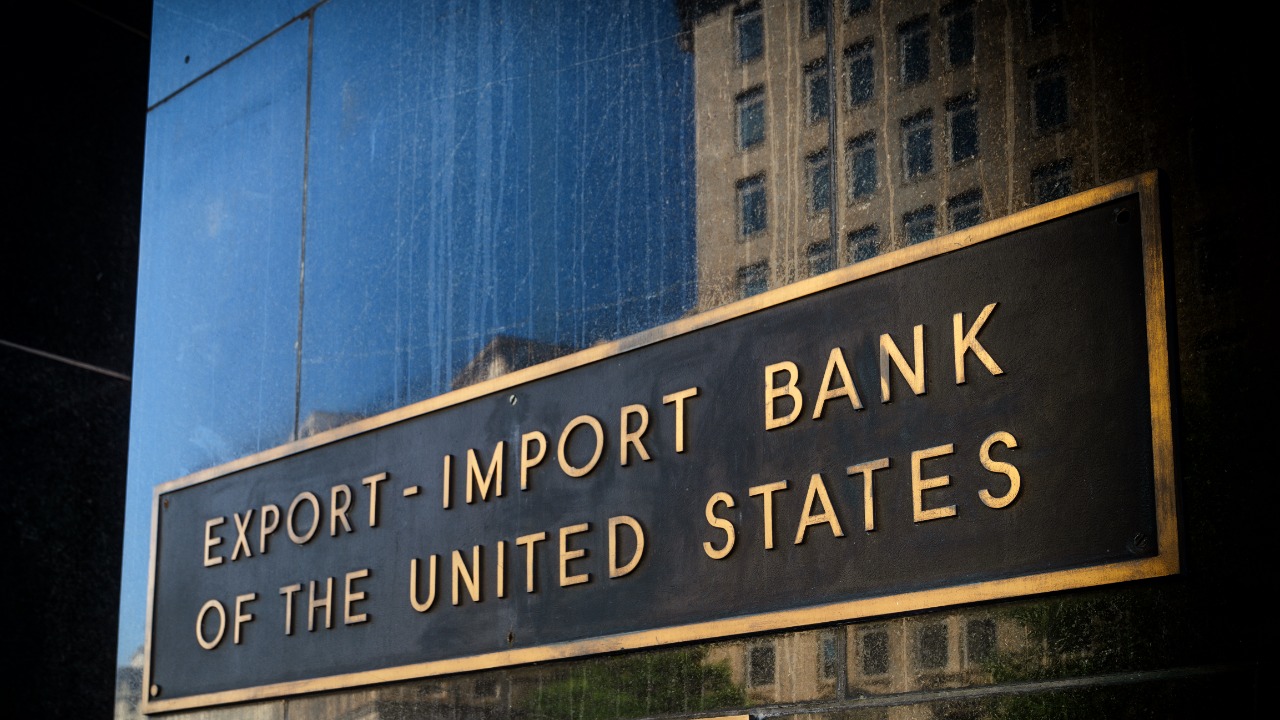
Congress is moving to dramatically expand the firepower of the U.S. Export-Import Bank to align with President Donald Trump’s push for a massive strategic stockpile of critical minerals. Lawmakers are debating how far to go, with some proposals pointing to tens of billions of dollars in new authority rather than the $205 billion ceiling that has circulated in political chatter but remains unverified based on available sources.
At the center of the fight is how much risk Washington is willing to load onto a government lender in order to secure supplies of rare earths and other inputs that underpin everything from electric vehicles to advanced weapons. The outcome will shape not only Trump’s $12 billion “Project Vault” stockpile but also the broader contest with China over who controls the minerals that power the twenty first century economy.
The Ex-Im Bank’s expanding role in mineral security
The U.S. Export-Import Bank sits at the heart of this debate because it is the main federal agency that finances American exports and overseas projects when private lenders will not. Its charter gives it a mandate to support U.S. jobs by backing deals that are competitive with foreign state lenders, and any major increase in its exposure to mining and processing would stretch that mission into the realm of national security. The bank’s own charter and bylaws spell out how its board must weigh credit risk, country exposure and policy priorities before approving large transactions.
Trump’s team has already identified the institution as the financial backbone for his mineral strategy, treating it as a quasi-sovereign wealth fund for critical resources rather than just a trade finance shop. That shift is why Congress is now considering a long term reauthorization that would keep the Export-Import Bank running for another decade and significantly increase its capacity to support strategic projects. Any move to scale up that mandate will have to reconcile the bank’s traditional export focus with a more activist role in securing supply chains that may not generate immediate commercial returns.
Project Vault and the first $12 billion test case
The most concrete test of this new posture is “Project Vault,” Trump’s plan to build a strategic stockpile of rare earth minerals modeled loosely on the Strategic Petroleum Reserve. The initiative is structured around a $10 billion loan from the U.S. Export-Import Bank, paired with $2 billion in other federal support, for a total of $12 billion in purchasing power for rare earths and related materials. The White House has framed Project Vault as a way to insulate U.S. industry from supply shocks, and officials have described the package in detail through Project Vault briefings.
Financing mechanics matter here because they show how far the administration is already leaning on the bank before any new congressional boost. Separate reporting describes the plan as combining a $10 billion loan from the U.S. Import-Export Bank with $1.67 billion in private capital, underscoring that the government expects commercial partners to share some of the risk. That $1.67 billion figure, cited in coverage of the $1.67 billion private contribution, highlights how Project Vault is designed as a blended finance vehicle rather than a purely public stockpile funded out of the federal budget.
Senate push to rearm the bank for a minerals race
On Capitol Hill, the next phase of the fight is taking shape around a bill that would reauthorize the bank and expand its lending headroom, with a particular eye on critical minerals. Two senators are preparing legislation that they plan to unveil on a Wednesday, a package that would keep the Export-Import Bank operating for another ten years and arm it with more aggressive tools for economic competition. Early descriptions of the bill emphasize that the Export-Import Bank would be explicitly tasked with countering China’s dominance in key sectors, according to a summary that notes how Two lawmakers want to sharpen its mandate.
Another account of the same legislative push points to a $70 billion funding deal that would support Trump’s critical minerals agenda by increasing the bank’s capacity over the next decade. That reporting describes how Senators intend to introduce the measure on a Wednesday to reauthorize the United States Export-Import Bank for the next ten years and direct roughly $70 billion in new support toward projects that reduce reliance on Chinese controlled supply chains. The proposal, framed as a way for Senators to back Trump’s minerals push, falls far short of any $205 billion ceiling and illustrates the scale that is actually on the table in Congress based on available reporting.
Global minerals diplomacy and the China factor
Trump is not pursuing this agenda in a vacuum, and the diplomatic backdrop helps explain why lawmakers are willing to contemplate such large sums. Earlier this week, more than 50 countries gathered at the Critical Minerals Ministerial, a high level meeting convened to discuss how to reduce reliance on China for rare earths and other strategic inputs. Coverage of the event notes that More than 50 governments sent representatives, underscoring the breadth of concern about China’s leverage over the supply of minerals that feed clean energy technologies and advanced manufacturing.
In parallel, the United States and its allies are exploring a critical minerals trade bloc that would set price floors and coordinate investment to counter Beijing’s grip on mining and refining. Reporting on those talks stresses that Beijing has used its market dominance in rare earths, lithium and copper as a geopolitical tool, prompting Washington and partners to consider collective action on rare earths and other inputs. The prospect of a coordinated bloc raises the stakes for Ex-Im financing, since any U.S. backed projects would likely be part of a broader allied effort to diversify away from Chinese controlled supply chains.
Private traders, global partners and the limits of leverage
Even with more congressional backing, the U.S. government is leaning heavily on private intermediaries to turn financing into physical stockpiles. Commodities trading firms Hartree Partners, Traxys North America and Mercuria Energy Group have been tapped to manage procurement of raw materials for the stockpile, according to officials familiar with the plan. Those firms, named explicitly as Commodities specialists, bring global sourcing networks and risk management expertise that the federal government lacks, but they also introduce commercial incentives that may not always align perfectly with strategic goals.
Internationally, Trump’s mineral diplomacy is built on the same coalition that turned out for the Critical Minerals Ministerial, where more than 50 countries signaled interest in new supply arrangements that bypass China. That gathering, described as the Critical Minerals Ministerial, showcased how the White House is trying to pair Ex-Im financing with diplomatic outreach so that friendly governments host new mines and processing plants. The combination of public lending, private traders and allied governments may give Washington more leverage in the minerals race, but the actual scale of congressional support, anchored around figures like the $70 billion package under discussion rather than any unverified $205 billion ceiling, will determine how far Trump’s stockpile vision can go.
More From The Daily Overview
*This article was researched with the help of AI, with human editors creating the final content.

Grant Mercer covers market dynamics, business trends, and the economic forces driving growth across industries. His analysis connects macro movements with real-world implications for investors, entrepreneurs, and professionals. Through his work at The Daily Overview, Grant helps readers understand how markets function and where opportunities may emerge.

