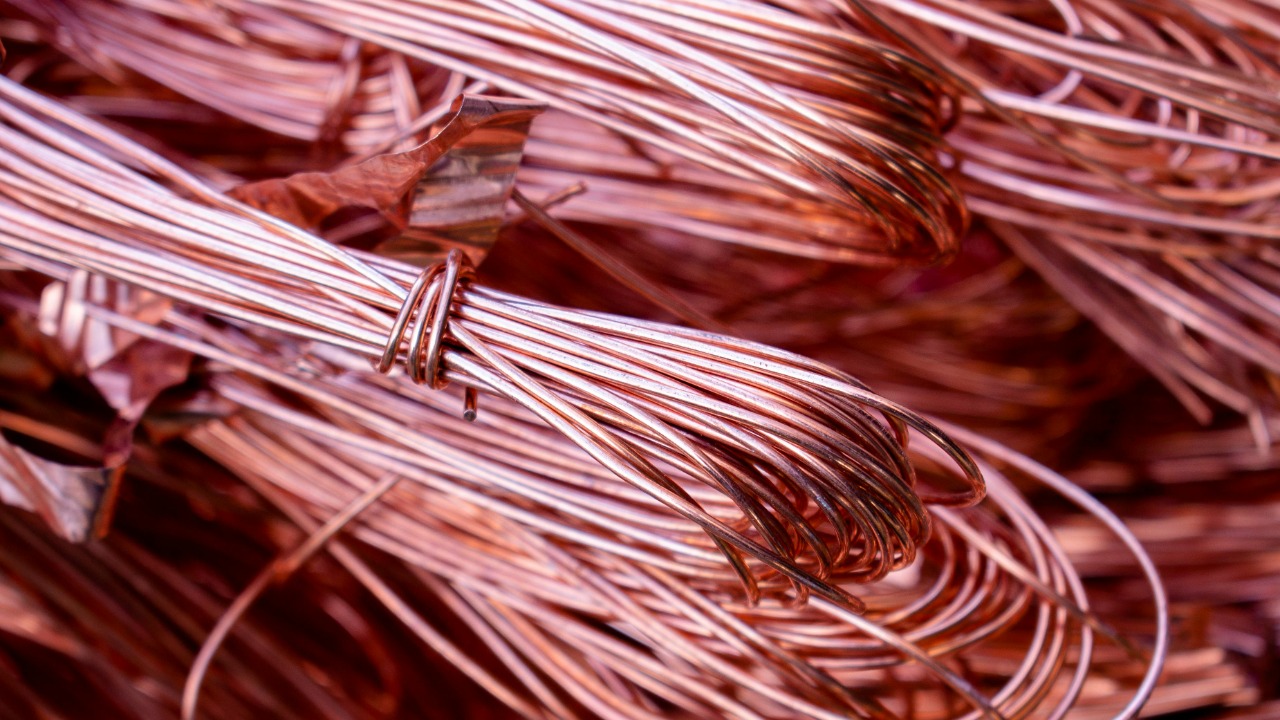
Copper has exploded into the spotlight, sprinting to record territory alongside gold and silver as investors crowd into metals. The red metal has surged on a mix of supply shocks and future‑facing demand from electric vehicles, grids, and artificial intelligence, then lurched into a sharp pullback that has left traders debating whether this is a buying opportunity or the start of a hangover. I want to unpack what is driving copper’s wild ride, how it stacks up against gold’s own boom, and what that means for anyone thinking about putting fresh money to work.
At its peak, copper futures vaulted above $13,000 per ton and briefly topped $14,000 per ton before sliding back, a swing that would be dramatic even in crypto, let alone an industrial metal. With prices still up strongly from last summer but down from their highs, the key question now is whether copper is behaving like a long‑term structural winner or a short‑term speculative trade that has run too far, too fast.
The new metals frenzy: copper joins gold at the top
The starting point is simple: copper is no longer just a sleepy industrial input, it is trading like a macro asset. In late January, Copper futures (HG=F) were up as much as 10%, topping $13,000 per ton as traders piled into the red metal alongside silver, platinum, and palladium. Another burst of buying then pushed prices to a record above $14,000 per ton before a rapid reversal took them back toward $13,800, a textbook sign of speculative froth meeting profit‑taking and worries about demand and a stronger US dollar, according to one account that described how prices hit $14,000 per ton and then dropped to $13,800 in a matter of hours After.
Gold has been on its own tear, which helps explain why copper is suddenly being mentioned in the same breath. One influential forecast sees Gold reaching $6,300 an ounce by year‑end, driven by central‑bank buying and investor demand that has not yet been exhausted, a view attributed By Reuters. When both a classic safe haven and a core industrial metal are ripping higher at the same time, it signals that investors are not just hedging inflation or growth, they are also betting on structural shifts in how the global economy uses raw materials.
From record peaks to sudden slump: how wild is copper’s move?
To understand whether copper is “on fire” or simply overheating, it helps to look at the speed of the move. One analysis noted that Copper had jumped 38% since crashing at the end of July, a staggering gain for a metal that usually trades in single‑digit annual percentage changes. That kind of vertical move tends to attract momentum traders and algorithmic strategies, which can amplify both the climb and the eventual correction once sentiment turns or macro data disappoints, a pattern that has played out repeatedly in commodities from oil to nickel.
The reversal has already begun. According to one pricing snapshot, Copper fell to 5.63 USD per Lbs on February 2, 2026, down 4.90% from the previous day, and Over the past month its price has fallen sharply from the highs as the rally unwound. Another market update framed it as Copper Prices Fall, Down 11% from Record High, with Copper slipping nearly 2% toward $5.8 per pound on Monday and briefly touching $5.8 per pound as the air came out of the trade. In parallel, a separate report described how Base Metals Collapse as the Speed of Rout Puts Bulls Under Pressure, underscoring that this is not just a copper story but part of a broader shakeout across industrial metals.
Why copper is suddenly a macro story, not just a wiring metal
Behind the price fireworks is a deeper shift in how copper is used and perceived. The metal sits at the heart of electrification, from EV motors and charging networks to high‑capacity transmission lines and data centers that power artificial intelligence. One forecast framed the trend under the banner of Copper price prospects remaining strong over the coming years, with an AI‑driven demand surge cited as a key upside factor, and Morgan highlighted as a bullish voice on the long‑term outlook. That narrative has helped recast copper from a cyclical barometer of construction and manufacturing into a strategic asset for the energy transition and digital infrastructure.
At the same time, supply has struggled to keep up. A detailed Copper outlook describes how Copper prices could soar further amid a tightening market, Following a barrage of severe supply disruptions that have constrained mine output and concentrate flows. Another section of that same research notes that Looking ahead, J.P. Morgan Global Research sees copper prices reaching $12,500 per metric ton in the second quarter of 2026, ultimately averaging around $12,075 for the full year, a projection that underscores how tight the balance between supply and demand could become if new projects are delayed or disrupted.
Bulls vs bears: what the forecasts are really saying
On the bullish side, several forecasts lean heavily on the idea of structural shortage. A detailed Copper Price Forecast under the banner Analysts Issue Bullish Outlook Amid Supply Shortage argues that the price of copper is likely to remain elevated as inventories shrink and Why Copper Going up in Value becomes a function of both constrained mine supply and rising consumption. That analysis stresses that Copper is a widely used industrial metal whose price tends to spike when demand‑side pressures build, a pattern that fits with the current combination of green‑energy spending and AI‑related infrastructure.
More cautious voices are not hard to find. A Reuters Poll under the Economic Indicators banner found that Copper forecasts have jumped above $11,000 for the first time, but analysts remain wary about demand, particularly if global growth slows or China’s property sector fails to stabilize. Another market commentary framed the recent surge as an unsustainable rally, with Copper surges in ‘unsustainable’ rally, joining silver and gold in 2026 metals frenzy described by Jake Conley in a Breaking Business News Report that warned such spikes often signal stress points for the economy rather than a smooth glide path higher.
Short‑term chaos: corrections, routs and buying the dip
In the near term, copper is trading less like a slow‑burn structural story and more like a high‑beta risk asset. One account described how, After touching a record above $14,000 per ton on Thursday, copper dropped sharply to around $13,800 on Friday, in line with downward pressure from weaker manufacturing data, concerns about China, and a US Dollar moves that made commodities more expensive for non‑dollar buyers Thursday and Friday. Another piece described how Copper surges in ‘unsustainable’ rally, joining silver and gold in 2026 metals frenzy, with Copper flagged as a leading indicator that can flash warning signs for the broader economy when it moves too far, too fast, a point Jake Conley made in a Breaking Business News Report that resonated with traders already nervous about valuations.
Yet corrections can also create entry points. A Shanghai‑focused update noted that Decline in Copper, with spot discounts narrowing slightly as physical buyers stepped in. That same report highlighted how, on Feb 1, 2026 at 22:04, SHFE Non‑Ferrous Metals Plunge saw Copper and Aluminum Down 9%, while Tin and Nickel dropped 11%, a violent move that flushed out leveraged longs but also tempted manufacturers to lock in cheaper supply. Another market wrap framed the broader slide as Speed of Rout, a reminder that even long‑term bulls need to size positions carefully when volatility spikes.
How to get exposure: from miners to ETFs to direct prices
For investors who decide copper’s long‑term story outweighs the short‑term noise, the next question is how to gain exposure. One option is to buy producers, and a recent analysis under the banner Copper Staging a Comeback in 2026: 3 Stocks to Buy highlighted how Copper prices have lately demonstrated renewed momentum and are heading in a positive direction, which could benefit miners with strong balance sheets and attractive long‑term fundamentals. That same piece framed the opportunity as Copper Staging a Comeback in 2026: 3 Stocks to Buy, a reminder that equities can offer leveraged upside to the metal price but also carry company‑specific risks like cost overruns, political instability, and environmental liabilities.
Another route is through funds and derivatives that track the metal more directly. One thematic note on The Red Metal’s AI Revolution argued that Copper price prospects remain strong over the coming years and suggested that copper ETFs are poised for a strong 2026, with AI‑driven demand surge as key upside factors. For those who want to track spot prices or futures curves without trading directly, Google Finance provides a simple way to search for financial security data, including commodities, currencies, and indexes, although it is important to remember that such platforms come with their own disclaimers and are not a substitute for professional advice. For more granular commodity pricing, services that track Copper Hits 4‑week Low and similar milestones can help investors time entries and exits more precisely.
Is it time to buy? My take on risk, timing and strategy
So is now the moment to jump into copper, or to wait for the dust to settle? I see a clear tension between a compelling long‑term story and a frothy short‑term setup. On one hand, detailed research from J.P. analysts argues that Copper prices could soar further amid a tightening market, and a separate section of that outlook reiterates that Copper prices could amid a tightening market, with the scene described as A tightening copper market that leaves little margin for error if demand surprises to the upside. Another section, introduced with the phrase Looking ahead, J.P. Morgan Global Research sees copper prices reaching $12,500 per metric ton in the second quarter of 2026, ultimately averaging around $12,075 for the full year, which, if realized, would still leave upside from current spot levels even after the recent rally.
On the other hand, the recent pattern of Copper surges in ‘unsustainable’ rally, joining silver and gold in 2026 metals frenzy, as described in a Breaking Business News by Jake Conley, and the subsequent Down 11% from Record High correction, suggests that buying aggressively into spikes is a recipe for whiplash. I would treat copper less like a lottery ticket and more like a long‑duration theme: scale in gradually on pullbacks such as the recent slide toward $5.8 per pound, diversify across miners, ETFs, and perhaps a small allocation to futures‑linked products, and be prepared for more volatility as macro data, Chinese policy, and AI‑related capex ebb and flow. For those with a shorter time horizon or low risk tolerance, it may be wiser to watch how the current rout in Base Metals Collapse plays out before committing serious capital, especially given that Even setbacks like mine disruptions can be offset by a strong US dollar that puts a lid on copper’s climb for now, as one analysis of how Even mine issues have not pushed prices higher by mid‑2026 if these issues drag on made clear.
More From TheDailyOverview
*This article was researched with the help of AI, with human editors creating the final content.

Grant Mercer covers market dynamics, business trends, and the economic forces driving growth across industries. His analysis connects macro movements with real-world implications for investors, entrepreneurs, and professionals. Through his work at The Daily Overview, Grant helps readers understand how markets function and where opportunities may emerge.

